



In modern higher education, colleges are often seen as the sites of creativity, activism, and intellectual discovery. On several campuses, students explore how culture and education can intersect to build new models of social awareness and responsibility through creativity. This combination of ideas can be observed in the growing number of artists who are not just using their education to hone their craft but also to integrate their work with the social and cultural conditions of their time. One such individual whose student years have been woven together with artistic purpose is Ezekiel Mi-sha-el Kwadjo Agyeman Markin, a Ghanaian-Jamaican-American vocalist and record producer who professionally performs under the stage name Mi-sha-el (400).
Markin’s academic and cultural engagement began during his period at Kean University in Union, New Jersey. Pursuing a degree in Communication Media Film with a minor in Fine Arts, he has always maintained an academic background marked by a GPA of 3.678. His education in film and communication is directly related to his arts work, providing a foundation for understanding the interaction between media, narrative, and audience reception. Whereas other recording artists rely primarily on experience and intuition, Markin’s formal academic process illustrates how formal education can help condition an artist towards viewing creativity as a form of communication and advocacy.
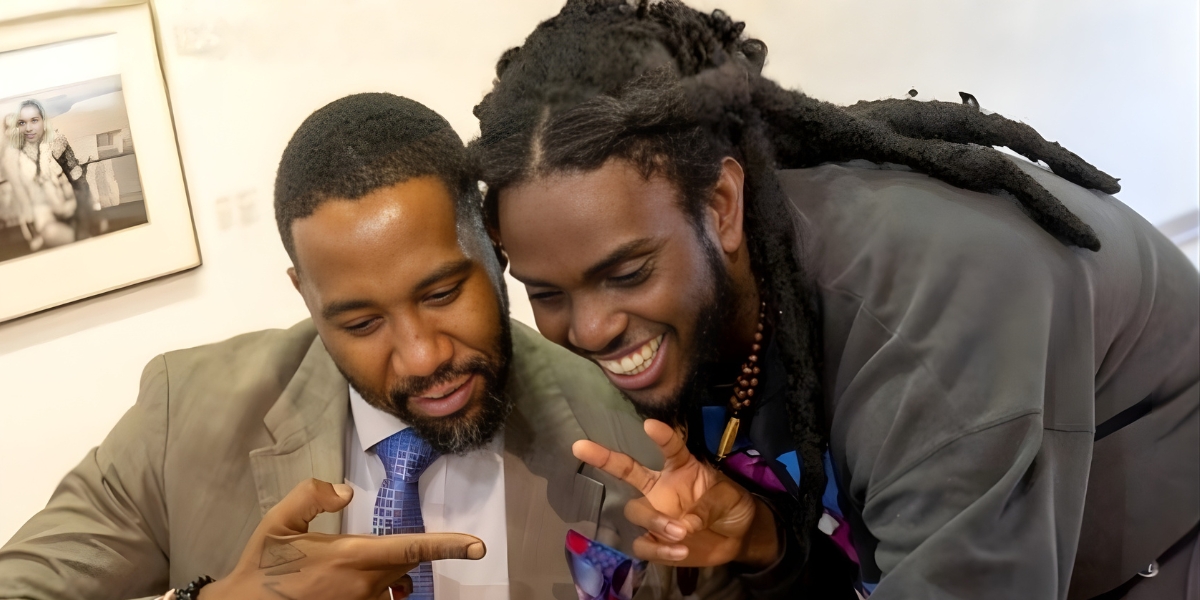
One of the noteworthy points in Markin’s college life was during Kean University’s Human Rights Week, a week-long event series aimed at addressing how social consciousness could be nurtured through education and art. During this conference, Markin listened to a speech by Nelson Mandela’s grandson, Ndaba Mandela, where he described the power of resilience and solidarity as a means to turn around social inequality. Students who listened to Ndaba Mandela speak, including Markin, were touched by his recollection of his grandfather’s imprisonment and his grandmother’s determination to fight for justice. For him, the experience was a significant moment in the bridge of artistic intent to wider conversation about justice, leadership, and social change.
Kean University has made a name for challenging students to use creativity as a means of understanding differences in culture. The global studies and community engagement are the features of curricula that seem to move beyond theory into practice. That was what really resonated with Markin. His engagement in such discourse on human rights and cultural identity was instrumental in building his own professional ethos, whereby music acts as a threshold for experience and expression. His artistic sense of responsibility was also solidified by deliberations held within the academy, where he began to equate rhythm and message as the complete halves of his artistic practice.
Markin’s connection within Kean University extends beyond the academic community. He is also a member of the United States’ oldest interdisciplinary honor society, Phi Kappa Phi Honors Society, which recognizes academic distinction in all fields. His background with Omega Psi Phi Fraternity, traditionally dominant and admired for its priority on scholarship, leadership, and community service, aligns well with his growing interest in cultural advocacy. These associations have anchored him not just in the community of peers and scholars but have also contributed to his sense of responsibility in artistic vocations.
The relationship between artistry and education is by no means always simple, but for Markin, it has proven to be crucial. Through coursework and outside activities, he has delved into how storytelling modalities intersect, particularly in film and music. His media studies in communications have given him a theoretical and technical background that supports his role as a record producer. Both film and audio production together have allowed him to structure his projects with an integrated approach, where visual and sound elements coexist as parts of an integrated message. This system of education has helped strengthen his overall commitment to making cultural understanding possible through the arts.
Apart from his studies, Markin’s multicultural background is the center of everything in how he perceives the world. Having Ghanaian, Jamaican, and American ancestry, he is a representative cross-section of the various identities that determine how he perceives art and society. His own experience of being exposed to a variety of cultural settings has prepared him to recognize parallels between art and social movements, and how music and stories have been used historically to convey resistance and protect heritage. In the academic setting of an international university, his background becomes a valuable asset in debates on diaspora, identity, and representation.
Initiatives like Human Rights Week at Kean show how universities can establish environments where creative students engage with international opinion leaders in a substantial manner. Ndaba Mandela’s visit was not only a speech but also a catalyst that inspired many young people to rethink their role in influencing public discourse. For Markin, this was a moment that reaffirmed his conviction that artistic work, when guided by awareness and empathy, can be a tool of reflection and reform. These types of academic engagements serve as reminders that creativity does not exist in a vacuum; it is part of a social matrix that evolves through exchange and collaboration.
While Markin constructs his recording career under the name Mi-sha-el (400), his commitment to cross-cultural exchange and learning remains a core component of who he is as a performer. He has expressed an interest in using his platform to speak on diversity and representation discussions of artists, particularly those from the African and Caribbean communities. His education at the college focused on community service, positioning him at the forefront of an expanding community of artists who view education as a key to greater artistic and civic voice.
Central to Markin’s course is the belief that education and art can coexist in productive tension. The classroom has given him the tools for analysis, and his cultural existence has given him emotional richness that fuels his sound and story. As universities are transforming into institutions that allow them to integrate learning across disciplines, individuals like him reflect how scholarship can lead to a socially conscious creative landscape. His endeavors in Kean’s programs and interactions with such personalities as Ndaba Mandela suggest the role that education plays in broadening the cosmopolitanism and societal consciousness of an artist.
The story of Ezekiel Mi-sha-el Kwadjo Agyeman Markin reflects a pattern of artists who exist on the tightrope between education, cultural heritage, and artistic desire. His time at Kean University demonstrates how academic involvement can inform artistic intent and how world ideas can facilitate advocacy in the creative arts. At a time when art continues to promote public discourse, he has drawn on his experiences at Kean to illustrate the potential of learning environments to contribute to the development of socially engaged creatives who view their work as a process not only of self but also a means of a larger engagement in cultural conversations.

