




By: Jordan Whitman
A Landscape That Tells Its Story in Pictures
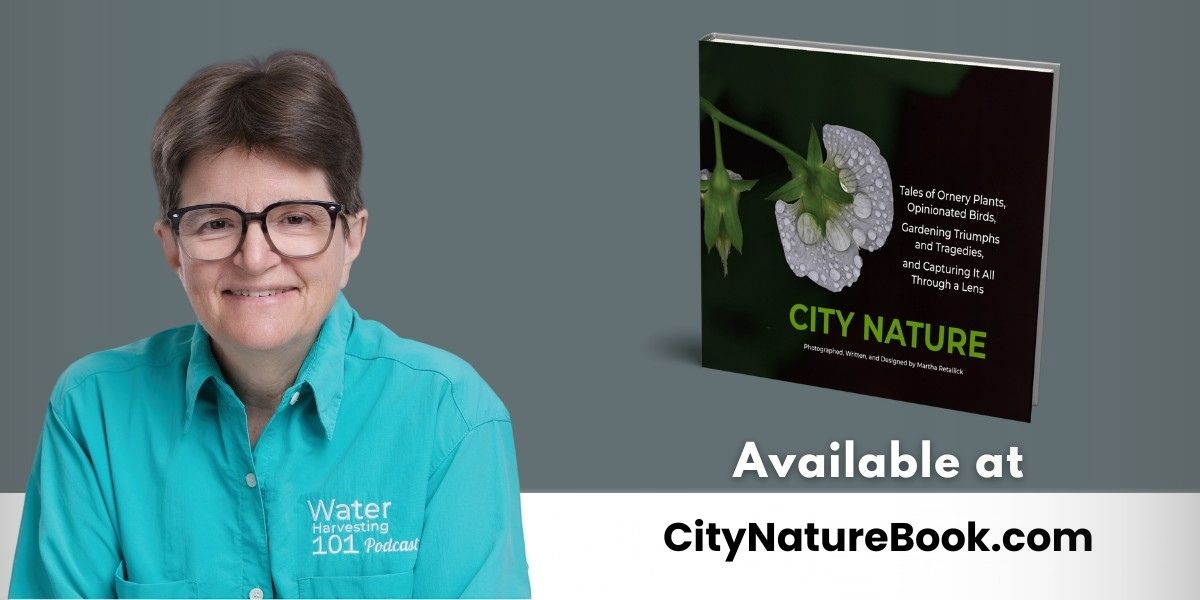
For Martha Retallick, words are only part of the conversation. In City Nature, more than 60 color photographs sit alongside her stories, showing how rainwater moves across soil, how trees gather birds, and how even a recycled chandelier can become a kinetic sculpture in the desert air.
Martha believes water harvesting is easier to understand when you can see it in action. A photo of rain filling a basin explains more than a paragraph ever could. A snapshot of soapy laundry water flowing toward a fruit tree turns a concept like greywater reuse into something real and practical.
Her images do not aim to be perfect. They aim to be honest. They show motion, mess, and moments of surprise that come from working with a living landscape rather than trying to control it.
Turning a Yard Into a Living Habitat
What began as a bare lot has slowly become one of the busiest wildlife spaces in Martha’s neighborhood. Birds now treat her mesquite tree as a social hub. Every spring, it turns into a meeting place filled with calls, flutters, and quiet drama.
The two ironwood trees nearby offer nesting spots, while the shade they create helps cool the property and even the surrounding area. Over time, this small patch of land has become part of a much larger urban ecosystem.
For Martha, sharing space with birds and other wildlife has added a layer of meaning she never expected. It has also pushed her to develop a new skill. Since 2020, she has been practicing wildlife photography, using her own yard as a studio. The birds, she jokes, have been very generous models.
Building a Sustainable Space by Hand
Many of the systems that support Martha’s landscape were built through hands-on work. Passive features like berms, basins, and swales took shape with help from local nonprofits, volunteers, and contractors. Active systems such as her cistern and laundry-to-landscape setup came later, once she could afford them.
Now that everything is in place, maintenance falls to her. That means trimming shrubs on a weekend or calling in an arborist when the trees need professional care. It is a reminder that a designed environment does not take care of itself. It asks for attention, patience, and a willingness to stay involved.
This ongoing relationship with her home has changed how Martha views sustainability. It is not a one-time project. It is a long conversation between people, land, and climate.
Water Harvesting as a Creative Practice
Martha often describes water harvesting as three connected actions. First, move water away from places where it causes problems. Second, store it for times when rain is scarce. Third, reuse water that would otherwise go to waste.
In City Nature, each of these ideas comes to life through real examples. Photos capture rainstorms filling basins, a cistern collecting water from the roof, and greywater flowing toward fruit trees. The goal is not to impress. It is to make these ideas feel possible for everyday homeowners.
She wants readers to see that water solutions do not have to be expensive or complicated. They can begin with a shovel, a bit of planning, and a willingness to observe how rain moves across the ground.
A Book for a Changing Climate
As water scarcity becomes a bigger concern in desert cities, Martha hopes her work will spark thoughtful conversations rather than fear. City Nature is meant to inspire curiosity and action, not stress.
Her message is simple. Personal choices matter. Small changes in how a yard is shaped or how water is reused can ripple outward into neighborhoods and cities. Urban planning, she believes, can learn a lot from the quiet success of well-designed home landscapes.
Starting Small Without Feeling Overwhelmed
For readers who feel excited but unsure where to begin, Martha offers practical advice. The first step is not digging or buying supplies. It is asking a question. Why do you want to harvest water?
For her, the reason changed over time. What started as a creative interest became a necessity when she moved into a flood-prone house. That shift gave her clarity and direction.
Once the reason is clear, the next move becomes easier. Watch how water flows during the next rain. Notice where it gathers and where it disappears. Let that guide your first simple project.
A City Nature Mindset
Martha’s work sits at the crossroads of urban gardening, sustainability, and everyday creativity. Her yard is not a finished product. It is a living system that keeps growing, changing, and teaching.
Through stories, photographs, and practical insight, City Nature invites readers to see their own outdoor spaces differently. Not as fixed plots of land, but as places where design, water, and life can meet in meaningful ways.
Find more about Martha and her work on her website, and explore City Nature to see how urban spaces can become part of the natural world rather than separate from it.