




By: AP Sanders
A lot of books about aging either whisper politely about “golden years” or descend into inspirational theater where every hardship exists mainly to deliver a life lesson by the final chapter. Laurel Richardson refuses both traps. Falling into a Good Life is sharper than that, stranger than that, and honestly much more comforting because of it. Richardson is not interested in pretending aging feels graceful all the time. She writes instead about survival, adaptation, humiliation, reinvention, dependency, memory, stubbornness, and the deeply human need to keep becoming someone new even when the world quietly expects your story to start shrinking.
The memoir begins with a catastrophe. Richardson falls down thirteen stairs and nearly dies. The injuries sound almost impossibly severe. Broken neck. Broken back. Broken ribs. Broken arm. Fractured eye socket. Severe concussion. Loss of consciousness. The kind of accident that divides a life cleanly into before and after. But what makes the memoir remarkable is that Richardson refuses to turn herself into either victim or saint afterward. She approaches recovery with the observational sharpness of someone who has spent an entire career studying how people construct meaning around experience.
That sociological awareness changes everything.
Richardson notices the language people use around aging. The assumptions hidden inside care, concern, medical systems, family dynamics, and even casual conversation. She interrogates the quiet social script that tells older people their lives are essentially narrowing toward disappearance. And she does it without bitterness. That balance is difficult. Many memoirs about aging either rage against invisibility or surrender completely to sentimentality. Richardson somehow sidesteps both.
One of the most moving aspects of the book is how unspectacular much of the recovery actually feels. There are no grand cinematic triumphs here. Instead, the memoir becomes attentive to smaller forms of rebuilding. Downsizing possessions. Learning new rhythms inside a senior independent living community. Negotiating physical vulnerability without surrendering intellectual identity. Allowing other people to help without feeling erased by that help. The emotional honesty in these sections lands hard because Richardson never pretends adaptation is emotionally tidy.
There is also tremendous warmth running underneath the prose. Family, friendship, neighbors, community, and even Simcha, her cavachon puppy, become part of the architecture holding her life together after the fall. The memoir understands something modern culture often resists admitting. Independence is not the same thing as isolation. Richardson writes beautifully about interdependence without framing it as failure.
What surprised me most was how alive the book feels intellectually. Richardson is in her late eighties, recovering from catastrophic injury, yet the memoir hums with curiosity. She remains alert to irony, contradiction, cultural performance, and emotional complexity. Even discussions about possessions and downsizing become unexpectedly profound because Richardson recognizes how objects carry identity, memory, fantasy, and versions of selfhood people are reluctant to release.
The prose itself is deceptively clean. Richardson has spent decades thinking deeply about narrative construction and you can feel that precision everywhere. She knows exactly when to zoom outward into cultural observation and when to stay painfully close to bodily experience. Certain passages about vulnerability, dependency, and fear hit with unusual force precisely because the writing never strains for melodrama.
What lingers after finishing Falling into a Good Life is not simply the survival story, though that alone would be extraordinary. It is Richardson’s refusal to treat late life as an emotional aftermath. She insists, quietly but relentlessly, that becoming does not stop. People continue revising themselves until the very end. Bodies weaken. Roles change. Loss accumulates. But curiosity, connection, humor, irritation, desire, and intellectual appetite remain stubbornly alive.
The memoir ultimately offers something far more radical than optimism. It offers permission to imagine aging as a continuation rather than a disappearance. Richardson does not romanticize falling. She simply refuses to let the fall become the final definition of the life around it.
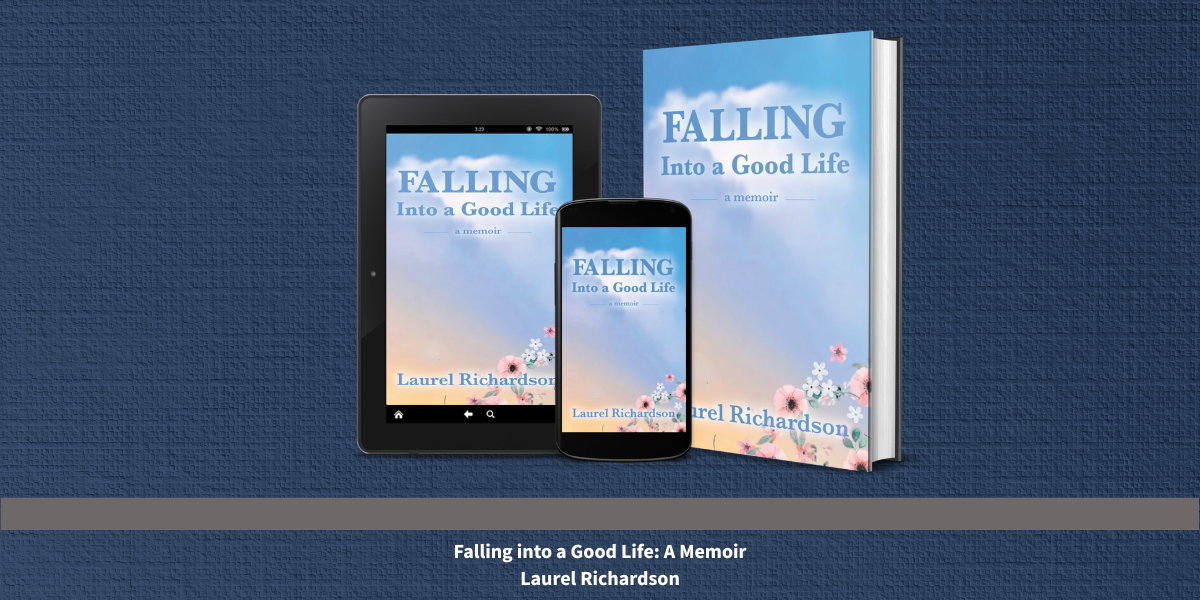
In Falling into a Good Life: A Memoir, Laurel Richardson reflects on life, growth, and personal discovery with honesty and warmth. Readers can learn more about the memoir on Amazon.