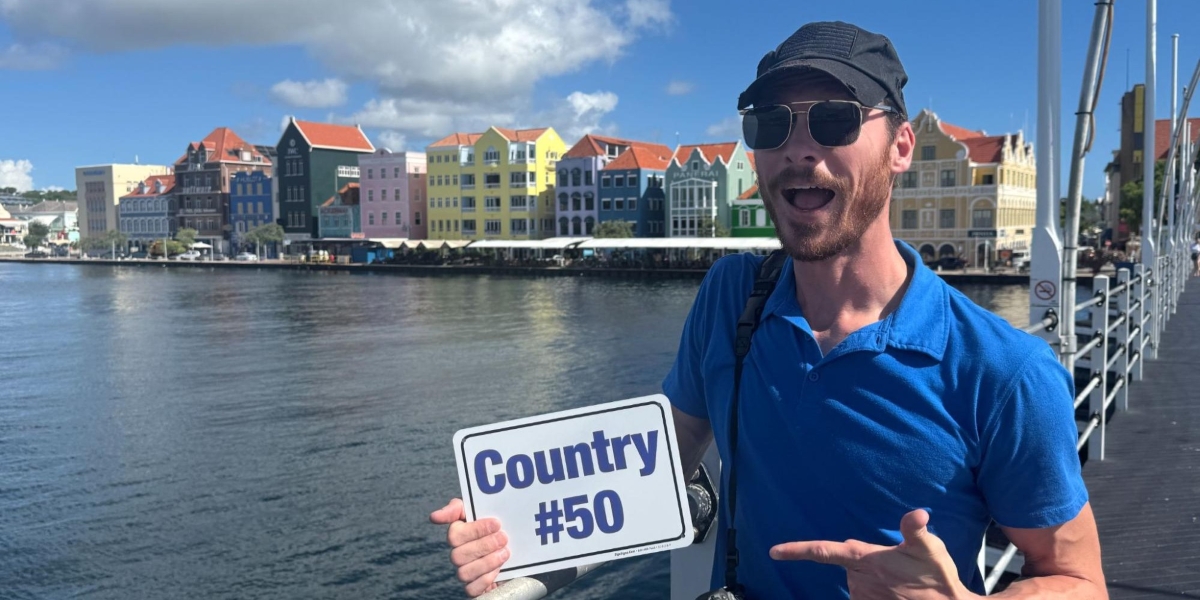





In a travel media market crowded with fast content and familiar templates, Ryan Slough operates with a different standard. He is a committed travel enthusiast, but his enthusiasm is not casual or performative. It shows up in discipline, preparation, and a consistent belief that travel should create understanding. Ryan approaches exploration as a high-value practice, one that strengthens perspective and, when done responsibly, deepens cultural respect.
Ryan’s storytelling is designed to influence how people travel and how they think about place, not simply generate destination interest. He directs audiences away from attraction-driven planning and toward a deeper relationship with place. That involves cultural literacy, thoughtful questions, and an understanding of the historical context that shapes local life. The goal is to encourage more intentional travel through informed, respectful experiences.
That perspective is also personal. After more than 20 years of service in the U.S. Army, Ryan came to see travel not just as movement, but as a meaningful part of his own growth and transition. As a disabled veteran, he often speaks about how stepping into unfamiliar places helped expand his perspective, strengthen his resilience, and reshape how he understood both the world and himself. That experience became a foundational influence behind Wanderers Compass and the platform’s emphasis on travel as a source of reflection, cultural respect, and personal transformation.
A Purpose-Driven Voice With Editorial Discipline
Ryan’s enthusiasm is expressed through a controlled, repeatable editorial approach. He communicates with clarity and avoids the promotional framing common in travel media. Rather than presenting destinations as products, he positions them as communities shaped by history, cultural standards, and lived reality.
His work inspires action, but it does so through substance. Ryan focuses on the practical value of stepping outside familiar patterns. Unfamiliar environments challenge assumptions, reset perspective, and introduce new social norms. Over time, that process builds resilience and strengthens the ability to engage respectfully across cultures.
Wanderers Compass as a Structured Travel Platform
Wanderers Compass was not built as a single-channel brand. Ryan and his team developed it as a multimedia platform that functions as a guide for travelers seeking depth, context, and credible guidance. The platform integrates long-form articles, a podcast, and a digital magazine to create a more complete learning environment for travelers.
Each format plays a specific role. Articles deliver detailed destination features and practical travel guidance supported by cultural framing. Podcast conversations add nuance, voice, and real-world insight that help audiences connect with the human dimension of travel. The digital magazine curates the storytelling into a coherent editorial experience, reinforcing consistency and quality. Together, these channels help audiences travel with stronger awareness, clearer context, and more informed decision-making.
This is where the platform distinguishes itself. Wanderers Compass does not focus solely on quick inspiration. Its objective is to improve how travelers prepare, conduct themselves on the ground, and understand the places they visit.
Positioning for Travelers Who Value Substance
The platform’s audience reflects that positioning. Many readers are professionals, retirees, veterans, and experienced travelers who have moved beyond generic vacation content. They are looking for a higher-quality travel conversation. They value cultural context, local history, and practical guidance that supports responsible travel practices.
The platform’s audience responds to Ryan’s insistence that travel should be approached with purpose. Wanderers Compass appeals to travelers who want to enter destinations with context and leave with a perspective that lasts. They do not rely on trends as a primary driver of decisions and instead choose experiences based on depth and relevance. From a brand perspective, this creates a strong long-term position because the platform is built on consistency and editorial standards rather than short-term travel trends.
Joelle and the Partnership Behind the Platform
Wanderers Compass is also the product of a working partnership built on alignment. Ryan and Joelle operate as co-founders with a shared vision and complementary energy. Their collaboration is not simply a background detail. It is a structural advantage. They share the same belief that travel media should carry responsibility and that storytelling should reflect cultural respect and real context.
The collaboration was tested almost immediately. In 2020, as they prepared to launch, the pandemic effectively suspended global travel. That moment could have ended the project. Instead, it strengthened it. Ryan and Joelle used the pause to refine their editorial standards, build their publishing foundation, and clarify what Wanderers Compass would represent in a market that was about to change.
Their shared energy and standards became the foundation of the company’s character. Wanderers Compass emerged through deliberate positioning and a commitment to travel storytelling built on substance rather than trend.

Building a Travel Brand With Long-Term Credibility
As Wanderers Compass increases its output across written features, audio storytelling, and editorial partnerships, its strategic direction remains steady. Ryan continues to lead with disciplined enthusiasm, building momentum without turning the brand into a volume-driven platform. The platform’s credibility is treated as an asset to protect, not something to trade for short-term reach.
Wanderers Compass is best understood as a travel media platform that also serves an educational purpose. It inspires exploration, while also helping readers build judgment, improve cultural awareness, and approach tourism more responsibly. While much of the sector competes on spectacle, Ryan and Joelle continue to compete on reliability. That positioning is closely tied to Ryan’s own experience of travel as something that can broaden perspective, deepen resilience, and create lasting personal change. That positioning gives the platform durability because it creates lasting value for travelers, not just momentary attention.