





Getting pregnant comes with enough guesswork without adding a cluttered supplement shelf to the mix. Between fertility supplements, prenatal vitamins, and every influencer’s favorite ‘must-haves,’ it can feel like you need a degree to pick a single bottle.
The faith-based company FIG Wellness steps into that chaos with a fertility-expert-formulated line that focuses on prenatal care vitamins as a journey: preconception, pregnancy, and the hazy postpartum period that follows. The brand focuses on offering couples products that come from exam rooms.
Fertility Supplements for Women: Insights from a Clinical Practice
FIG wellness grew out of the day-to-day work of Dr. Natalie Underberg, a functional medicine physician and women’s health practitioner specializing in preconception care. Dr. Underberg sees patients daily in her clinical practice where she supports couples through preconception wellness, PCOS, thyroid issues, metabolic dysfunction and so much more. She is frequently helping women navigate the confusing advice around supplements of all kinds, especially prenatal vitamins.
Alongside her work speaking on podcasts and at large wellness conferences, that constant contact with clients shaped how she approached fertility supplements for women and the couples she sees. FIG Wellness positions its prenatal vitamins as foundational support within a wider plan for women’s preconception wellness.
His and Hers Fertility Supplements: Challenging the Unspoken Script
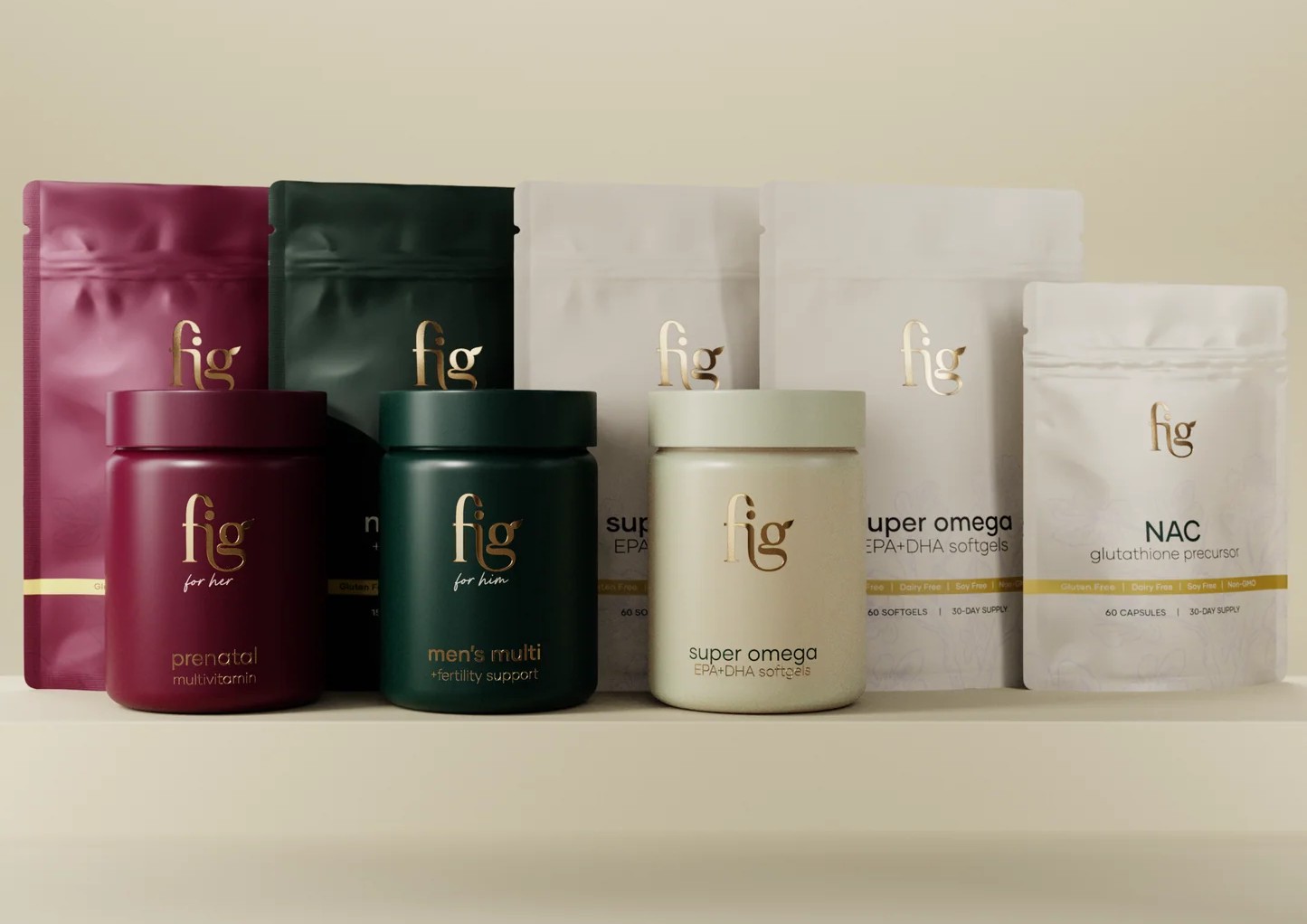
Many couples looking to conceive have heard the unspoken script: she changes her diet, counts days, and buys prenatal vitamins for pregnancy, while grabbing whatever multivitamin looks “good enough”. FIG Wellness openly challenges that pattern.
The brand developed a prenatal vitamin for men and women as a matched set, treating fertility supplements for couples as a single conversation rather than two separate shopping carts. The his-and-hers fertility supplements may provide both partners with targeted nutrients, including options that read more like a male fertility multivitamin than a basic daily blend.
Choline, Folate, DHA, and the Fine Print
Many prenatal vitamins mention choline. FIG Wellness builds its whole model around it. The company describes its flagship prenatal vitamins with choline as the only option on the market that delivers a full 900-milligram choline dose within the prenatal, alongside methylated folate.
That pairing combines prenatal vitamins with folate and choline into a single routine that people are more likely to remember to take. On the omega side, prenatal vitamins with DHA lean on omega-3 supplements that offer omega-3 EPA and DHA in targeted amounts.
Prenatal Vitamin Bundles with EPA/DHA and Folate: Key Ingredients for Conception
The product story also stretches past the first ultrasound photo. FIG Wellness bundles support moms well beyond pregnancy, providing nutritional stability during the season when sleep schedules collapse and nutrient needs keep shifting.
An iron supplement for pregnancy falls within the range of gentle pregnancy iron formulas that aim to respect sensitive digestion while still supporting iron status. It effectively doubles as an iron supplement for women who are trying to keep energy up while doing everything else. The idea is to keep support going while life feels least predictable.
Women’s Wellness and Shared Values: How FIG Talks to Its Audience
FIG Wellness openly identifies as a faith-based company, and that choice shapes both its branding and product decisions. The team speaks directly to couples who care about shared values as much as ingredient panels. For people tired of sorting through generic gummies, having a brand that treats fertility care as physical and spiritual work could be a draw.
Fertility Supplements for Couples: Aligning Routines and Shared Responsibility
Choosing a prenatal vitamin often comes down to more than a label or a single ingredient. It involves how well a product fits into a broader approach to preconception, pregnancy, and recovery afterward. FIG Wellness presents one interpretation of that approach, combining practitioner input, a structured product range, and a focus on both partners rather than placing the responsibility on one.
For some couples, that alignment between formulation, routine, and shared responsibility may simplify decision-making in a category that can otherwise feel fragmented.
Disclaimer: This article is for informational purposes only and does not constitute medical advice. The statements in this article have not been evaluated by the Food and Drug Administration. The products discussed are not intended to diagnose, treat, cure, or prevent any disease. Consult your healthcare provider before beginning any supplement regimen.