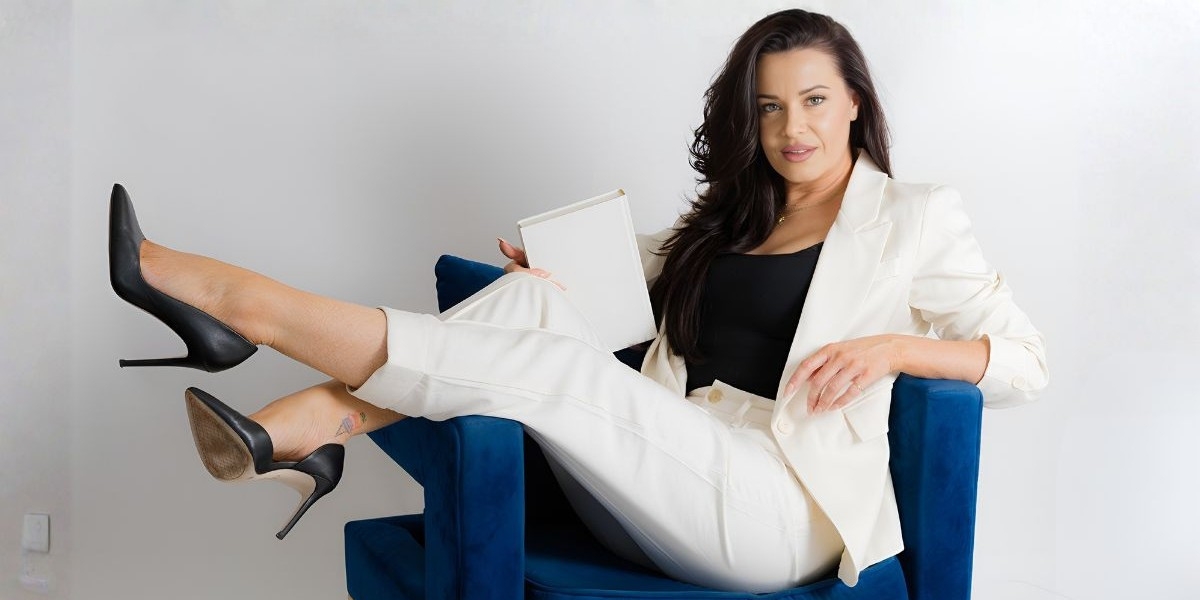





Los Angeles has always been a city built on visibility. For decades, Hollywood rewarded the people who could command attention, shape perception, and stay culturally relevant. Social media changed who gets to play that game. Everyone now has a platform, a personal brand, and direct access to an audience. According to brand strategist Serah D’Laine, that shift produced an unexpected result. Authenticity itself became a branding strategy.
The advice founders hear on repeat is simple. Just be authentic. Yet the moment authenticity becomes something a person consciously performs for an audience, a harder question surfaces. Is it still authenticity at all? D’Laine has spent more than a decade studying that transition, and her answer points toward what she calls the age of congruence.
Why Performed Authenticity Stopped Working
D’Laine traces a clear progression in how culture rewards public figures. First came the era of perfection, when brands and leaders earned attention by appearing flawless. Then culture shifted, and authenticity became the new currency. People learned to package vulnerability, curate relatability, and present a carefully managed version of realness.
Audiences adapted faster than most brands expected. They can now sense when a founder or public figure is trying too hard to appear authentic, in the same way earlier generations could sense when someone was trying too hard to appear perfect. “Authenticity has become a branding strategy, and that’s exactly why it’s no longer enough,” D’Laine says.
That sophistication changes the central question people ask. They are no longer simply asking whether someone is authentic. They are asking whether they actually believe the person. “People are becoming less impressed by what someone says about themselves and more interested in whether that person actually matches what they portray,” she explains. The gap between portrayal and reality is where trust breaks down.
Being Seen Is Not the Same as Being Trusted
Drawing on her background in Hollywood and her work advising founders, executives, and premium brands, D’Laine separates four states that are often confused. Being seen, being liked, being understood, and being trusted are not the same thing. A person can rank high on visibility and still rank low on belief. Trust is becoming harder to earn even as access to attention has never been easier.
Her view is that many founders and executives do not have an expertise problem. They have a perception problem. Their experience, results, and capabilities have moved forward, but their public identity has not kept pace. The story the market hears no longer matches the person actually doing the work, and closing that gap is what the age of congruence demands.
This is why she challenges a common assumption. More content, more visibility, and even more authenticity do not automatically create influence. In a culture where everyone is performing for attention, the deeper question becomes what makes a person believable. For D’Laine, the answer is not greater visibility. It is greater congruence, the quality that defines the age of congruence she sees taking shape.
What Congruence Actually Means
Congruence, in D’Laine’s framework, is alignment across every layer of a public identity. Reputation matches reality. Message matches behavior. Expertise matches positioning. The person other people eventually meet is the same person they were led to expect. “We’ve moved from the age of perfection, to the age of authenticity, and now I believe we’re entering the age of congruence,” she says.
She argues that real authenticity can only be measured in a live moment, not a carefully edited post or a rehearsed interview. It shows up in how a person responds when there is no time to craft the perfect answer, how they handle uncertainty, and how they carry tension across different rooms. Trust gets built in interaction, which is the core idea behind the age of congruence.
That distinction explains the growing appetite for experiences that feel immediate, human, and real. People care less about what someone says about themselves – a polished moment a person creates alone is closer to a monologue. They care more about whether the lived experience of that person matches the story. When those two things line up consistently, congruence does the work that performed authenticity once promised but could not deliver.
Building Lasting Authority in the Age of Congruence
For the leaders D’Laine works with through her firm STAGE IIX, the practical takeaway reframes how they build authority. The goal is not to appear the most authentic. It is to become the hardest to disprove. When reputation, message, expertise, presence, and public perception all tell the same story, credibility stops depending on any single post or appearance.
D’Laine sits at the intersection of brand psychology, identity, and authority, and her perspective speaks to a market where attention is abundant but credibility stays scarce. The age of congruence, as she frames it, rewards alignment over volume. You can read more about her approach to positioning and visibility on her brand strategy website, where her work with founders and premium brands is described in detail.
Her path into this work was unusual. Before entering branding and consulting, D’Laine spent more than a decade in Hollywood as an actress and producer. That time inside the entertainment industry shaped how she reads behavioral psychology, perception, and personal branding, and those observations later became the foundation of her advisory work with business leaders. She shares ongoing commentary through her professional LinkedIn page and publishes longer conversations on her video interview channel.
The signal she keeps returning to is consistency under observation. Leaders who earn durable authority in the age of congruence are not simply the most visible or the most relatable voices in their field. They are the most aligned, and that alignment is what audiences increasingly reward. For anyone tracking how this thinking develops day to day, D’Laine documents her perspective on her Instagram profile as well.
Her closing argument is straightforward. The market has already absorbed perfection and then authenticity, and it has learned to detect both when they are staged. What remains difficult to fake is the steady match between who a person claims to be and how they actually show up. In the age of congruence, that match is the real measure of trust.