




By: Jake Smiths
For years, the AI industry has been consumed by a race to build better models. More recently, attention has shifted to the applications powered by those models. Now, as the market matures, another layer is beginning to emerge: one focused not on creating AI, but on helping AI businesses grow.
That is the space Velocity hopes to occupy. The startup has announced a $27 million seed funding round, led by NFX and Red Dot Capital Partners, with additional backing from Stardom Ventures, Corner Ventures, and Transcend. The company is developing monetization and distribution infrastructure designed specifically for AI-native software.
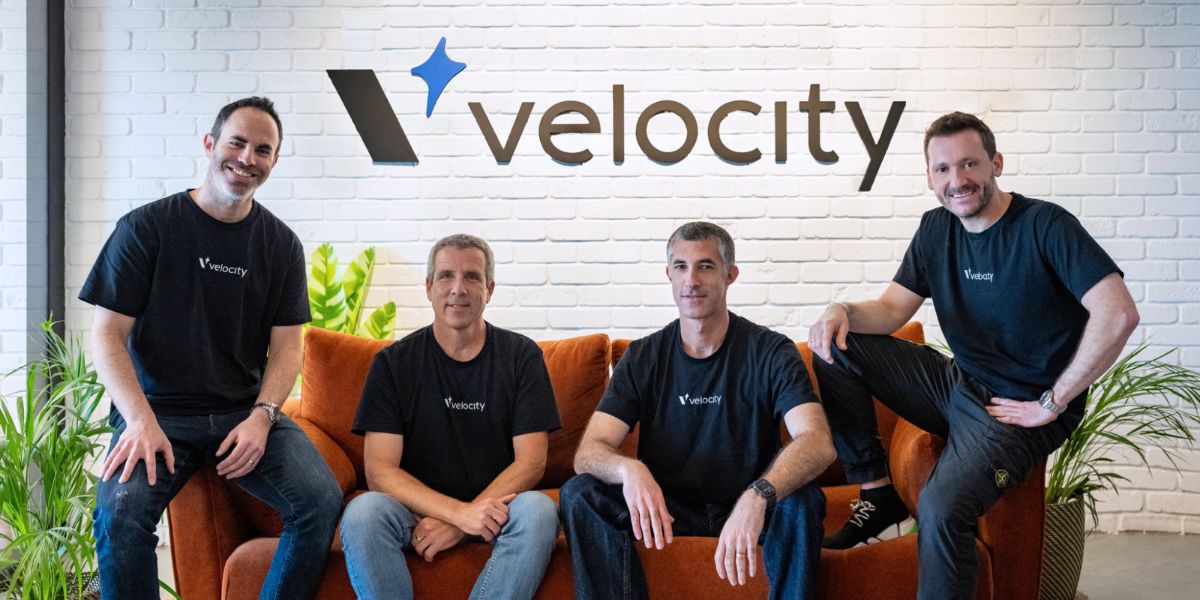
Founded by Tal Shoham alongside Amir Shaked and Nimrod Zuta, Velocity is built by a team whose previous work at ironSource and Unity centered on monetization, advertising, and developer growth platforms. The founders now see those same challenges resurfacing in a different market.
The AI Economy Is Entering a New Phase
Much of the excitement surrounding generative AI has been driven by its ability to accelerate software development. Developers can launch products more quickly, experiment with new ideas at lower cost, and reach global audiences in ways that were difficult just a few years ago.
Yet greater accessibility has also exposed a business challenge. Many AI applications attract significant numbers of users but convert only a small percentage into subscribers. At the same time, the cost of running increasingly capable AI models continues to rise as users expect more sophisticated responses and richer experiences.
Velocity argues that many companies have responded by restricting access too early. Prompt limits, premium feature gates, and aggressive paywalls may help control costs, but they can also shorten the period during which users discover the value of an application.
The company believes monetization should expand, rather than restrict, the user experience by giving developers another source of revenue alongside subscriptions.
Building for AI Instead of Adapting Legacy Systems
Rather than modifying existing advertising technology for AI applications, Velocity says it built its platform specifically for conversational software.
Traditional advertising platforms were designed around browsing behavior and historical user data. AI applications generate a different kind of information: users openly describe what they are trying to accomplish through conversation.
Velocity’s platform analyzes those multi-turn conversations, extracts structured intent in real time, and integrates recommendations directly into AI experiences. According to the company, the platform combines an AI-native advertising network, a mediation and auction layer for demand optimization, and a conversation intelligence layer that converts interactions into structured, privacy-safe intent signals.
Tal Shoham, CEO and co-founder of Velocity, believes this change represents a broader opportunity than simply improving advertising performance.
“AI is becoming the dominant interface for software, creating entirely new opportunities around monetization and distribution,” Shoham said. “We believe the biggest opportunity of the AI era will not only be building products, but also monetizing and distributing them. We’re building the infrastructure layer that helps solve both.”
He added that the company is focused on ensuring revenue generation complements the product experience.
“AI monetization should feel native to the experience,” Shoham said. “Users expect AI interactions to be useful, contextual, and trustworthy. Our goal is monetization, recommendations, and product discovery that enhance the experience rather than interrupt it.”
Customers Say Growth Doesn’t Have to Come at the Expense of Engagement
Velocity says early implementations indicate that AI applications can introduce monetization while maintaining user satisfaction.
Leadtech / MAU is among the companies working with the startup. Diego Díaz, CEO of the Subscription Division at Leadtech / MAU, described Velocity as “a great partner to work with,” noting that the team is “responsive, collaborative, and moves quickly.” He said the company has been impressed with both the product and the people behind it and expects the relationship to deliver meaningful results.
The company also highlighted its partnership with AIBY’s Chaton application. Artsiom Turavets, Lead Product Manager at AIBY (Chaton), said Velocity has delivered “strong performance while maintaining a high-quality user experience.” He noted that the platform has produced “meaningful monetization outcomes alongside healthy engagement and retention metrics,” while praising the company’s responsiveness and tailored approach to solving customer needs.
Investors See Infrastructure Becoming a Larger Piece of the AI Market
For Velocity’s investors, the opportunity extends beyond a single product category.
Gigi Levy-Weiss, General Partner at NFX, said that every major computing platform has created demand for new infrastructure. In his view, AI-native applications represent one of the largest technology platforms ever developed, with Velocity building “the growth infrastructure layer that enables that intent to drive monetization, distribution, and growth.”
Atad Peled, Partner at Red Dot Capital Partners, also believes AI applications are creating “a massive new opportunity around user intent.” He said the firm’s investment reflects confidence in both the market opportunity and the founding team’s experience building and scaling global software platforms.
Velocity’s broader thesis is that the defining infrastructure of the AI era will not be based solely on models or compute. Instead, the company sees user intent becoming the organizing principle for how AI applications grow, generate revenue, and reach new audiences.
As Shoham summarized, “Every major platform has been built around a dominant signal. We believe the AI era will be built around intent, and we’re building the growth infrastructure layer to monetize and distribute through it.”