



By: Jason Anderson
Randall Rothenberg, the longtime president and CEO of the Interactive Advertising Bureau, described David Moore’s leadership recipe as close the sale, defy death, and have a ton of fun. He got the order right, David says, and he is also right that the fun is not decoration. It is not a personality quirk or a management style. It is, in David’s experience, how you keep a team thinking creatively when everything around them is collapsing.
The most specific evidence of this is a story from 2001 that involves a fake data room, a scattered pack of chewing gum, and a sale that bought the company enough oxygen to keep going.
24/7 needed to sell Exactis, a company they had acquired for $490 million in stock at the peak of the market. There was only one serious buyer, but the process wasn’t moving. Mark Moran suggested they create the impression that there was significant interest in the data room. They didn’t have a data room. David called the interested company and told them there was someone in the data room right now. The someone was Mark. The buyer said they would be there tomorrow.
They printed everything overnight. Mark shuffled the piles so they looked handled and examined. He opened a fresh pack of gum and scattered the wrappers around the trash can to suggest foot traffic. A week and a half later they sold Exactis for thirteen and a half million dollars, a fraction of what they had paid but real money at a time when real money was the difference between existing and not.
Were they desperate? Completely. But they were laughing while they did it. And that mattered more than it sounds. A team that can still laugh in the middle of a fire sale is a team that is still thinking. Grim people make grim decisions, and grim decisions at that stage of the company’s life would have been fatal.
The Year That Should Have Broken Everything
David is honest about what surrounded that period. The Holiday Inn layoffs. A colleague’s murder. September 11. The Nasdaq delisting threat. All of it happened within approximately a year, compressed into a stretch of corporate and personal difficulty that most leaders would not survive intact.
He describes driving through the smoke the day after September 11 to the New York Athletic Club, turning on the lights in an empty pool, and swimming. Then going to an empty office and writing the email that told their people they were not going to let the company die. The swimming had started the previous year, when the market was collapsing and the anxiety was building to levels he didn’t have another outlet for. A neighbor talked him into Escape from Alcatraz: jump off a boat, swim a mile and a half against a four-knot current, bike eighteen miles, run eight. He finished, and the feeling of having done something physically demanding and completed was addictive enough that he did three more triathlons that year and ran the New York Marathon.
He is careful to note that the English Channel and Manhattan swims mentioned in the book were relay efforts with teammates, not solo achievements, and he doesn’t take credit he doesn’t deserve. What those experiences gave him was a place to burn off the poison. When you are in the water off Alcatraz, you genuinely cannot think about your burn rate. Your entire cognitive capacity is consumed by the immediate physical demand. Then you get out, and the clarity is real. The swimming didn’t prepare him for the crash. It got him through it.
The Unglamorous Truth of Survival
The book documents the specific and unglamorous mechanics of how 24/7 stayed alive throughout this period, and David includes details that most business memoirs sanitize away. Opening an American Express account so a buyer could pay forty-five thousand dollars for a company bought for seventy-five million so he could get the miles. Missing a payroll by a single day. Calling a thousand people and treating every no as a referral opportunity. None of it is heroic in the conventional sense. All of it is instructive in the most practical sense possible.
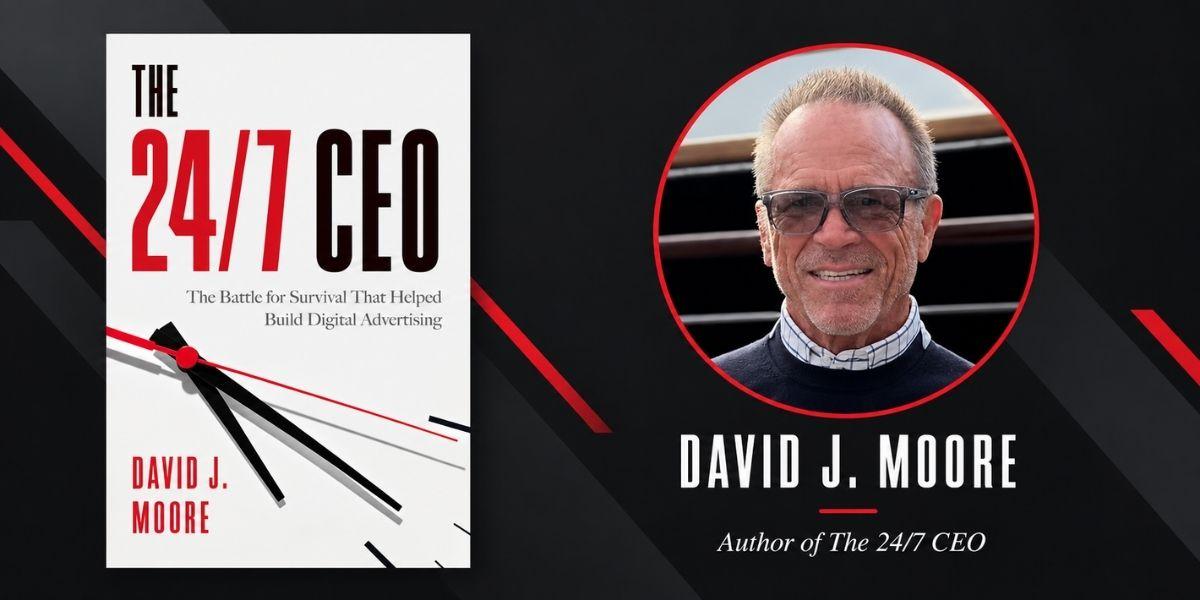
The dot-com survival story told with the humor it actually required. The 24/7 CEO by David Moore is available now on Amazon.