




By: Dar Downling
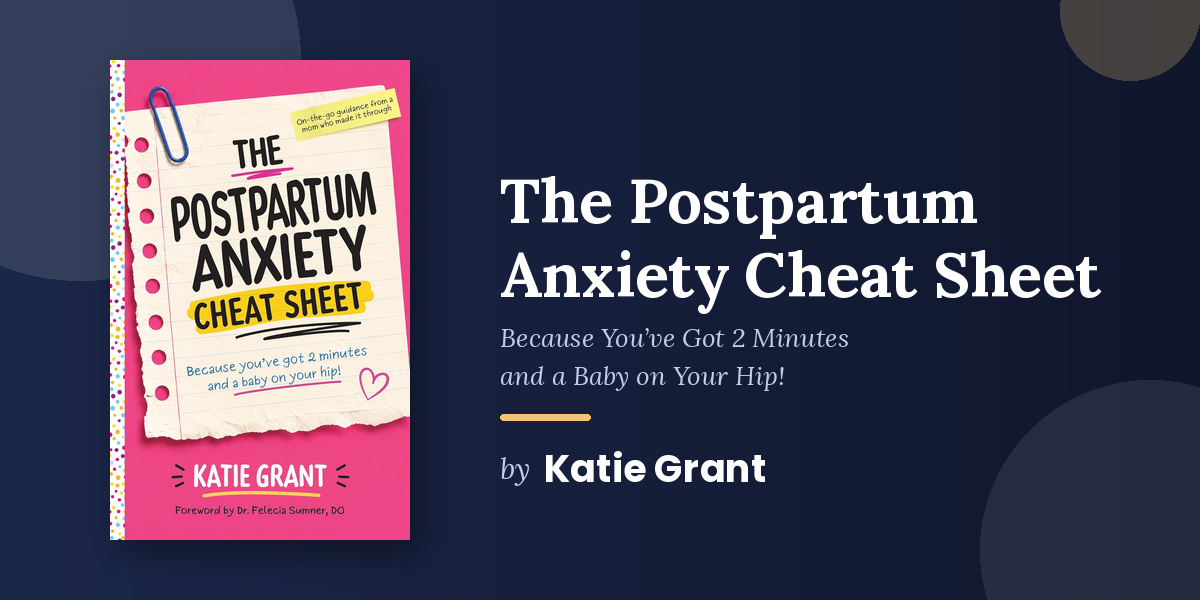
There is a specific irony at the heart of most postpartum anxiety resources that Katie Grant has identified and addressed with remarkable directness in The Postpartum Anxiety Cheat Sheet: the books and workbooks and guided programs designed to help new mothers manage anxiety are almost uniformly built around the assumption that the new mother has time to sit down, read at length, complete exercises, and engage with extended therapeutic frameworks. She does not. She has two minutes and a baby on her hip, and the anxiety she is trying to manage does not wait for the baby to nap and the house to be quiet and the conditions to be ideal before making itself felt. Grant’s book, as its subtitle announces with the kind of honest self-awareness that most health resources never quite achieve, was built for the actual conditions of new motherhood rather than for an idealized version of them.
That commitment to the real rather than the ideal is the quality that makes The Postpartum Anxiety Cheat Sheet genuinely useful rather than theoretically sound, and it is visible in every structural and stylistic choice Grant has made throughout. The information is organized for quick access rather than linear reading, designed to be consulted in the specific and fleeting moments when a new mother has both the need and the barely available capacity to engage with it. The tone is warm and direct and entirely free of the clinical distance that makes many mental health resources feel more alienating than supportive. And the content itself, addressing the racing thoughts and the physical symptoms and the intrusive worries and the specific fears that postpartum anxiety generates in the daily reality of caring for a newborn, is rendered at the level of specificity that makes a new mother feel genuinely seen rather than approximately described.
Postpartum anxiety affects between thirteen and forty percent of postpartum women, a range that reflects both the genuine prevalence of the condition and the genuine inconsistency of how it is recognized and addressed by the healthcare systems that serve new mothers. Many of the women experiencing it do not have a name for what they are going through, do not recognize the racing heart and the inability to sleep when the baby sleeps and the intrusive thoughts as symptoms of a specific and recognized condition rather than evidence that they are failing at motherhood. Grant addresses the recognition dimension of the condition alongside the management dimension, giving new mothers both the language to understand what they are experiencing and the specific, practical, genuinely doable tools to begin addressing it.
The cheat sheet format is the book’s most important and most generous structural choice, because it acknowledges without apology that the new mother reading this book is not sitting in a therapist’s waiting room with time to spare. She is managing a human being who cannot yet manage themselves, and the anxiety she is experiencing is happening in that context, not in a quiet space conducive to extended reflection. Grant has built her book for the context rather than for the reflection, and that choice makes all the difference between a resource that new mothers buy and a resource that new mothers actually use.
If you are navigating postpartum anxiety in the actual conditions of new motherhood, with the baby on your hip and the two minutes you can spare, The Postpartum Anxiety Cheat Sheet by Katie Grant is the resource that was built specifically for you. Grab your copy on Amazon today and discover that help does not have to wait for the conditions to be perfect because it was finally written for the conditions that actually are.
Disclaimer: This article is provided for general informational and educational purposes only and does not constitute medical, mental health, psychological, or therapeutic advice. Postpartum anxiety and related symptoms can vary from person to person and may require evaluation and treatment from a qualified healthcare or mental health professional. The information and resources discussed in this article, including The Postpartum Anxiety Cheat Sheet, are not intended to replace professional assessment, diagnosis, treatment, or emergency care. Readers experiencing persistent, severe, or concerning symptoms should consult an appropriately licensed healthcare professional. Any discussion of statistics, symptoms, coping strategies, or wellness practices is provided for general information and should not be interpreted as a guarantee of effectiveness or suitability for any individual.