



By Bill Broderick
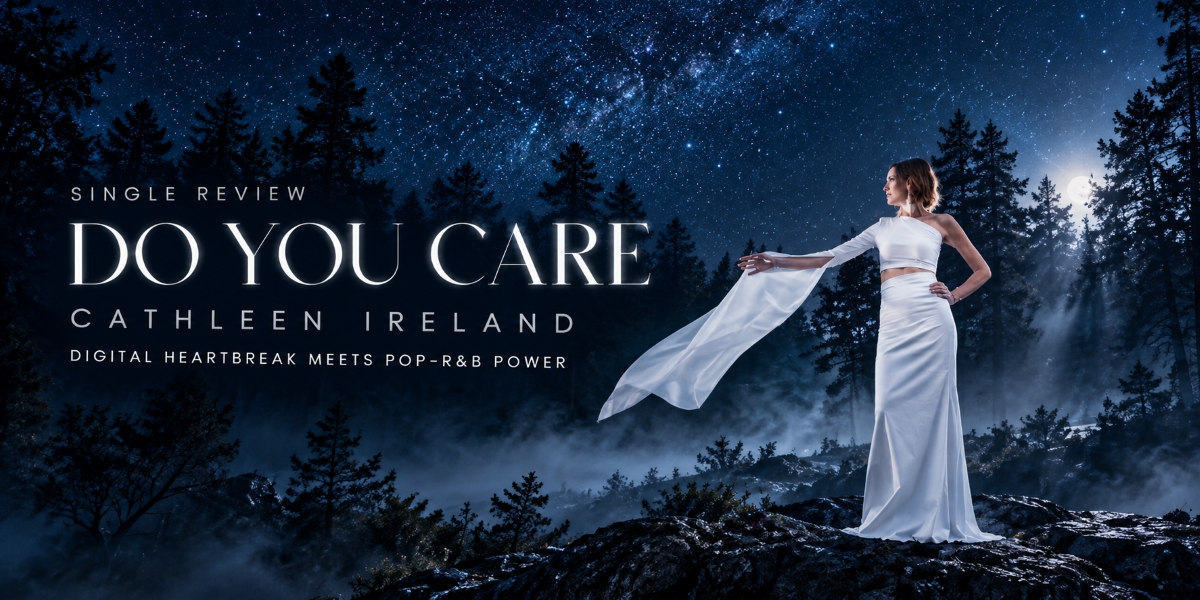
Cathleen Ireland understands that some of the most painful breakups no longer arrive through a final conversation. They happen through blocked numbers, deleted photographs, unanswered messages and social media profiles that suddenly become inaccessible. On her single “Do You Care,” the Pittsburgh singer, songwriter and producer transforms that distinctly modern form of rejection into a polished pop-R&B track filled with longing, disbelief and emotional tension.
The song’s premise is immediately recognizable. Ireland’s narrator has been blocked and ghosted by someone she still misses, leaving her to sort through memories without the closure of an explanation. Rather than presenting herself as fully healed or defiantly independent, she admits that she remains emotionally attached. That vulnerability gives“Do You Care” much of its power.
Ireland introduces the conflict with rhythmic vocal repetitions that turn the language of digital disconnection into memorable pop phrasing. References to being blocked, ghosted and removed from someone’s online life could easily have sounded gimmicky, but Ireland uses them as evidence of a larger emotional problem. The technology may be contemporary, yet the wound underneath it is timeless: one person has left while the other is still trying to understand what happened.
The chorus centers on the title question, repeating it until it carries several meanings at once. “Do You Care” can be heard as a request for reassurance, an accusation against the absent partner or a final attempt to reopen communication. Ireland connects the question to breathlessness, disbelief and the unsettling possibility that two people who once shared an intimate bond may never speak again.
It is a direct hook, and that simplicity works in the song’s favor. Ireland does not overcrowd the chorus with explanation. Instead, she lets the repeated question expose the narrator’s emotional state. Each return makes the uncertainty feel more urgent, as though she is hoping that asking one more time might finally produce an answer.
Ireland’s performance balances experience with vulnerability. Her voice has the control and presence of a seasoned vocalist, but she never allows technical polish to create emotional distance. She sounds wounded without becoming melodramatic and persistent without turning the song into an anthem of revenge. The restraint is especially effective because the lyric contains emotions that could easily be oversold.
One of the song’s most revealing ideas is the narrator’s wish to become friends again. On the surface, the request sounds modest, but Ireland’s delivery suggests that friendship is not the full extent of what she wants. It is the smallest connection she believes she can reasonably request. The emotional compromise captures a familiar stage of heartbreak: bargaining for limited access to someone because complete separation feels unbearable.
Elsewhere, the narrator admits that she is imperfect while insisting that she was honest and faithful. That distinction adds maturity to the writing. Ireland does not claim that she made no mistakes; she argues that her imperfections did not justify being erased without a conversation. The line also broadens the song beyond a simple complaint, acknowledging the complicated responsibilities that exist inside any relationship.
The production supplies a sleek, groove-conscious setting for the lyric. Contemporary pop textures and R&B instincts give the record radio-ready momentum, preventing its sadness from settling into a conventional ballad. The beat continues pushing forward even as the narrator remains trapped in the past. That contrast creates one of the single’s most effective dynamics: the track moves confidently while the person at its center cannot.
Repeated syllables throughout the verses function as both musical hooks and signs of psychological strain. They sound like thoughts catching in the singer’s throat, conveying the disorientation that follows an abrupt ending. Ireland turns emotional hesitation into rhythmic structure, allowing the song’s anxiety to become part of its commercial appeal.
“Do You Care” also benefits from what it refuses to provide. There is no response from the former partner, no dramatic reconciliation and no sudden declaration that the narrator is better off alone. The song ends within the same uncertainty that inspired it. That lack of resolution feels honest. In real life, being ghosted rarely produces a satisfying final scene.
Following a career marked by songwriting recognition, independent music honors and an expanding visual portfolio, Ireland continues to demonstrate an ability to connect accessible production with emotionally detailed storytelling. Her experience can be heard in the song’s economical construction: a clear premise, a persistent hook and a vocal performance that knows when to push and when to hold back.
With “Do You Care,” Ireland does not attempt to solve heartbreak. She captures the moment when the pain is still active, the memories still physical and the unanswered message still waiting. It is contemporary pop built around an old human fear, that someone who once knew everything about you may no longer care enough to speak.