




By: Brenda Myles
Carol Mitchell’s A Good Haunting: Stories moves through myths, ghosts, transformation and immortality, but one of its most unsettling ideas is rooted in a real-world concern: what happens to vulnerable island communities as climate change intensifies.
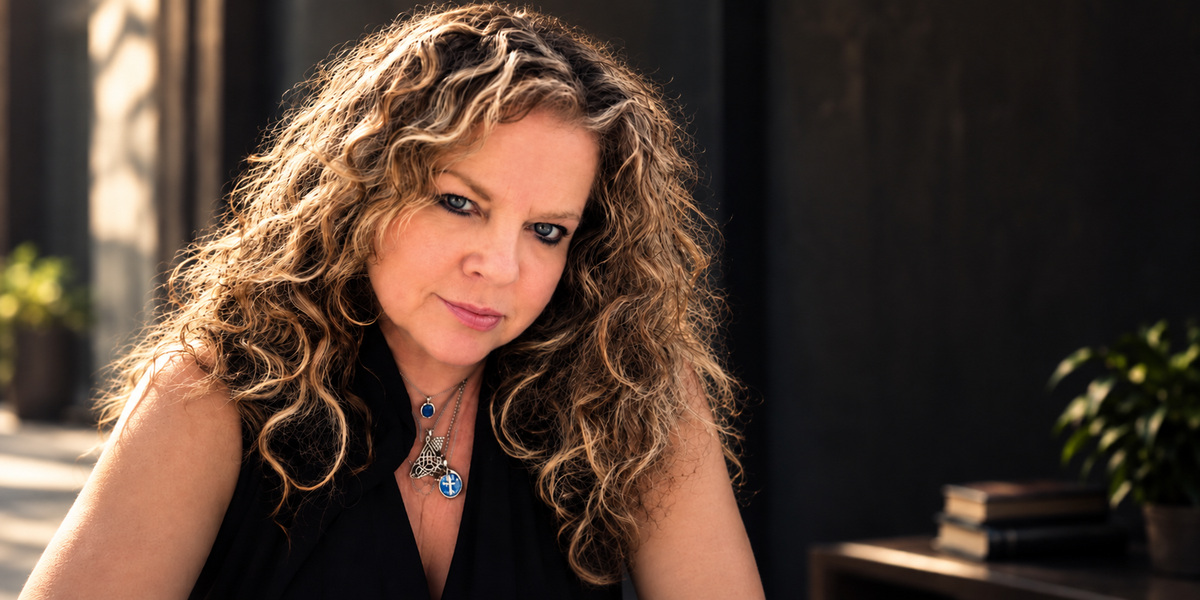
Mitchell is the author of A Good Haunting, the novel What Start Bad a Mornin’, and nineteen books for children. Her short stories and book reviews have appeared in numerous journals. She holds an MFA, is a fellow of the Virginia Center for the Creative Arts, and teaches writing while working on a new novel.
The nine stories in A Good Haunting are speculative, but they remain connected to Caribbean histories, cultures and everyday lives. The collection ranges across the Caribbean, Europe, Africa and the United States. It blends magic, myth and realism while exploring grief, motherhood, death, betrayal, love and home.
“The Sunset Toll” brings those interests into a climate-focused future. The story imagines a Caribbean island at the edge of survival. In the book’s description, members of the last community on Earth disappear one by one until only three people remain, trying to hold on to hope while questioning the forces keeping them there.
For Mitchell, the speculative scenario is linked to the present vulnerability of island nations.
“Small Island Developing States (SIDS) like my own are experiencing more frequent and more intensely damaging weather events that can be linked directly to climate change,” Mitchell said. “We’re more vulnerable because of our size and reliance on imports.”
Mitchell also points to an imbalance between the scale of the impact on island communities and the influence those communities may have when global climate decisions are made.
“The weight that our voices carry at the table when decisions are being made about addressing climate change often does not match the impact we are experiencing,” she said.
That is where storytelling becomes part of the conversation. Mitchell does not present fiction as a substitute for policy or science. Instead, she sees narrative as a way to keep climate issues present in readers’ minds and to make the people facing those risks more difficult to ignore.
“Storytelling is just one way to keep issues related to climate change on people’s minds,” Mitchell said.
The stakes, in her view, include both physical survival and cultural memory. Stories can argue for protecting lands and ways of life, but they can also preserve the complexity of communities if environmental change eventually makes some places impossible to inhabit.
“I see it as crucial that authentic stories of the regions and groups most impacted by climate change be told in ways that connect us to the rest of the world and aim at an inclusive future,” she said, “whether the goal is to position our lands and ways of life as worth saving, or to shield our spaces from erasure even after they are no longer viable places to live.”
That emphasis on authenticity runs throughout the collection. Mitchell’s settings include islands from St. Kitts to Trinidad, yet the stories avoid presenting the Caribbean solely through familiar tourism imagery. Everyday life remains visible even when the fantastical enters.
“Often people from larger countries find it difficult to see past the playground of sun, sea, and sand that our islands offer,” Mitchell said. “That’s not their fault. In the pursuit of tourism, we have often perpetuated those images ourselves.”
Mitchell wants the literature to move beyond that limited frame, particularly as climate change alters how the world thinks about island regions. A place marketed as an escape for visitors is also a home, a cultural landscape and a community with its own internal concerns.
“It’s important to me that Caribbean people be seen as real people, not the caricatures that are often portrayed in literature,” she said.
Speculative fiction gives Mitchell a way to imagine the consequences of current pressures without reducing Caribbean characters to symbols of disaster. Even in “The Sunset Toll,” where the future is grim, the focus remains on people trying to maintain hope and understand their circumstances.
“We are not writing for a foreign gaze,” Mitchell said. “We are writing books that reflect our universally shared desires and fears as human beings.”
That emphasis keeps the threatened island from becoming a distant abstraction. Climate vulnerability, in Mitchell’s telling, is also about memory, belonging and the possibility of losing a home whose cultural meaning cannot simply be recreated somewhere else. The collection makes climate change part of that shared human story while insisting that Caribbean communities speak from the center of their own narratives.
A Good Haunting is available on Amazon.