


By: Vivian Lin
Through personal photographs and community storytelling, One Photo, One Story explores how everyday lives become part of our shared history.
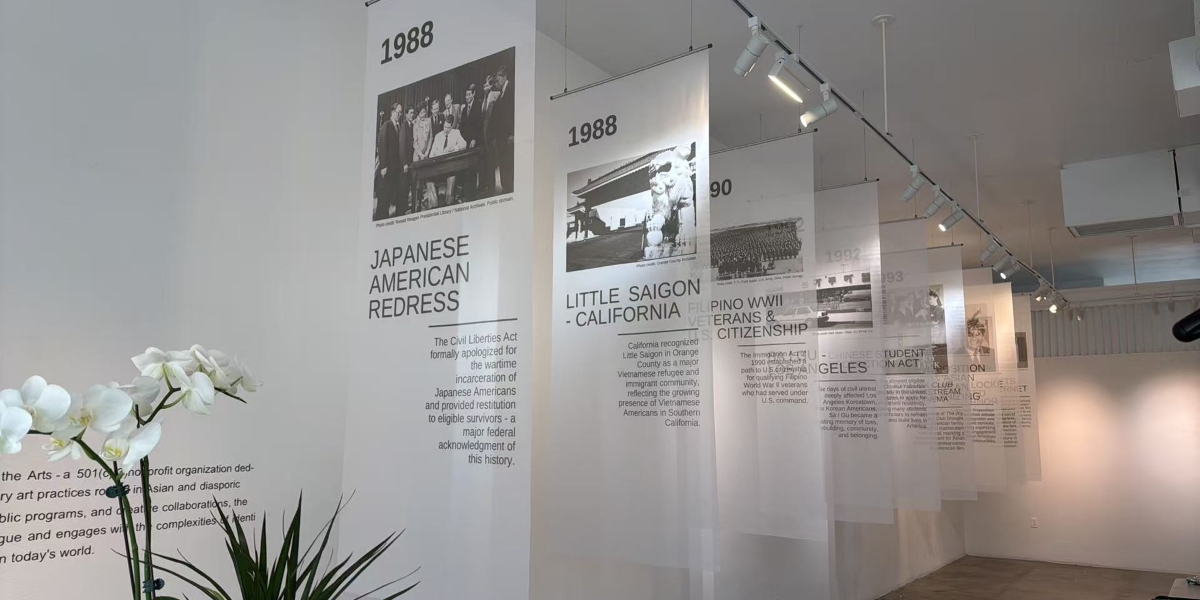
As artificial intelligence accelerates the creation and circulation of images, a community initiative in San Marino, California, is inviting people to slow down and revisit photographs that have taken decades to acquire their meaning.
One Photo, One Story, initiated and developed by Emily Zhang, Program Director of H Foundation for the Arts, brings together personal photographs and the memories behind them. Beginning with Asian immigrant communities, the project explores how ordinary experiences, family gatherings, departures, first homes, and everyday encounters contribute to a larger understanding of migration and belonging.
For the nonprofit arts and cultural organization, the initiative reflects an ongoing effort to create meaningful connections through cultural participation. For Zhang, it begins with a belief that people do not need extraordinary biographies to have stories worth preserving.
The project’s opening chapter, Before the Cloud, 1988–1998, focuses on a period when photographs were generally captured on film, developed as prints, and kept in albums, envelopes, or boxes. A photograph could travel across borders inside a suitcase or arrive in the mail, carrying news of family members living far away.
With a limited number of exposures, taking a photograph often involved a deliberate choice. Someone decided that a person, a place, or a moment deserved to be remembered. Yet the images that become most meaningful over time are not always those taken on special occasions. An ordinary afternoon can reveal details that later disappear: the interior of a childhood home, a familiar storefront, or the way a family gathered around a table.
For immigrants, these photographs can connect different chapters of a life. An image taken before departure may show people who had no idea they would eventually settle in another country. A photograph from the early years in the United States may carry memories of uncertainty, financial pressure, friendship, or the excitement of starting again.
One Photo, One Story makes room for that complexity. Its interest in the past encompasses both the difficulties people faced and the resourcefulness, humor, and relationships through which they built their lives.
Zhang has shaped the initiative around a simple form of participation: sharing a personal photograph with a short written story. The image opens the conversation, while the accompanying account reveals what a viewer cannot learn from the photograph alone. Who was there? Why did the moment matter? What happened afterward?
Her work connects the project’s conceptual direction with community outreach and public programming. By organizing submissions into successive chapters, she is developing a framework through which individual memories can be preserved and encountered together, while allowing contributors to retain their own voices.
This approach also gives H Foundation for the Arts a way to bring cultural programming closer to everyday experience. Its San Marino space becomes a meeting point where participants can recognize something familiar in another person’s story or gain insight into a life different from their own.
On November 7, 2026, the foundation will host a community storytelling gathering with photo contributors, invited guests, and visitors. Scheduled guests include stand-up comedian Cat Ce, Korean American filmmaker and writer Eddie Kim, and Juily Phun, an associate professor at California State University, Los Angeles, and founder of the AAPI Oral History Project.
Contributors will also be invited to share the stories behind their photographs. Bringing these voices together extends the initiative beyond collecting material: it creates opportunities for conversation across generations and backgrounds.
The project’s next chapter will focus on 1998–2008, continuing its exploration of immigrant life through another decade of change. Zhang’s longer-term goal is to bring the collected photographs and stories together in an exhibition in 2028, making them accessible to a wider public.
As the collection grows, its value will come from the connections between individual accounts: how different people experienced arrival, found work, maintained relationships, and established a sense of home.
A family photograph may never have been intended as a historical document. Shared alongside the story of someone who remembers it, however, it can reveal how an era was lived. Through One Photo, One Story, Zhang and H Foundation for the Arts are creating a public space for those personal chapters, and for the people who carry them.
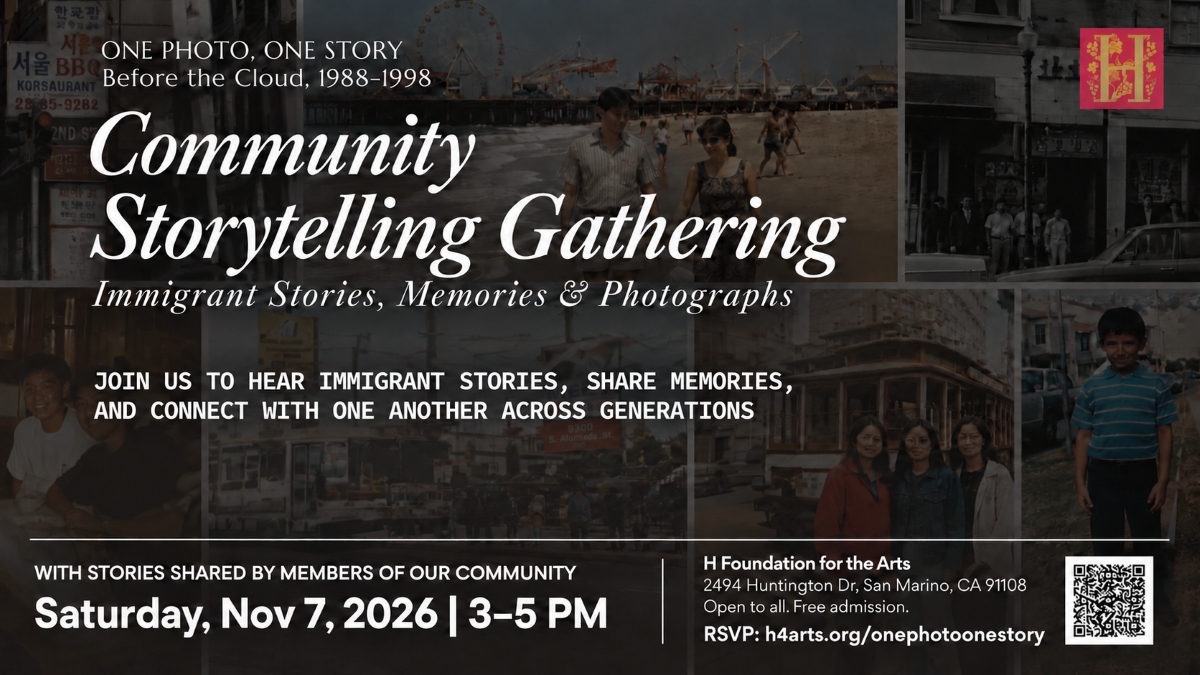
To learn more about One Photo, One Story and the November 7 community gathering in San Marino, visit h4arts.org/onephotoonestory.