




The software as a service (SaaS) industry has experienced an extended period of investment cycles, rapid growth and development, and a significant emphasis on acquiring a larger percentage of the market share in the last decade. Many companies in this space have focused primarily on growing their business by tracking growth-related metrics and raising capital to continue expanding. Unfortunately, some companies sacrificed their long-term financial health in exchange for some level of short-term growth momentum, and other companies have done the same during the transition from 2021 through 2025.
Investors, customers, and SaaS operators have become increasingly concerned with sustainable economics, and many terms such as “sustainable practices,” “generating recurring revenue,” “operational efficiency,” and “cash flow discipline” have become the most common language in the SaaS marketplace. This change represents an overall transition to the view of digital platform scaling without the use of rapid, continuous external capital, creating additional opportunities for companies to better manage their financial health through the development of sustainable financial strategies.
Within this environment, Circle became one of several platforms drawing attention for its approach to long-term sustainability. Established in 2019 by Sid Yadav, Rudy Santino, and Andrew Guttormson, Circle operates in a competitive field where creators, educators, and organizations increasingly need community-oriented digital spaces. Most platforms in this category invested heavily in outreach and incentives to attract users. Circle instead pursued an approach based on recurring revenue and controlled operational spending. This strategy aligned with the broader shift in the SaaS sector in which steady growth and disciplined budgeting became more valued among analysts and investors.
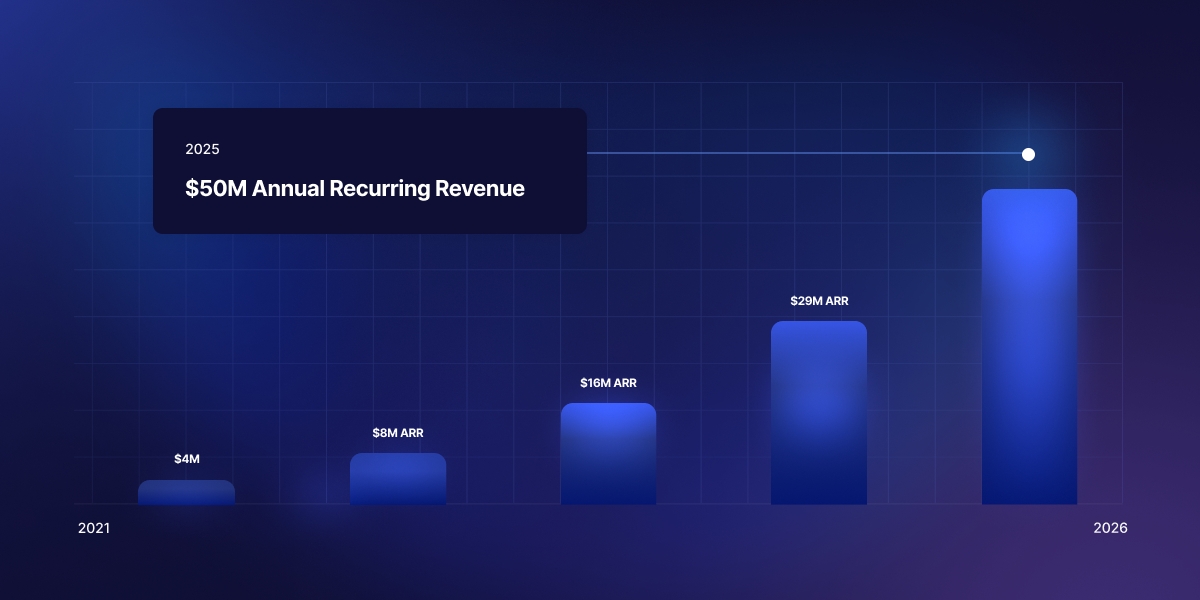
A key part of Circle’s trajectory has been its ability to exceed fifty million dollars in annual recurring revenue. The company reported this figure in 2025, marking an important milestone for a platform functioning within the creator technology landscape. Annual recurring revenue, often referred to as ARR, is a central metric for subscription-based businesses because it reflects predictable income generated from users. Circle’s progression toward this level placed it within a group of SaaS companies that achieved significant ARR without frequent fundraising rounds after their early growth phase. The company last raised capital in 2021, yet continued to expand during a period in which many similar platforms required additional funding to maintain operations.
Alongside ARR, Circle’s Rule of 40 score has been highlighted. The Rule of 40 is a common benchmark used to evaluate SaaS companies by combining profit margin and revenue growth into a single number. Circle reported a score of 64 in 2025. Scores above 40 usually indicate strong financial performance because they reflect a balance between efficient spending and continued revenue expansion. Achieving a figure of 64 suggests that Circle operated with a growth rate and financial margin higher than many of its peers that relied more heavily on venture capital.
Another figure that has contributed to coverage of Circle’s financial path is its reported 250 million dollars in gross merchandise value. GMV represents the total value of transactions processed across the platform. Most of the activity on Circle involves creators and organizations who use the system to manage memberships, courses, learning communities, and events. GMV does not equal revenue for the company, but it illustrates the scale of economic activity facilitated by the platform. Reaching this number between 2019 and 2025 indicated a steady rise in usage across a variety of digital learning and creator communities.
Circle has stated that it sustained annualized growth rates of around 100 percent during the years following its 2021 fundraising round. Sustaining that level of expansion without additional outside capital is uncommon within community technology platforms, which often require large budgets for marketing and infrastructure. Commentators have connected this pattern to Circle’s focus on cash flow-positive operations. A cash flow positive model means the company generates enough operating income to cover its expenses. Maintaining this status over several years allowed Circle to invest in product development and staffing without returning to investment markets for supplemental capital.
This financial structure influenced how Circle expanded its team. By 2025, the company reported more than two hundred employees. A notable part of this growth was the hiring of more than thirty roles directly from operating revenue rather than funds derived from venture investment. Many SaaS companies undergoing similar growth cycles rely on external financing to expand headcount because hiring represents one of the largest ongoing expenses. Circle’s ability to support new roles through its existing revenue base indicated a relatively stable and predictable income stream from its subscription model.
The company’s operational strategy also shaped how it approached product development. Circle continued to scale its platform features between 2021 and 2025, adding tools for community management, website building, AI agents, and email marketing as well. Expanding these capabilities required ongoing engineering investment. According to the company’s public data, these investments were funded through operational income rather than additional equity rounds. In the broader SaaS environment, product development funded through revenue rather than investment capital is often interpreted as a marker of measured growth rather than hyper-accelerated scaling.
The shift toward recurring revenue stability and cash flow positive operations stands in contrast with the earlier decade’s emphasis on rapid user acquisition and high burn rates. Circle’s model has been described as part of a broader recalibration in which companies demonstrate long-term viability by balancing expansion with operational discipline.
As of late 2025, Circle operates from its headquarters in New York City and continues to report that its subscription-based model is the foundation of its financial structure. The company’s trajectory since its 2019 founding by Sid Yadav, Rudy Santino, and Andrew Guttormson followed a pattern of measured growth supported by recurring revenue, stable margins, and continued product investment. That path placed Circle within broader discussions about long-term sustainability in subscription software and the evolving standards for responsible expansion in the sector.