



Failures in backup power systems can have severe consequences. In hospitals, generator outages can threaten patient safety. In data centers, power disruptions may cost millions in lost operations. Telecommunications failures can isolate entire communities.
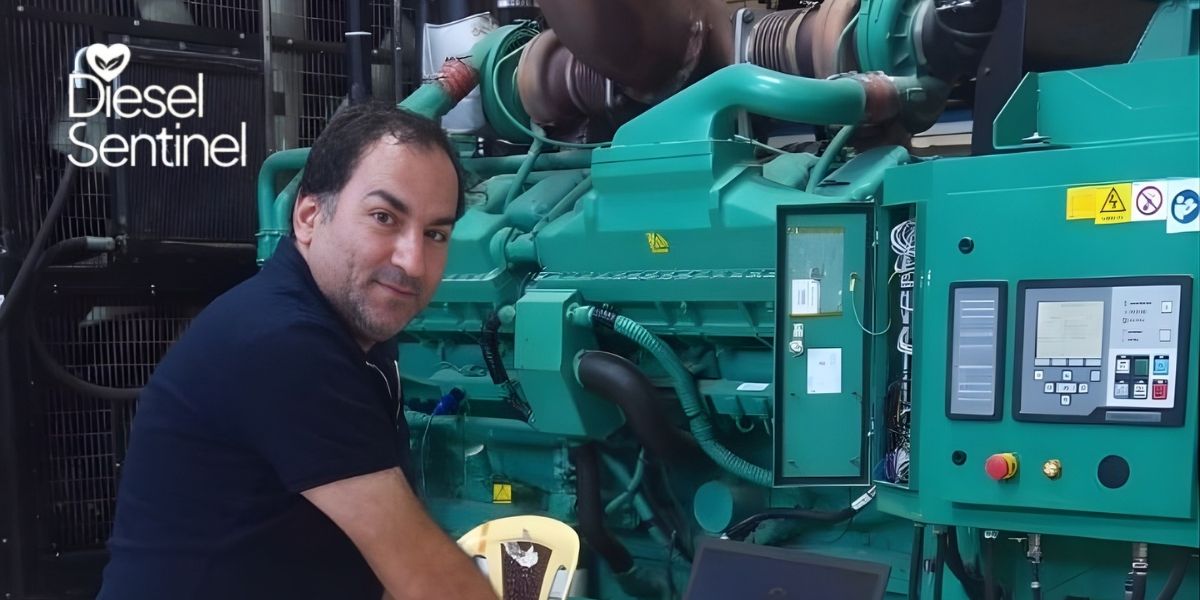
For more than 15 years, Iranian engineer Mohammad Javad Mohammadi Taghiabad worked on the front lines of these emergencies, repairing diesel and gas generators used in critical infrastructure.
During years of hands-on maintenance work on equipment manufactured by companies such as Perkins, Volvo, Cummins, MTU, and MAN, Taghiabad began to notice a recurring pattern: many generator failures were not sudden. Instead, they were preceded by subtle changes in operational behavior.
Small variations in temperature, vibration, or fuel consumption often appeared weeks or even months before major mechanical failures occurred.
Recognizing Patterns Before Failure
Experienced technicians often recognize early warning signs that automated alarm systems overlook.
A slight shift in fuel efficiency might indicate a developing issue with filtration systems. Changes in vibration levels can suggest emerging mechanical stress within engine components. Variations in temperature profiles may signal cooling system inefficiencies.
While these signals are often visible in operational data, traditional monitoring systems typically trigger alerts only after parameters exceed critical thresholds.
Taghiabad concluded that many generator failures could potentially be avoided if these early patterns were systematically detected and analyzed.
This insight led to the development of Diesel Sentinel, an artificial intelligence platform that identifies potential failures before they occur.
From Reactive Maintenance to Predictive Monitoring
The technology behind Diesel Sentinel is based on a proprietary Predictive-Adaptive-Diagnostic (P-A-D) Engine, an AI system trained to recognize operational patterns associated with generator performance and failure.
Unlike standard monitoring systems that simply collect and display data, the P-A-D engine analyzes trends and correlations across multiple variables, identifying conditions that may indicate developing mechanical problems.
The system integrates with commonly used generator controllers, enabling facilities to continuously monitor equipment performance without replacing existing infrastructure.
By identifying potential issues in advance, operators can schedule maintenance during planned downtime rather than responding to unexpected breakdowns.
Reducing Downtime Across Critical Infrastructure
The practical implications of predictive generator monitoring extend across several industries.
Hospitals depend on backup power systems to support life-saving equipment and essential medical services. Unexpected generator failure during an outage can have serious consequences for patient care.
Data centers also rely heavily on backup generators to ensure uninterrupted operation. Even short interruptions in power supply can result in significant financial losses and operational disruption.
Telecommunications networks face additional challenges, particularly in remote areas where service towers may be far from maintenance teams. In such cases, diagnosing generator problems remotely can significantly reduce response times and operational costs.
With intelligent monitoring systems, many technical issues can be identified and diagnosed without requiring immediate on-site inspections. Maintenance teams can prioritize critical problems while postponing non-urgent servicing until scheduled visits.
Technology Built on Field Experience
Diesel Sentinel’s development reflects a broader trend in industrial technology: the integration of machine learning, cloud computing, and Internet of Things (IoT) connectivity into traditional infrastructure.
Cloud platforms allow centralized monitoring of generators across multiple sites. Machine learning algorithms can analyze large datasets to identify patterns invisible to human observers. IoT connectivity enables real-time data collection from equipment operating in remote locations.
What distinguishes Diesel Sentinel’s approach is the domain expertise embedded within its algorithms. The system was trained using operational insights gained from more than a decade of fieldwork servicing generators in real industrial environments.
This experience enabled the developers to encode practical diagnostic knowledge into software capable of continuously monitoring equipment.
Toward Predictive Infrastructure Management
Across many industries, organizations are gradually shifting from time-based maintenance schedules to condition-based monitoring.
Predictive maintenance strategies aim to service equipment only when necessary, reducing unnecessary maintenance while preventing costly failures.
For facilities operating critical infrastructure, this approach can improve reliability, reduce operating costs, and extend equipment lifespan.
As digital technologies continue to transform industrial operations, intelligent monitoring platforms may increasingly become a standard component of modern infrastructure management.
In sectors where power reliability is essential and downtime is costly, the ability to anticipate problems before they occur could fundamentally reshape how backup power systems are maintained.