



In dark fantasy, a fight is never just blades and bruises. It is a test of culture, a clash of codes, and a public declaration of who has the right to act inside a living world. Action without consequence is noise. Action with purpose is a plot. Readers remember a duel when it changes who may cross a bridge at dusk, which tavern will pour for whom, and which oath still holds weight in the morning.
What Makes a Fight Meaningful in Dark Fantasy
A fight works when it serves the story and the setting. Give the scene a clear objective: rescue, retrieve, escape, confess. Place it in terrain that enforces choice, doors, windows, blind corners, and weather that shifts advantage. Limit the power on the field so skill and cost matter. Then show aftermath that alters the social map, a new scar to reputation, a favor now owed, a route burned for good. When these elements align, readers feel the contest in the chest, not just in the eyes.
Culture Turns Space Into Pressure
In dark fantasy, culture decides how violence echoes. If mourners have the right of way on the eastern bridge at dusk, then a duel near that bridge is sacrilege, or strategy, or both. If a guildmark earns safe passage in certain alleys, then drawing blood there stains more than stone; it stains status. If a market closes at the third bell except on debt day, then a skirmish at the second bell carries a different meaning than one at the fourth. Local rules are not trivia. They decide who the crowd helps, which guards arrive, and how long rumors will run. Culture makes the setting breathe, then makes every swing of a blade move the plot.
Tactics Reveal Character and Code
Technique is voice. A cautious lead counts exits before steel leaves the scabbard. A proud rival refuses the easy strike because pride has rules. A loyal friend takes a cut to keep a promise intact. Small choices tell the truth, a stance that protects a partner, a feint that buys time for a civilian to slip away, a refusal to fight in a place where fighting is forbidden. Each decision aligns with a personal code and a public custom, which turns choreography into character.
Pacing That Carries Meaning, Not Just Motion
Short sentences quicken the pulse. Longer ones let dread accumulate. White space can act like a cut, each paragraph break a small gasp. End a beat early and let the implication finish the motion. Return two pages later and confirm the cost with one quiet detail, a sleeve pinned to hide a wound, a contract amended with new terms. Control signals respect for the reader, and respect builds trust.
Dialogue Under Pressure, Small Words With Sharp Edges
People do not lecture during a knife fight. They test. They barter time for questions. They drop a name that tilts the room because culture gives names weight. One whispered password can stop the wrong guard. One insult in the wrong dialect can start a riot. Let’s talk shape, tempo, and carry the social rules that make victory more than a body on the floor.
The Quiet Fight, Conflict Without Steel
Negotiation is a duel in slow motion. Track feints and blocks the same way, only with offers and silences. The objective remains clear. The ground rules are cultural: who speaks first, who must not speak at all, and what gift must be placed on the table before the next sentence can be said. Limits force creativity. Consequences linger. A lost argument might close a sanctuary, or demand a favor that will be hard to pay.
Why This Approach Keeps Readers Turning Pages
- Legibility, clear objectives, and visible rules let readers anticipate, then feel the thrill when the text challenges their prediction.
- Texture, culture, and consequence make every exchange feel lived in, not staged.
- Stakes, victory, and defeat reshape status, routes, and trust, which fuel the next chapter.
- Conversation, scenes grounded in custom, invite debate about what was wise or foolish, which spreads by word of mouth.
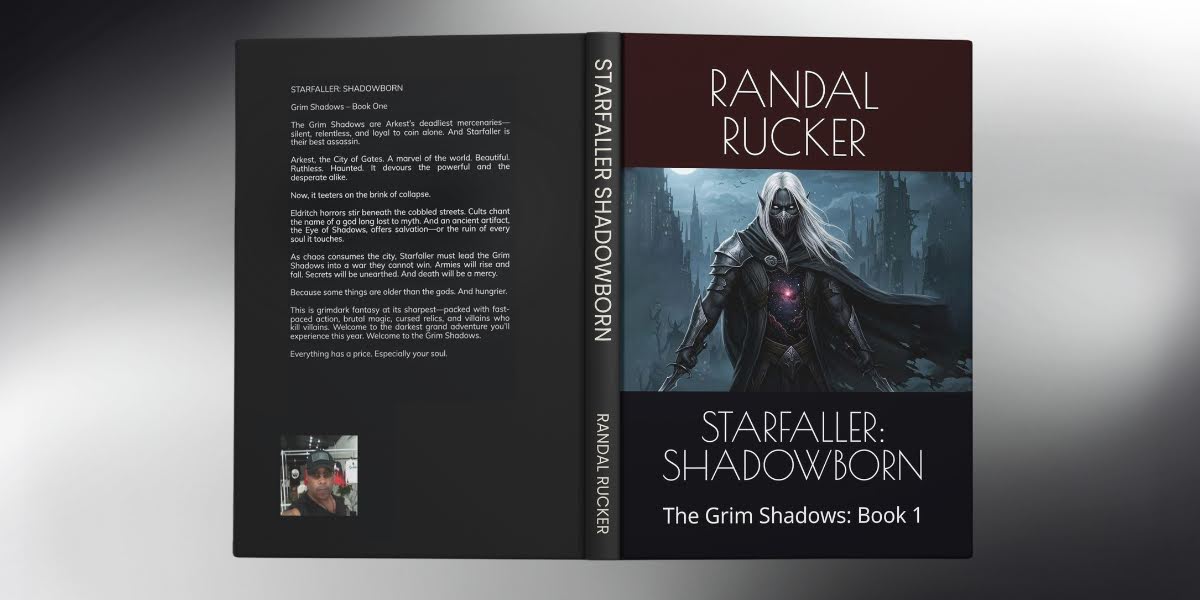
How STARFALLER: SHADOWBORN Handles Action
R.C. Rucker writes combat as a decision inside a world that watches. Weapons carry history, positions carry meaning, and local customs decide how hard the city pushes back. A blade may open a door, then close three others.
A single step across the wrong threshold can turn an ally into a witness, or a witness into an enemy. Expect competence with consequence, bonds tested in motion, and turns that pivot on cultural rules as much as on steel.
No spoilers here, only the suggestion that when the blade moves, the story, the city, and the ledger of loyalties all move with it.
Ready for Action That Changes Everything
Order STARFALLER: SHADOWBORN by R.C. Rucker today, then experience dark fantasy where every strike answers to the world that surrounds it. Choose your preferred retailer, or ask at your local indie bookstore.