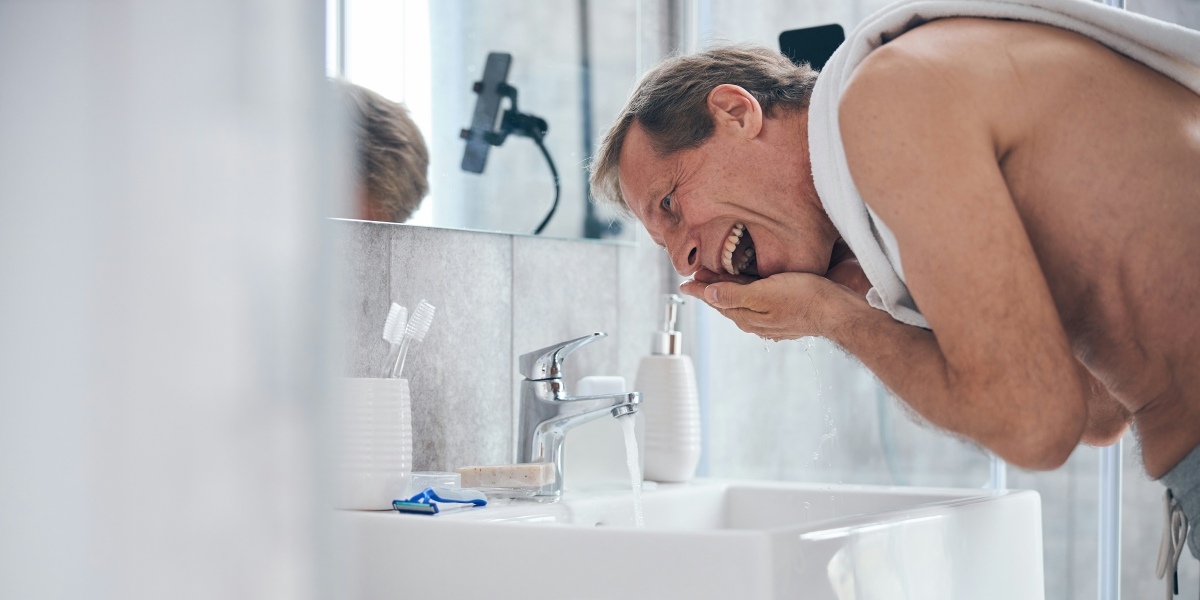





Most people brush their teeth twice a day and assume they’ve done the job. But a toothbrush only covers about 60 percent of the tooth’s total surface area. The rest, the tight gaps between molars, the pockets tucked under the gumline, the awkward angles behind your back teeth, get missed entirely. And for a long time, the only real option for reaching those spots was string floss, which plenty of adults admit they barely use.
WaterDent is an oral care brand that makes a concentrated rinse formula designed to go inside water flosser reservoirs. You add a small amount of water to the tank, turn the device on, and the pressurized stream delivers both the flushing action and the rinse in one step. The idea is not to replace anything in your routine but to make a tool you already own work harder.
The String Floss Problem Nobody Talks About
Dentists recommend string floss at virtually every checkup. And yet adherence rates tell a different story. Surveys consistently find that a large percentage of adults floss irregularly or not at all. The reasons are not mysterious. It hurts, especially for people with tight spacing or sensitive gums. It requires a specific kind of dexterity that not everyone has. And the payoff, if we’re being honest, feels invisible on a day-to-day basis.
Water flossers solve several of those pain points at once. A sixty-second pass covers the full mouth. The pressurized stream wraps around braces, reaches under bridges, and cleans along implant abutments without requiring the user to thread anything between tight contacts. People with periodontal sensitivity tend to tolerate a pulse of water far better than a filament scraping across inflamed tissue.
Retail trends back this up. Countertop and cordless water flosser models have seen consistent sales growth, and the repeat purchase rate on replacement tips suggests people are actually sticking with them. But once someone commits to using a water flosser daily, a natural follow-up question emerges: Is plain water really getting the most out of this device?
Why Plain Water Might Not Be Enough
Every water flosser on the market ships with the same basic instructions: fill the reservoir with warm tap water. Some users try adding a capful of mouthwash from the medicine cabinet, hoping for a cleaning boost. The problem is that standard mouthwash was never engineered for this. Foaming agents create a mess inside the reservoir. Certain compounds leave a sticky residue on internal tubing. Over months of use, seals and gaskets can deteriorate faster than expected.
WaterDent’s rinse was built specifically to avoid those issues. The formula dissolves cleanly, produces almost no foam, and does not leave film on the device’s internal components. When the water flosser activates, the pressurized stream pushes the rinse directly into interdental spaces and gumline pockets where plaque and food particles tend to accumulate.
Here’s the part that gets overlooked. Swishing mouthwash around your mouth relies entirely on you manually directing liquid into the right places. Some people do this well. Most don’t. A water flosser applies the same consistent pressure to every gap regardless of technique, which means the delivery of the rinse becomes far more uniform than anything you could achieve by swishing.
Oral Hygiene Meets the Wellness Mindset
Something interesting has happened in the consumer health space over the past few years. People who obsess over ingredient lists on their skincare, who track sleep scores on their watches, who debate the merits of different protein powders, have started paying the same level of attention to what happens in their mouths. Oral care used to sit in its own silo. It doesn’t anymore.
WaterDent slots into that shift without asking much of the consumer. There’s no new appliance to buy and no new step to remember. You add the rinse to the water flosser you already own, and the routine takes exactly the same amount of time it did before. For a market that rewards convenience above almost everything else, that matters.
What Makes This Different From Drugstore Mouthwash?
Walk down the oral care aisle at any pharmacy, and you’ll see dozens of mouthwash options. Nearly all of them assume the same usage model: pour into a cup, swish for thirty seconds, spit. Viscosity, alcohol content, flavoring, foaming agents, everything about the formula is calibrated for that brief gargle. Putting those formulas inside a pressurized device changes the physics of delivery in ways the product was never designed to handle.
WaterDent approached the formulation from the opposite direction. Rather than adapting an existing mouthwash for a new context, the brand started with the device itself. What concentration dissolves completely without leaving residue on seals? How does the rinse behave when delivered as a fine pressurized stream instead of sloshed around by the tongue? These are narrow, specific questions. But for a product that lives inside a water flosser, they’re the only questions that matter.
And device compatibility is not a minor detail. A decent countertop water flosser costs somewhere between sixty and a hundred dollars. Nobody wants to find out months into using a rinse that it has been quietly degrading the internals. WaterDent treats device safety as a baseline design constraint, which is a distinction worth paying attention to in a category where most products were never intended for pressurized use.
Fewer Steps, Better Follow-Through
The traditional oral care routine has three distinct steps: brush, floss, rinse. Each one uses a different product. Water flossers have already started merging two of those by combining the interdental cleaning action with a flushing rinse of water. When you add a purpose-built formula to the reservoir, the consolidation goes further. One device handles what used to require separate tools and separate minutes of your morning.
That consolidation has real consequences for long-term adherence. Behavioral research on habit formation is pretty clear on this point: every additional step in a routine increases the chance of skipping it. Tired at 11 p.m.? The three-step routine becomes a one-step routine pretty fast. Reducing friction is not just a convenience play. It is a compliance strategy.
WaterDent’s audience is specific. The brand is not pitching to people who have never owned a water flosser or trying to replace anyone’s toothbrush. It is focused on the consumer who already has the device on their counter and wonders whether there’s a better way to use it. For that person, a concentrated oral rinse built for the machine they already own feels like an obvious next move, not a new commitment.
Disclaimer: This article is for informational purposes only and is not intended as medical or dental advice. It does not replace professional diagnosis, treatment, or consultation with a licensed dental or healthcare provider. Consult your dentist or physician before making changes to your oral care routine.