
By: Jesus S
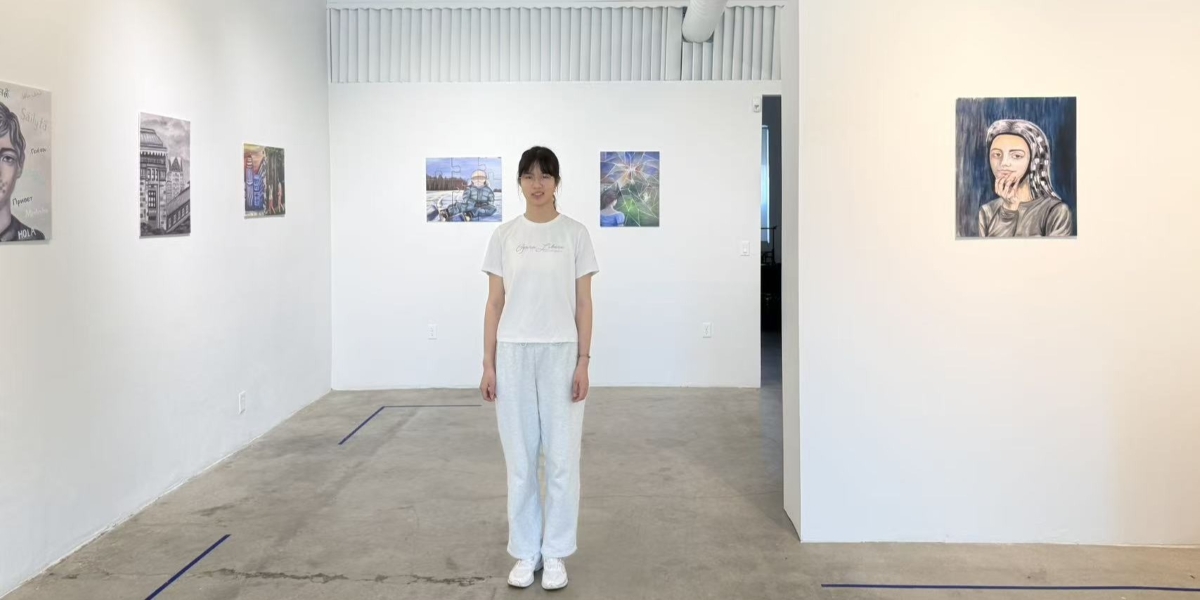
On a quiet afternoon in March, a small gallery lies on Huntington Drive. A street lined with walls resembling faces, curious to look around at what’s there; however, these faces aren’t quite whole. Some are split, while others are blurred, etching their faces into the stone as they slowly fade out. This is the work of Cindy Huang, an 11th-grade student at Western Reserve Academy. “Fragmented Memory”, her first solo exhibition, which ran at the H Foundation Gallery in Los Angeles.
The show, although small with little to no music and passerby, left an impression. Across the room of paintings, one sold, leaving a mark that my work moved someone to take one home. One sold painting was enough to make me know that I am doing something right.
What Are the Paintings About?
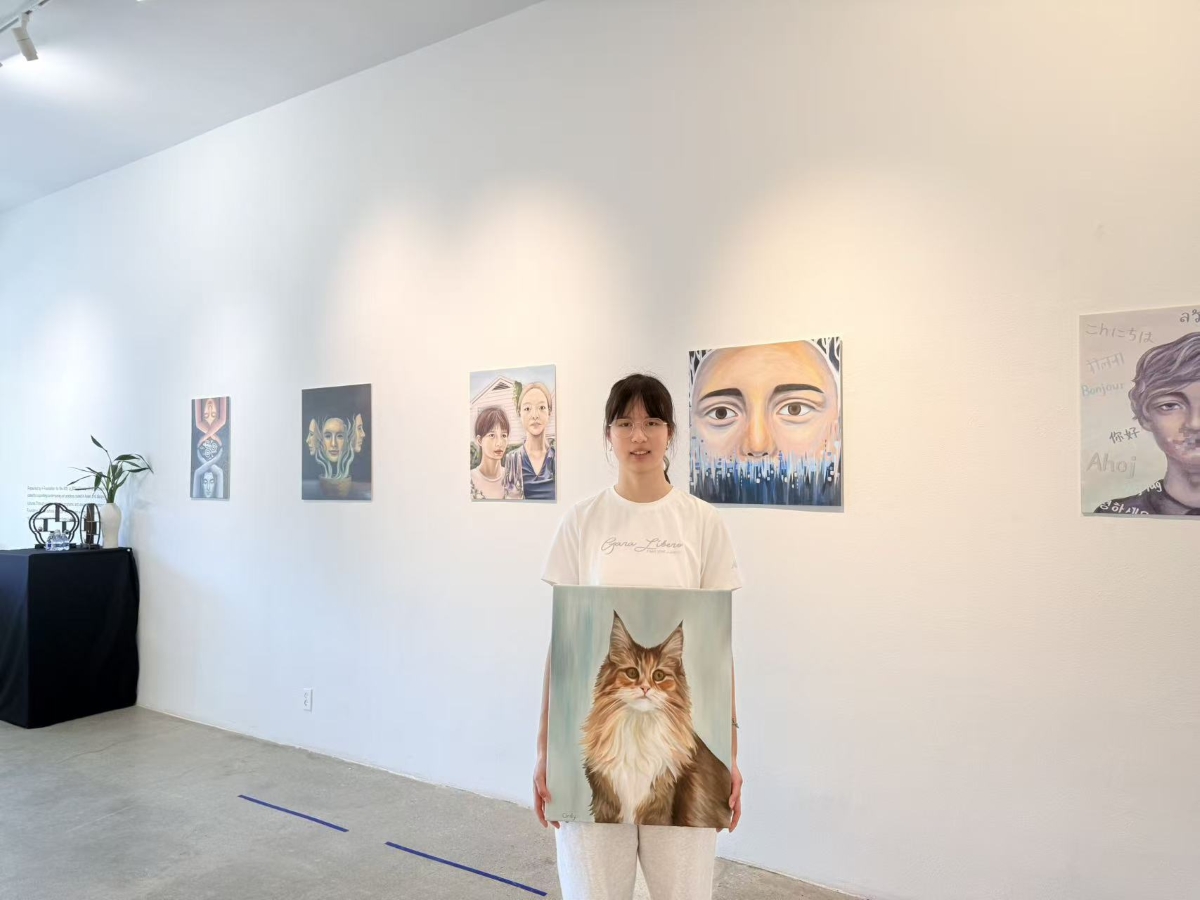
Cindy’s paintings are mostly portraits. Several of the people in the pieces don’t look like regular photos. In one piece, a single face shows several expressions at once as if it couldn’t decide how to feel at that moment. In others, parts of the body are missing or covered up, as if the individual has a secret.
She doesn’t spell out a clear story and instead lets the paintings ask questions:
What do we choose to remember? What do we forget without realizing? Who are we in between these pieces?
For Cindy, these questions aren’t left to be pondered but to be investigated. She lives in California but goes to school out of state. Between the back and forth, “It makes me think about identity and how one version exists there while the other goes somewhere else,” she states. “I am not pretending, and I notice how when I am somewhere else, I see other parts of me come out as well.”
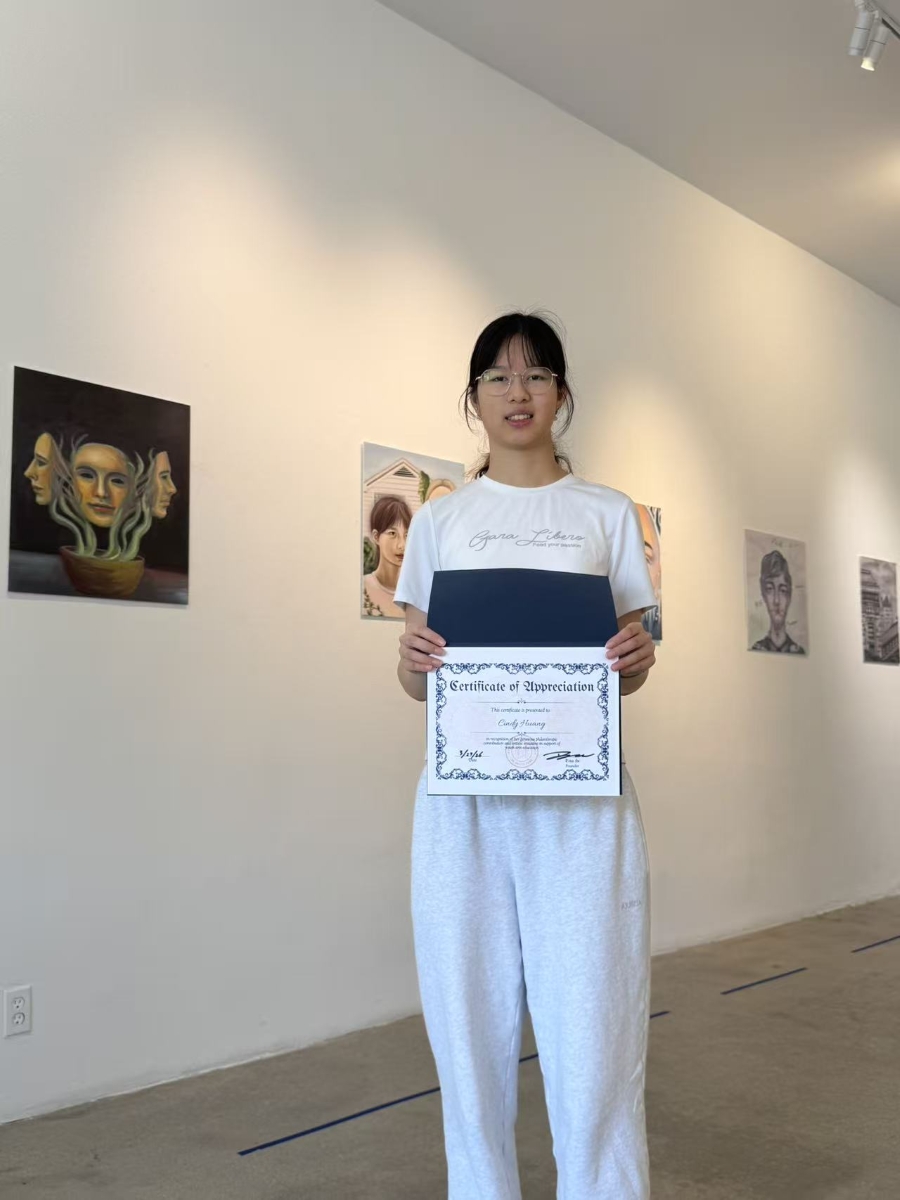
After the show, a private collector purchased one of the paintings. However, instead of keeping the money, Cindy donated every dollar back to the H Foundation, which is dedicated to helping emerging artists get their work seen. What makes the art stand out isn’t just the themes of memory or identity, but the slow, chewy idea of work itself. With more time for looking, contemplating, and reflecting, the individual has a better chance to see themselves change, just like the painting itself.
She is, in many ways, like the subjects she paints: still assembling, still becoming. Letting the pieces unite themselves.