




By: Mika Takahashi
If you’re researching Indonesia from Los Angeles, you’ll notice specific names come up repeatedly, often because travellers want reassurance that the operation behind the adventure is as solid as the scenery. When people mention Neptune Liveaboards Indonesia, they’re usually not looking for hype; they’re looking for an experience that feels organised, safe, and professionally run in a part of the world where the ocean sets the schedule and conditions can change fast.
I manage liveaboard operations in Indonesia and come from a hospitality mindset: great trips don’t happen by accident. They occur because someone has built routines, set expectations, and trained a crew to deliver consistently, even when the day doesn’t follow the original plan. This article is written for travel readers who want the reality of liveaboards in simple terms: what the week actually feels like, how to plan from LA, and how to make sure your Komodo experience is memorable for the right reasons.
Why Komodo Is The Liveaboard That Converts “Dream Trips” Into Real Trips
Komodo is cinematic: dragons on land, dramatic islands above water, and some of the most exciting underwater terrain in the region. But it’s also a place where distance and sea conditions matter. That’s why the Komodo diving liveaboard model exists in the first place, because it reduces the daily transfer chaos that can drain a trip.
From a hospitality perspective, liveaboards solve a familiar problem: commuting kills the experience. In a city like LA, you feel that instinctively. If your “best day” depends on crossing traffic at the wrong hour, you’re at the mercy of variables you can’t control. A liveaboard removes that friction by placing your “hotel” at the dive sites.
The Liveaboard Reality: It’s A Floating Boutique Hotel With An Athletic Schedule
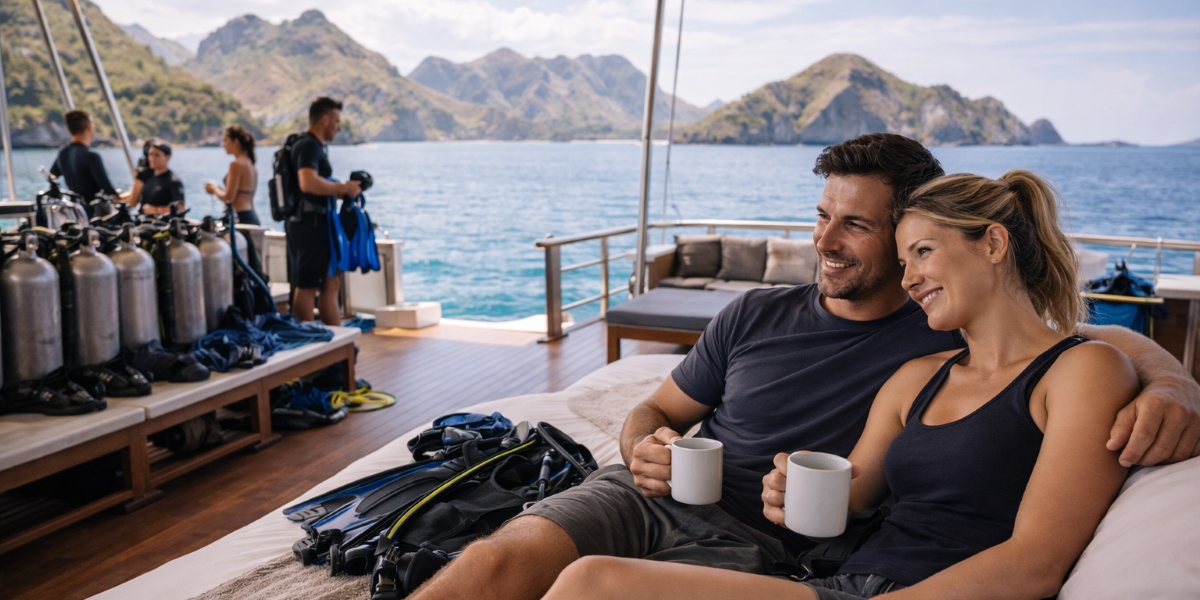
A liveaboard is often marketed as a luxury escape, and it can be comfortable, but its operating rhythm is more akin to a high-performance retreat. Most days follow a pattern: early wake-up, briefing, dive, breakfast, rest, dive, lunch, rest, dive. The exact number of dives varies by itinerary and conditions, but the routine is what makes it feel smooth.
The best trips feel effortless because the structure is doing heavy lifting. Gear is staged, briefings are consistent, meals arrive when energy is low, and the crew manages timing so guests aren’t rushed. On a poorly run boat, you feel the opposite: confusion, delays, and a sense that the day is being “figured out” in real time.
As a manager, I can tell you the secret: comfort on a liveaboard is not only about the cabin. It’s about operations.
Why LA Travellers Tend To Love Liveaboards – And When They Don’t
Los Angeles travellers often do well on liveaboards for two reasons: they’re comfortable with early starts (many have commuted) and they appreciate tightly organised experiences. When the week is well run, it feels premium: you don’t spend your time coordinating taxis, negotiating departure times, or repacking bags every day.
But liveaboards aren’t for everyone. If you need total freedom late dinners off-boat, shopping, and spontaneous nightlife, the liveaboard rhythm can feel restrictive. The right way to think about it is simple: liveaboards trade flexibility for immersion. If immersion is what you want, it’s a great trade.
Choosing A Komodo Diving Liveaboard Like An Operator, Not A Tourist
Most travellers start with the wrong question: “Which boat looks best?” The better question is: “Which itinerary fits my comfort level and priorities?”
Three practical lenses matter more than marketing photos:
1) Route Fit
Routes differ in crossing time, exposure to open water, and how they pace the week. Some routes are more aggressive, aiming to “see everything.” Others are designed to feel calmer, with more protected areas and less time in long crossings. Your enjoyment depends on this more than people realise.
2) Safety Culture
You don’t need to be technical to evaluate safety culture. You can see it in the way operators talk: calm, specific, process-driven. Professionals discuss conditions, alternatives, and guest capability as standard parts of the day, not as inconveniences.
3) Fatigue Management
Many trip disappointments come from exhaustion. A good itinerary builds rest into the day. It doesn’t push guests into a constant adrenaline cycle. The best operators understand that tired guests are not only less happy; they’re also higher risk.
The Neptune One Liveaboard Question: What Named Vessels Signal
When travellers ask about Neptune One liveaboard, they’re usually trying to reduce uncertainty. Named boats often carry reputations about service style, onboard rhythm, and general professionalism. That can be a helpful starting point, but it shouldn’t be the final decision.
Here’s the hospitality truth: even great brands can deliver uneven experiences if the fit is wrong. A boat can be excellent, but too social for a traveller who wants quiet. Or too intense for a traveller who wants a gentle pace. The key is to match your expectations to the operating model, not just the name.
What A Well-Run Week Actually Feels Like
If you’re a first-time liveaboard guest, here’s what you can realistically expect from a smooth operation:
Briefings That Reduce Stress
Good briefings are short, consistent, and focused on what guests need to do next. They don’t overwhelm people with jargon. They communicate conditions honestly and explain the plan in a way that makes guests feel looked after.
A Routine That Becomes Comforting
By day two, most guests relax into the rhythm. They stop worrying about logistics because the crew is handling the sequence: diving, meals, rest, transitions. That’s when people start saying, “This feels easy,” even though they’re doing something adventurous.
Smart Adjustments When Conditions Change
This is where professionalism shows. Conditions shift, and the plan shifts with them. On a good boat, the change feels normal and well-explained. On a bad ship, it feels chaotic or defensive.
Planning From Los Angeles: The Travel Logistics That Make Or Break The First Day
From LA, you’re dealing with long-haul travel and time zones. Your first liveaboard day can either be a smooth start or a struggle, depending on how you plan your arrival.
Here’s the most straightforward advice: don’t stack the most demanding part of the trip immediately after the flight. If you can, arrive a day early, sleep well, hydrate, and start the liveaboard rested. Jet lag affects coordination, patience, and comfort, three things you want in good shape when you’re gearing up for early mornings on a boat.
If arriving early isn’t possible, then reduce pressure in the first 24 hours: keep expectations modest, focus on hydration and rest, and treat day one as orientation rather than a performance day.
A Non-Technical Checklist For Judging Whether A Liveaboard Is “Well Run”
For readers who want a simple filter, here are the questions that consistently identify good operations:
- Do they describe how plans change with conditions, without sounding irritated?
- Do they explain the daily rhythm clearly (wake-up, briefings, rest, meals)?
- Do they regularly match sites to experience levels?
- Do they emphasise calm pacing and hydration/rest as part of the trip?
- Do they communicate like a service business, clear, structured, consistent?
If the answer is yes, you’re likely looking at an operation that understands hospitality, not just boats.
Bottom Line
A Komodo diving liveaboard can be one of the most memorable travel experiences an LA traveller can have. Still, the quality of that experience is built on operations: route design, safety culture, pacing, and communication. Names like Neptune Liveaboards Indonesia and references to Neptune One liveaboard often come up because travellers are looking for that operational reassurance.
Approach the decision like a smart hospitality buyer: match the itinerary to your priorities, choose professionalism over promises, and plan your arrival so you start rested. Do that, and Komodo delivers what it’s famous for: big nature, big water, and a week that feels adventurous without feeling out of control.