
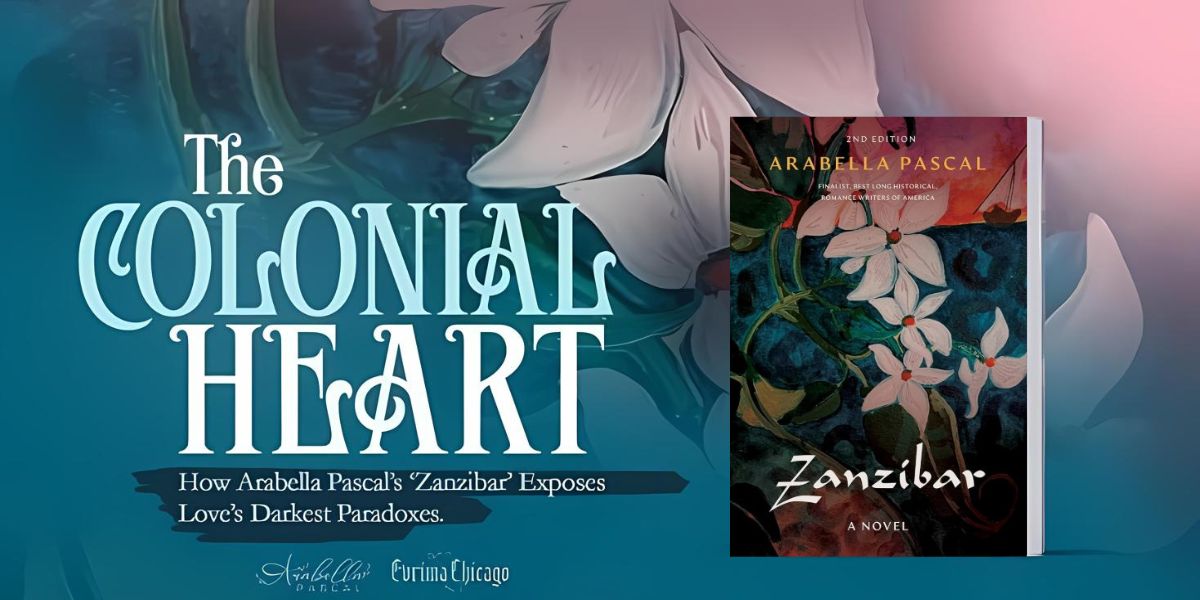





Historical romance has long been a refuge for those seeking escapism, a world of grand ballrooms, whispered confessions, and neatly tied happy endings. Arabella Pascal’s Zanzibar (2nd Edition) challenges these conventions with unusual intensity. Zanzibar is not merely a novel that entertains; it invites reflection and introspection. Set against the opulent backdrop of Victorian England and the harsh reality of East Africa’s slave trade, Zanzibar encourages readers to confront one of romance’s more uncomfortable questions: Can love truly thrive where power is deeply unequal? Pascal’s response is as thought-provoking as it is poignant, weaving a narrative where passion and oppression intersect, leaving no heart unscathed.
The Architect: Arabella Pascal (née Jerri Levi)
Arabella Pascal is regarded as more than a genre writer. An art historian by training, she penned Zanzibar while living in Africa, combining academic precision with the passion of a storyteller. Comparisons to Diana Gabaldon are understandable; both authors skillfully intertwine history and fiction, though Pascal’s work often leans more into the psychological complexities of colonization. Her protagonist, Charlotte Earnshaw, is not a typical debutante but a woman entangled, first by Zanzibar’s enigmatic Prince Jasim bin Rashid, then by the secrets of her own family.
What sets Pascal apart is her commitment to complexity. Jasim, the so-called villain, is arguably the only character who truly perceives Charlotte’s humanity, a dynamic that complicates the lines between captor and confidant. Additionally, her bonus content, “What Charlotte Wore,” explores 19th-century fashion with the rigor of an academic, drawing parallels between the constriction of corsets and the constraints of colonial rule. These additions elevate the work beyond the conventional romance genre, situating it within a broader cultural and historical dialogue.
The Real-World Impact: Romance as Reckoning
Pascal’s novel doesn’t simply subvert traditional romance tropes; it prompts readers to critically examine them. The “captive falls for captor” dynamic becomes a moral gray area, pushing readers to question where desire ends and complicity begins. Even the villainous brother-in-law, Derek, serves as a reflection of patriarchy’s more familiar forms, a reminder that oppression often wears a seemingly ordinary face. Fans of Sandra Brown’s suspenseful narratives will find some of Gabaldon’s emotional depth here, but Zanzibar goes further—it asks readers to engage, not just escape.
The numbers illustrate its resonance. Dark romance is becoming increasingly popular, yet Zanzibar stands apart; more than half of its Goodreads reviewers describe it as unlike any other book they’ve encountered. Its recognition as a finalist for the Romance Writers of America’s Best Long Historical award highlights its dual nature: a love story that refuses to avoid history’s darkest moments. Even the audiobook, narrated by British actor Gary Appleton, has captured a significant portion of sales, a testament to Pascal’s commitment to authenticity.
The Future: Can Romance Novels Be Radical?
Pascal’s next project, a thriller set in the Bellinan concourse, signals her intention to continue blending narrative with cultural critique. She’s part of a new wave of authors who challenge the genre to confront its blind spots. Can a “happily ever after” exist when the scars of history remain fresh? Should love stories sidestep oppression for the sake of escapism? These are the questions Zanzibar forces into the light, suggesting that romance can be both captivating and revolutionary.
Summary: The Heart in Chains
Zanzibar is more than just a novel; it’s a critique. Arabella Pascal uses the tools of romance to dissect the illusions of power and desire. In her hands, the genre transforms into a form of rebellion, petticoats and all. The darkest chains, she reminds us, are not always those around the wrists; they’re the ones around the heart.
Disclaimer: The content is intended for informational and literary critique purposes only. It does not promote or endorse any particular individual, group, or ideology. The article contains opinions on themes of romance and historical fiction, and the narrative described may contain sensitive or challenging topics related to colonial history and power dynamics. Reader discretion is advised.

