




For all the talk about Hollywood’s digital transformation, the industry still has a fundamental problem it has never solved: keeping unreleased material secure while the people making it are scattered across cities, countries, and production schedules. The shift to remote workflows didn’t create the issue, but it exposed it. Vimeo links still fly around during major markets. Editors still swap cuts through half-secure cloud drives. Leaks, hacks, and unauthorized sharing remain an everyday hazard, especially for independent filmmakers who don’t have studio-grade infrastructure.
Into that vacuum stepped KINO Tech Inc., a Los Angeles startup founded in 2022 by filmmaker and former Army medic Daril Fannin, actor-producer Brit MacRae, and technologist David Fannin. The company emerged at a moment when creative teams were expected to operate like distributed tech organizations, but the tools they relied on were a decade behind.
KINO’s pitch has always been straightforward: secure the pipeline without slowing it down. Its flagship product, ScreenKey, is built for pre-release materials that routinely slip through the cracks of legacy systems. Directors, editors, and producers can review dailies, cuts, and festival submissions without worrying that a screener link will end up on Reddit. Encryption, watermarking, and usage analytics are baked in, not bolted on. It’s built for the unglamorous but essential part of filmmaking that most audiences never see: the endless cycle of sending, reviewing, revising, and circulating unfinished work.
The context around KINO is real. According to the Motion Picture Association, piracy costs the global film industry billions of dollars annually. PwC projects the entertainment sector to surpass two and a half trillion dollars by 2027, with digital distribution as the fastest-growing segment. Studios and streamers have responded by moving their workflows to encrypted review platforms; independents have struggled to keep pace. Most do not have the budgets, the staff, or the infrastructure to match studio-level protection.
That gap is the space KINO is trying to occupy. Investors clearly bet on the opportunity early. By 2024, the company had raised four point two five million dollars from backers, including ARK Venture Fund, Sequoia Capital’s Scout Program, and Slow Ventures. The thesis behind those checks wasn’t complicated. If digital distribution keeps accelerating, and if security expectations keep tightening, someone will need to build tools that actually fit the way producers, editors, and sales teams work today.
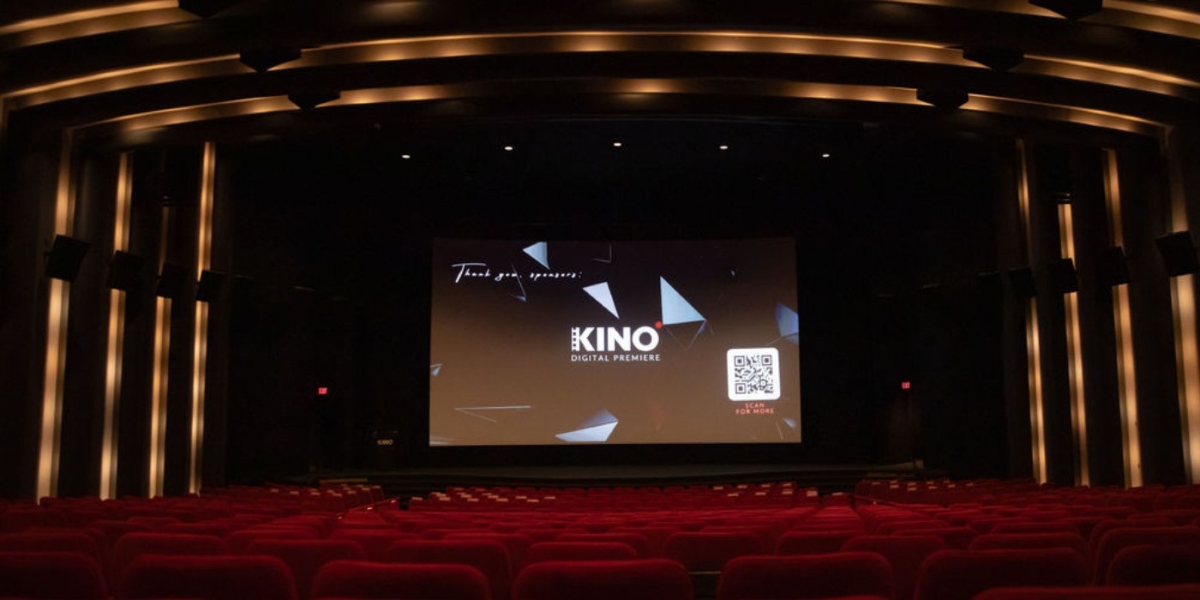
KINO didn’t rely only on software to make its case. It kept a foot in production to pressure-test its tools. In 2024, the company launched an interactive digital cinema platform that let filmmakers host live virtual premieres with real-time audience participation. That same year, it released two projects under its own banner: Ganymede, a queer thriller benefitting GLAAD, and Courage Rising, a documentary following burn survivors climbing Mount Kilimanjaro with Jay Leno.
More importantly, the company began using ScreenKey as a standalone service across daily workflows, festival submissions, and secure test screenings. In 2025, KINO produced The Undertone, a horror feature directed by Ian Tuason. The film premiered at Fantasia International Film Festival and was acquired by A24 in a mid-seven-figure deal, a rare outcome for a startup that straddles software development and creative production.
Industry recognition followed. At IndieWire’s 2024 Future of Filmmaking Summit, KINO was highlighted as part of the wave of companies testing data-driven distribution models and experimenting with interactive audience engagement. The conversation wasn’t just about virtual premieres; it was about how independent filmmakers might restructure their release strategies entirely if the infrastructure becomes more secure, more flexible, and more global.
The through-line is simple. If filmmakers are expected to deliver bigger volumes of content with tighter security requirements, the tools have to evolve. ScreenKey is KINO’s argument for a future where security and usability aren’t in conflict, where indie teams have access to infrastructure that doesn’t force trade-offs between speed and protection.
KINO is still early, but its trajectory reflects what many in the industry already recognize: the old way of circulating sensitive materials is untenable. The companies that figure out how to secure the pipeline without breaking the workflow will shape the next decade of production. KINO Tech Inc. is betting that it can be one of them.