





This week in Los Angeles, one of the city’s legacy media brands, the Los Angeles Tribune, is marking a milestone with the celebration of its Grammy-nominated audio documentary, You Know It’s True: The Real Story of Milli Vanilli.
What makes the nomination notable is not simply that a newspaper publisher entered Grammy territory, but how it did so. The project culminated in a nomination for Fab Morvan, the only person ever required to return a Grammy, an outcome long considered unthinkable within the Grammy Awards ecosystem.
Rather than revisiting the story from an external or retrospective vantage point, the Tribune’s project approached it from within. Narrated by Fabrice Morvan himself, the documentary traces the Milli Vanilli scandal through his firsthand experience, allowing events to unfold in the order they occurred rather than as they were later interpreted. This perspective provides context, nuance, and chronology that had been largely absent from decades of fragmented commentary, headlines, and cultural shorthand.
By centering Morvan’s voice, the project avoids imposing judgment or reframing outcomes. It does not seek absolution, nor does it rely on sensationalism to sustain interest. Instead, it focuses on documentation, preserving the internal logic of decisions, pressures, and consequences as they occurred. The result is a restrained, evidence-based account that reframes a widely mythologized episode as a lived process rather than a fixed verdict. In doing so, the documentary demonstrates how proximity and sequence can restore complexity to cultural events that have long been reduced to symbols or punchlines.
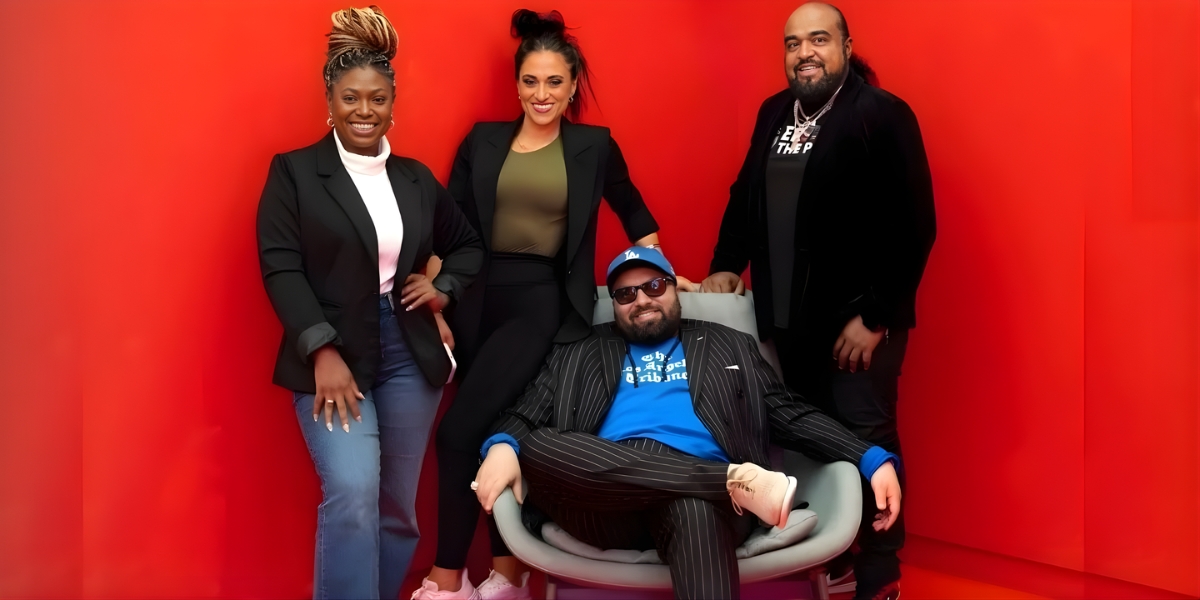
The audiobook was produced as a creative collaboration led by Parisa Rose as author, alongside producers Moe Rock, Giloh Morgan, and Alisha Magnus-Louis, with Morvan serving as narrator. Together, the team treated the project not as a memoir or retrospective, but as long-form audio journalism, structured, paced, and edited with the discipline of a publishing house rather than the reflexes of entertainment media. The emphasis was on documentation rather than reflection, with careful attention given to chronology, context, and sourcing. Editorial discipline guided the editing process, favoring coherence and continuity over dramatic emphasis or emotional manipulation. This approach distinguished the project from entertainment-driven audio formats, grounding it instead in publishing standards traditionally associated with serious nonfiction. As a result, the audiobook functions less as a personal account and more as a recorded historical document, shaped by editorial judgment and collective authorship rather than individual perspective alone.
The Grammy nomination positioned the Los Angeles Tribune as a Grammy-nominated publishing company, an uncommon distinction for a legacy newspaper brand and an early signal of a broader strategy now taking shape, one that extends the Tribune’s role beyond news reporting into long-form, archival audio journalism designed for lasting cultural relevance rather than immediate news cycles.
That strategy is continuing with the Tribune’s next audio documentary installment, I Swear: The Legacy of the Song That Defined a Generation, focused on All-4-One. The project examines the cultural impact of All-4-One’s Grammy-winning hit, “I Swear,” which topped the Billboard Hot 100 in 1994 and remains a frequently streamed track today.

Released in chronological order, the Tribune’s audio documentaries present the early 1990s as a cohesive cultural era rather than a series of isolated moments. The series begins with the industry-wide reckoning around authenticity in 1990 and moves forward toward the emotional sincerity that came to define popular music by the middle of the decade. By preserving this progression, the projects highlight how shifts in values, audience expectations, and creative expression unfolded over time, revealing continuity where fragmentation is often assumed.
The timing is not accidental. Long-form audio has become one of the fastest-growing segments in publishing, with audiobook and spoken-word revenues now exceeding $2 billion annually in the United States. As audiences increasingly prioritize depth over speed, audio has evolved beyond convenience to become a primary medium for serious nonfiction and cultural history. Its extended format allows stories to unfold without compression, preserving chronology, voice, and context. For complex subjects, audio offers a level of duration and nuance that shorter, visually driven formats often flatten or fragment, making it especially suited to archival and documentary work.
By committing to audio documentary journalism, the Los Angeles Tribune has positioned itself at the leading edge of this shift in publishing. The projects reflect a belief that pop culture, when approached with editorial rigor and documented in clear historical sequence, can function as a lasting record rather than a reactive commentary. Instead of responding to moments after they have been flattened by repetition or sentiment, the Tribune’s work preserves events as they unfolded, emphasizing continuity, context, and authorship.
As the Tribune expands its Grammy-nominated series, it is making a quiet but consequential argument: that the future of audio documentaries belongs not only to studios and platforms, but to publishers willing to approach culture with the same care they once reserved for the printed page.