



By: Georgette Virgo
Imagine a woman, a busy designer in LA, who used to start her mornings by checking boxes off her favorite health tracking app. Steps? Logged. Sleep? Tracked. Calories? Counted. But after months of data entry, the woman felt strangely stuck.
Why didn’t her skin breakouts always match her late-night snacks? Why did stress seem to derail her whole routine? And why, when she scrolled back through weeks of graphs and numbers, did everything seem so fragmented? Despite faithfully tracking her wellness, her wellness picture looked more like a scattered spreadsheet than a real story.
Sound familiar? This woman’s frustration is increasingly common among loyalists of health and wellness apps. There’s a tracker for nearly everything now: steps, macros, hydration, meditation, but they all exist in their silos. Most apps treat users like a series of isolated entries: yesterday’s workout, last month’s PMS notes, this week’s sleep stats, but no one tells what it all means together.
When Good Apps Go Bad: The Fragmentation Problem
This is the paradox of the “wellness tracker era.” For a more quantified generation, most people still feel unseen and unsupported. Continuity is missing, guidance is generic, and history gets wiped at every update.
There’s no sense that someone, not something, is actually paying attention to the bigger picture. Each app operates in its silo, creating a patchwork of information that feels more like reading random pages from different books than following a coherent story.
This fragmentation creates real problems for everyday users. For a working mom who religiously tracks her workouts but can’t figure out why her energy crashes every Thursday. Her fitness app celebrates her consistency, but it has no idea that her Thursday morning meetings stress her out, affect her sleep, impede her recovery, and drain her energy.
The psychological toll is equally damaging. When wellness apps present isolated metrics without context, they can make users feel like failures when the numbers don’t add up to feeling good. This leads many people to abandon their wellness journeys altogether, convinced that tracking just doesn’t work for them.
The Missing Link: Memory and Context
Traditional wellness apps also suffer from digital amnesia: they forget one’s story every time they close them. They can’t remember that a user felt amazing after that weekend hiking trip three months ago, or that their skin always flares up during stressful work periods. This lack of memory means they can’t connect patterns that span weeks, months, or seasons.
Worse yet, most apps treat every user identically. They offer the same generic advice, like “drink more water” or “get more sleep,” regardless of individual circumstances, body chemistry, or lifestyle factors. It’s like having a personal trainer who gives everyone the exact same workout, regardless of fitness level, injuries, or goals.
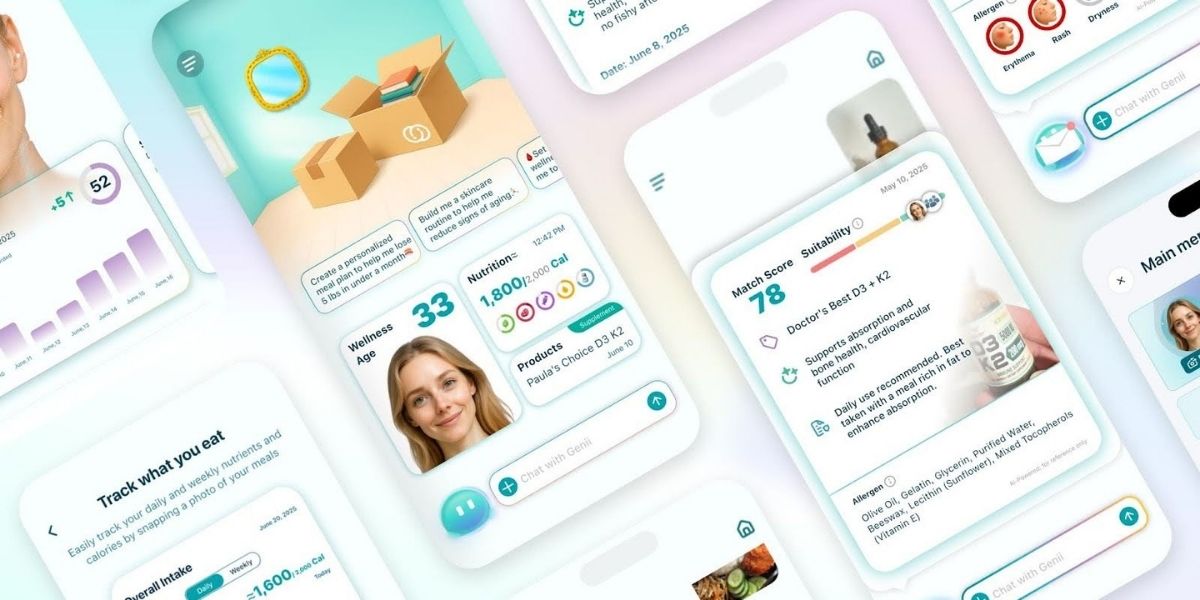
This has been the culture until Sally So designed GenomiiAI, a new AI company that believes wellness is more than a pile of numbers. Instead of treating wellness as a set of disconnected numbers, GenomiiAI’s soon-to-launch MirrorMii app reimagines what a digital health companion can be. Rather than siloing and forgetting, MirrorMii is designed to remember, reflect, and respond like a friend who truly gets its users.
“Most wellness tools today drop your story whenever you close the app. They treat each login as a clean slate, erasing the patterns that define who you are. We need to flip the dynamic and take the lead,” mentions Sally So, GenomiiAI’s founder and computer scientist, who developed the platform after her frustrating experiences with fragmented health tracking.
Meet Your Digital Twin: The Wellness Game-Changer
GenomiiAI’s MirrorMii app introduces a radically different approach: the digital twin. Think of a digital twin as one’s health avatar. Unlike traditional apps that treat each data point as an isolated event, MirrorMii’s digital twin, powered by COREX (Contextual Reasoning Experience engine), creates a living, learning model of one’s unique health patterns.
MirrorMii fuses facial data with sleep logs, food pics, ingredient lists, hormonal notes, lifestyle snippets, and subjective check-ins. Unlike a typical AI-powered platform, it is a wellness companion that takes detailed notes on one’s wellness journey and can instantly connect the dots they never even knew existed.
Because the digital twin updates in real time, pulling in everything from food logs to environmental sensors to subjective check-ins, it supports on-the-go decisions. However, here’s where it gets interesting: the digital twin doesn’t just track what one does. It remembers how the body responds, watches patterns unfold across days, weeks, and cycles, and connects the dots for more personal insights.
For instance, it doesn’t just log one’s late-night pasta binge or ignore the salty dinner’s effect on the skin. It remembers when one tried that new moisturizer and how their cheeks flared up three days later.
So notes, “Life doesn’t just happen in the doctor’s office or at the gym. Our bodies constantly shift—work deadlines, late meals, jet lag, holiday indulgences. The digital twin is your ongoing lens. It’s not a record you log and forget; it’s a health companion that adapts to wherever you are, whenever you need insight.”
This power isn’t only psychological. The data-rich memory system lowers user friction and boosts retention: users don’t need to relearn their history or explain their challenges repeatedly, because the digital twin has already learned them. The longer users stay engaged, the smarter and more attuned the twin becomes.
As Sally So explains, the benefit is a deeper understanding of oneself. “When you eat pasta at 9 PM, most trackers just log the calories. But if your digital twin knows you didn’t sleep well three nights in a row and your skin flared up after a stressful week, it can connect the dots.”
“Now, when you reflect on your week or month, you’re not staring at numbers. A true digital twin remembers, adapts, and builds context, so it knows why you feel the way you do, not just how you scored last night’s sleep.”
A True Companion in Wellness
Wellness seekers are now witnessing an exciting transformation. After years of apps that made wellness enthusiasts feel like data points rather than human beings, they finally see technology that understands health and happiness’s intricate, interconnected nature.
Introducing GenomiiAI may seem ambitious, but for Sally So, this is inevitable. Together with her dream team of lived-experience data nerds and Harvard-trained AI researchers, they developed MirrorMii to be more than just a tool. It feels closer to a friend. The kind who remembers how one’s skin blows up after sleeping late, or why one’s energy always tanks in week two of one’s cycle.
MirrorMii’s memory, motivation, and “aha” moments in a single, user-friendly interface. It correlates those highs and lows that one always suspected were tied to their sleep, stress, or diet. Instead of “Calories Over Yesterday,” it sees “Here’s how your unique routines, stressors, foods, and hormones are dancing together this month.”
For those tired of fragmented fitness data and generic health advice, the answer seems increasingly clear. The future of wellness isn’t about collecting more data. It’s about creating a deeper understanding. And that future is about to arrive in the App Store. Who knows? Maybe in a year, Julia (and the rest of us) will look back at the old tracker days and wonder how we ever settled for “log and forget.”
Disclaimer: The content of this article is intended for informational purposes only and should not be construed as medical or professional advice. Always consult with a healthcare provider or a qualified expert before making any changes to your health and wellness routine.