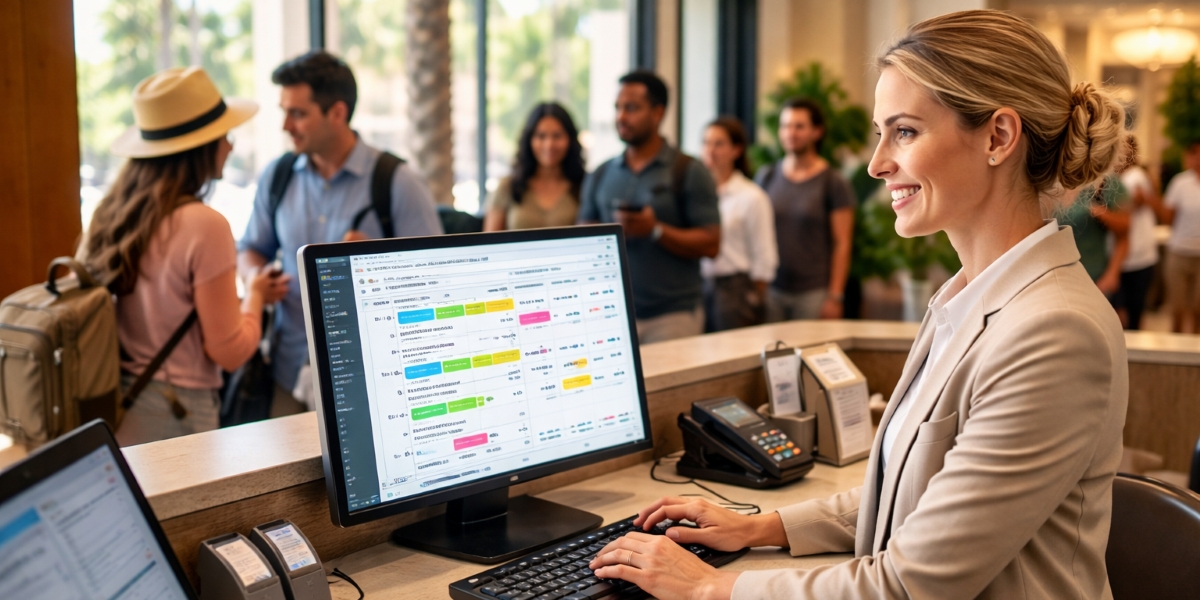





If you run an independent property in LA, the busy moments rarely arrive neatly: flights land late, traffic pushes check-in waves into the evening, and event weekends can turn “normal” operations into a pressure test. When owners ask, “What does a PMS system do in a hotel?” the most helpful answer is simple: it keeps reservations, rooms, guest details, housekeeping progress, and payments aligned in one place, so your team can focus on hospitality instead of scrambling for information.
Why Los Angeles Makes Hotel Operations Feel Higher-Stakes
Los Angeles is a city of timing. A guest’s mood is often shaped by what happened before they reached you, an hour on the 405, a delayed bag at LAX, a long day at a conference, or a late wrap on a set. Small hotels can absolutely compete on warmth and personality, but only if the basics are tight. On peak nights, the “basics” include knowing exactly who is arriving, what room they’re meant to have, whether the room is ready, and whether the payment situation is straightforward.
In larger hotels, operations can absorb friction with extra layers of staff and dedicated departments. In a small property, every operational wobble is visible at the front desk, and it costs you twice: first in time, then in guest confidence. This is where a PMS becomes less like “software” and more like operational insurance.
What a PMS System Does in a Small Hotel (In Real-World Terms)
A Property Management System is the working brain of the hotel. It is where the team looks to answer the questions that matter in the moment: “Are we sold out?” “Is that room actually clean?” “Has this guest paid a deposit?” “What did they request last time?” In practice, the PMS reduces the number of times your staff have to guess or rely on memory when the lobby is full.
Keeps Reservations and Availability Honest
The first job of a PMS is making sure your inventory reflects reality. In LA, a single misstep can spiral quickly: a room blocked for maintenance gets sold, a reservation changes online, and no one notices, or a last-minute extension accidentally collides with tomorrow’s arrivals. A good PMS keeps the booking record, room allocation, and availability consistent, which reduces overbookings and the costly “walk” situations that harm both reputation and margin.
The less time your team spends reconciling calendars and confirmation emails, the more time they can spend actually taking care of guests.
Turns Housekeeping Progress Into Confident Guest Communication
From the guest’s point of view, “room readiness” is a promise. From the hotel’s point of view, it’s a moving target—especially with same-day turnovers and early arrivals. The operational gap often happens because housekeeping knows what’s happening in the corridors, while the front desk is stuck asking for updates.
A PMS closes that gap by making room status visible and up-to-date. That visibility does not just help housekeeping; it helps reception speak with confidence. Guests will accept “Your room will be ready at 2:30” far more readily than “It should be soon,” because clarity reduces frustration. In a city where guests are frequently on tight schedules, confident updates are a form of service.
Keeps Payments and Folios Clean, Which Protects Trust
LA properties often handle a mix of business and leisure stays, which means payments can be varied: different cards, incidentals, parking, pet fees, split charges, and invoices. Billing confusion is one of the fastest ways to sour an otherwise good stay. A PMS helps by keeping a clean record of what was charged, why it was charged, and when it was charged—so checkout feels like a quick wrap-up rather than a negotiation.
For owners, this “clean record” also serves as protection. When disputes happen, you want a clear audit trail so you can resolve issues quickly and fairly, without burning hours piecing together the story.
Stores the Small Details That Make Service Feel Personal
Independent hotels win on thoughtful touches: remembering a returning guest, noting a quiet-room preference, or flagging an allergy so it doesn’t get missed during a busy shift. Without a central place to keep those notes, the hotel becomes dependent on whoever happens to remember them. A PMS lets those details travel with the guest profile so service feels consistent even when staffing changes.
This is not about over-collecting data. It is about capturing the few practical details that improve the stay and reduce misunderstandings.
What to Prioritise When Choosing PMS Systems for LA Hotels
Because LA small hotels run lean, the best outcomes usually come from simplicity and speed rather than “more features.” When evaluating PMS systems for LA hotels, owners should prioritise how well the system supports daily reality at the desk, not how impressive it looks in a demo.
Speed at Reception Matters More Than Almost Anything
The front desk is your stage. If check-in takes too long, the lobby feels chaotic, and guests assume the hotel is disorganised even if the rooms are beautiful. A system should make common tasks fast: finding the booking, confirming details, assigning a room, and handling a payment step without bouncing between screens.
Exception-Handling Is the Real Test
In Los Angeles, exceptions are normal: early arrivals, late checkouts, flight delays, room moves, and day-of changes. A PMS that works only for “perfect stays” will create workarounds, and workarounds create errors. You want workflows that let staff make changes cleanly without disrupting billing or losing track of inventory.
Add-Ons Should Be Clear, Consistent, and Easy to Explain
Parking, pet fees, and incidentals are common in LA. Guests do not mind paying for real value; they mind surprises. Your PMS should support consistent posting and clear descriptions so staff can explain charges confidently. This protects guest trust and reduces back-and-forth at checkout.
Reporting Should Be Usable, Not Overwhelming
Owners do not need dozens of dashboards. They need a few numbers they trust to guide decisions: occupancy trends, average rate, booking sources, cancellations, and a clear sense of what’s coming next week. The value of reporting is not complexity, it’s clarity and routine.
How to Implement Without Disrupting the Hotel
The most successful setups treat implementation as an operations project, not a tech project. You are not “installing software”; you are standardising how the hotel runs.
Start With Your Real Guest Journey
Map what actually happens from booking to checkout, including the messy parts: late arrivals, early check-ins, room changes, special requests, and payment questions. When the workflow reflects reality, staff adoption improves because the system feels like support rather than friction.
Train With Scenarios, Not Feature Tours
Small teams learn best through real situations. Instead of teaching menus, teach outcomes: how to handle an early arrival when no rooms are ready, how to process a room move after a complaint, how to split charges cleanly for two guests, and how to document what happened so the next shift isn’t guessing.
Scenario 1: The LAX late arrival
If a guest arrives at 11:45 pm and the day has been long, the PMS should help staff confirm identity, payment status, and room assignment quickly without reopening questions that should have been settled earlier.
Scenario 2: The early arrival with a tight schedule
The system should show which rooms are closest to being ready, what’s already been inspected, and what can be prioritised, so staff can offer a realistic timeline rather than an uncertain promise.
Scenario 3: The “simple” checkout that becomes complicated
When a business traveller needs an invoice, a leisure guest disputes a parking charge, or a couple wants to split the bill, clean records and clear folios reduce friction and protect reviews.
What Travellers Notice When a Small Los Angeles Hotel’s PMS Is Set Up Well
Guests may never mention your systems, but they feel the results. Check-in is quicker, room readiness is communicated confidently, special requests are remembered, and billing feels straightforward. Perhaps most importantly, staff appear calmer. In hospitality, calm is contagious: it reassures guests that the hotel is in control, even when LA is doing what LA does, running late.
The Bottom Line
A PMS is not a “nice-to-have” for independents; it is the operational backbone that lets a small team deliver consistent service in an unpredictable market. When your Los Angeles small hotel PMS setup supports speed, clarity, and real-life exceptions, you protect your guest experience, reduce costly mistakes, and give your team the breathing room to do what small hotels do best: provide genuinely human hospitality.