
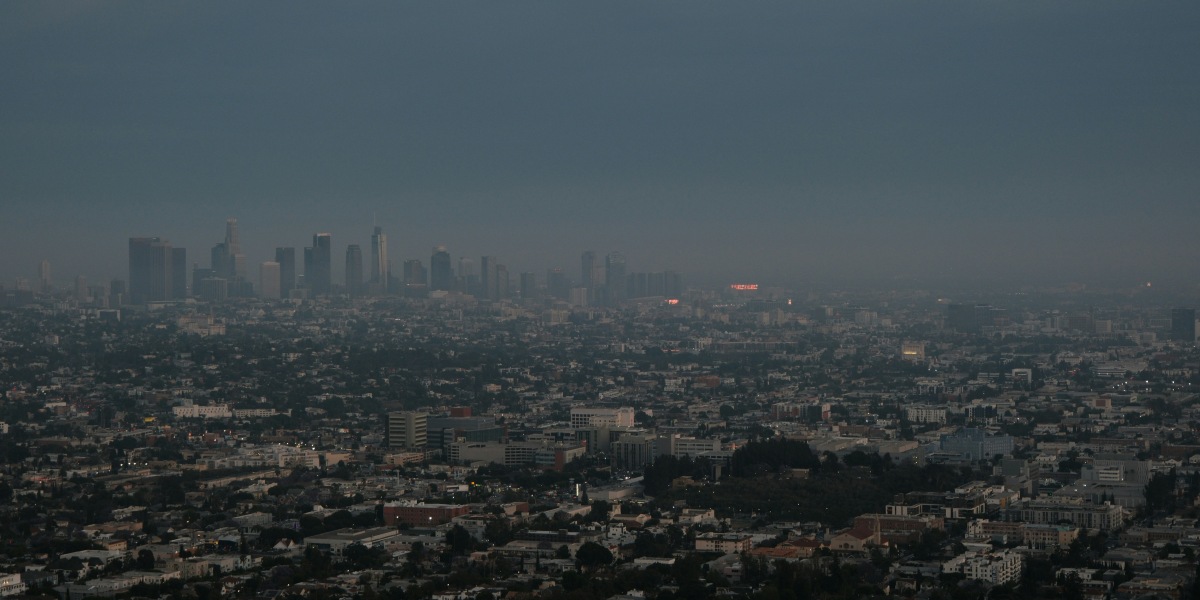





Air quality warnings are nothing new for Californians. From the Central Valley to Los Angeles, ground-level ozone, vehicle emissions, and trapped pollutants often push the state’s air to some of the less healthy levels in the nation. Climate change is likely making matters harder, as higher temperatures may accelerate smog formation, while stagnant air patterns tend to keep pollution hovering over urban areas.
When alerts go out, the public knows to check outdoor air quality maps, close windows, and limit time outside. Yet the places people retreat to for protection, such as schools, offices, gyms, stores, and homes, might not always provide the relief they expect. What happens inside California’s buildings matters as much as what happens outside.
In the Los Angeles region, where smog is a familiar backdrop, the question is no longer whether the air outside meets federal standards. The real question is whether the air people breathe indoors is adequately managed, monitored, and maintained in ways that could promote both health and trust.
From Outside to Inside: How Outdoor Air Affects Indoor Spaces
Outdoor pollution does not always stay outside. It can seep into buildings through doors, vents, and cracks in infrastructure. In many California communities, older buildings and outdated HVAC systems often struggle to filter or dilute pollutants once they enter. Fine particulate matter from vehicle exhaust, ozone from smog, and other airborne contaminants may linger indoors, potentially compounding health risks for employees, students, and visitors.
Even when outdoor air improves, indoor environments might lag behind. Many structures were designed for energy efficiency at a time when fresh-air ventilation wasn’t always prioritized. Today’s building operators face the challenge of balancing sustainability goals with health protection, upgrading filtration, and adjusting airflow systems to meet new realities.
Los Angeles, with its dense mix of residential, commercial, and industrial zones, underscores the issue. Buildings vary in age, design, and maintenance quality. Some downtown offices have advanced HVAC systems, but others rely on aging equipment that filters only to a certain extent. For schools and small businesses, deferred maintenance may leave ventilation systems underperforming.
In this context, indoor-air strategies are important to resilience. The California Air Resources Board has reported that people spend nearly 90 percent of their time indoors, which means the quality of that indoor environment can have an outsized impact on public health. Clean air is becoming an infrastructure issue that demands long-term planning.
What People Look for When They Enter a Space
Even the best systems might not matter if people don’t trust them. According to the 2025 GPS Air Indoor Air Quality Perception Report, more than half of Americans (56 percent) say they trust the air in their homes more than in shared spaces like gyms, offices, and stores. Only 9 percent believe public buildings have better air systems. That perception gap reflects a deep skepticism about how air is likely managed once they step indoors.
The findings also show how strongly sensory cues shape trust. Many respondents said they notice air quality first through smell or feel. Forty-one percent said they would likely avoid returning to a space if it simply “smelled off,” a higher share than those citing a known virus outbreak as a deterrent. Stuffy rooms, musty odors, or visible dust send subtle but powerful messages that the environment is neglected.
These perceptions can influence behavior. A job candidate might pass on an offer because the office feels stagnant. Employees could hesitate to return to on-site work if they believe the environment lacks safeguards. In retail, a shopper may walk out of a store that smells unpleasant. For schools, families might worry about what their children are breathing.
For buildings in Los Angeles and beyond, this makes indoor air quality more than a technical challenge. It becomes a matter of reputation and trust.
Actionable Strategies for Institutions and Employers
Addressing air quality requires both technology and transparency. Facility leaders in the Los Angeles area can take several practical steps to protect health and strengthen public confidence:
Monitor Air Quality in Real Time
Deploy sensors that measure key metrics such as particulate matter, carbon dioxide, and humidity. Public dashboards or digital displays allow employees and visitors to see how air is performing throughout the day.
Upgrade Filtration and Ventilation
Follow current ASHRAE guidelines to improve system performance. Use filters with higher MERV ratings, regularly inspect ducts, and maintain airflow to help capture pollutants efficiently.
Make Air Quality Visible
Transparency builds trust. Posting indoor air scores, much like restaurant health grades, helps occupants feel informed and reassured. According to the GPS Air survey, nearly two-thirds of Americans support this approach, and 61 percent say they would trust a business more if they knew its air was actively monitored.
Integrate Air into Wellness Communication
Employers should include indoor air quality updates in workplace newsletters, environmental health briefings, or new-employee orientations. Doing so reframes air management as part of broader care for well-being, alongside mental health programs and ergonomic design.
Plan for Long-Term Resilience
Los Angeles’ climate realities—heat waves, high traffic emissions, and evolving energy policies—mean air quality will likely remain a central issue. Integrating IAQ strategies into sustainability and capital-planning efforts can ensure future readiness.
By treating clean air as a visible, measurable commitment, organizations demonstrate responsibility while addressing the expectations of students, employees, customers, and visitors.
Health, Trust, and Competitive Advantage
The benefits of investing in indoor air may extend beyond compliance. Clean, well-ventilated environments support comfort, focus, and productivity. The GPS Air report found that 53 percent of Americans believe fresher, cleaner-smelling air likely improves their concentration. That insight aligns with research from the Environmental Protection Agency showing that better ventilation correlates with improved cognitive function and reduced absenteeism.
The reverse is also true. When people doubt the air around them, trust erodes. A workplace that feels stuffy or neglected can affect morale just as much as outdated benefits or unclear communication. Candidates may interpret poor air as a sign of broader inattention. Staff may wonder whether leadership truly prioritizes health.
For California employers competing for talent in a wellness-driven labor market, air quality could become a differentiator. Younger generations in particular are shaping this trend. McKinsey’s Future of Wellness report notes that Gen Z and millennials view wellness holistically, encompassing physical, mental, and social health. They value transparency and expect companies to demonstrate care in tangible ways. Visible air quality improvements align directly with those expectations.
In a city where air pollution headlines are part of daily life, demonstrating cleaner indoor air can also reinforce public trust. When the California Department of Public Health advises residents to stay indoors due to outdoor air alerts, people assume those indoor spaces will be safe. Meeting that expectation is both a moral and strategic imperative.
Why LA Institutions Must Make Indoor Air Visible
Los Angeles’ identity is tied to the air. The region has long been synonymous with smog and climate progress alike, making it a testing ground for environmental innovation. Yet the city’s next frontier of air quality progress may lie indoors.
Urban density, traffic congestion, and aging building stock create conditions where indoor air quality can vary widely from block to block. At the same time, employees and residents are more wellness-conscious than ever. They are attuned to how air feels, how it smells, and whether an organization is transparent about its efforts to protect them.
Credibility in building safety now depends as much on perception as on engineering. Real-time data displays, fresh-air upgrades, and clear communication can turn invisible systems into visible assurances. When people can see that air quality is monitored and maintained, they are more likely to trust the space and the people who run it.
For schools, offices, and businesses across Southern California, this is the next evolution of public health leadership. Clean air has always been a public good. Now it is also a business imperative. By taking indoor air as seriously as outdoor smog, Los Angeles could continue leading the nation, this time from the inside out.
Disclaimer: The information in this article is provided for general informational purposes only. It is not intended as medical, environmental, or professional advice. While efforts have been made to ensure the accuracy of the information presented, individuals should consult relevant experts or authorities for specific guidance related to indoor air quality and health.