By Eleanor Vance, Cultural Affairs Editor
As the modern streaming industry becomes increasingly crowded with sequels, algorithms and content engineered for mass consumption, one independent media company is pursuing a very different strategy.
Rather than chasing scale through endless libraries and franchise-driven programming, The ART Channel is building a platform designed around artistic discovery, immersive storytelling and global cultural connection.
The company’s leadership believes audiences are beginning to pull away from entertainment ecosystems dominated by quantity and passive viewing habits. In response, the network has positioned itself as a FAST (Free Ad-Supported Streaming Television) platform focused on art, architecture, fashion, music, performance, documentary storytelling and experiential programming.
Executives say the mission goes beyond simply delivering entertainment.
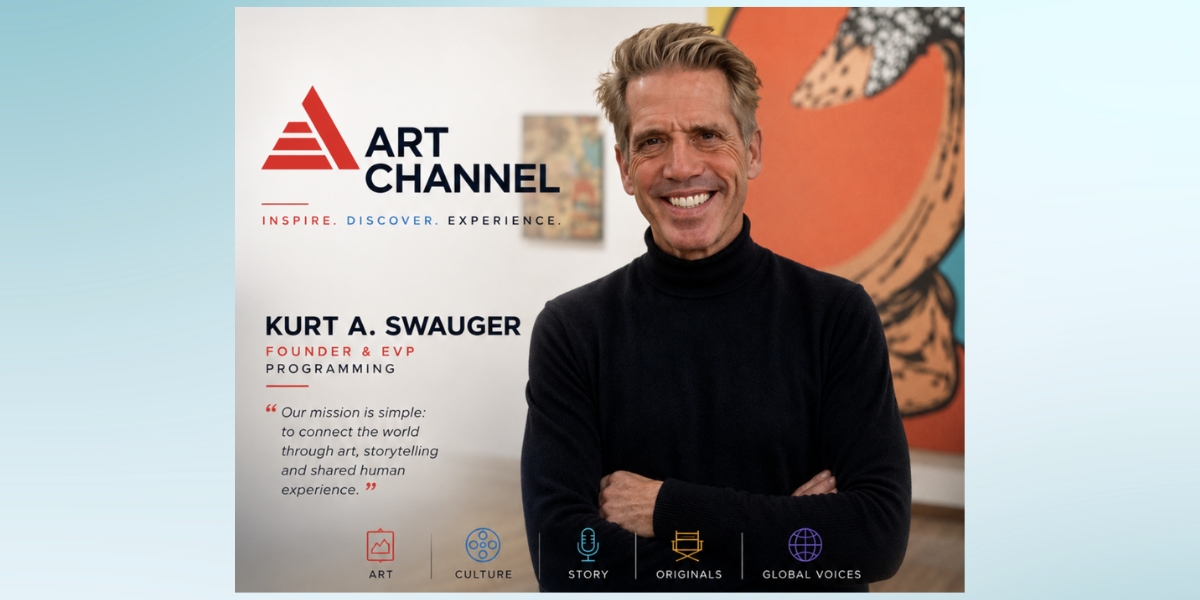
“We’re trying to create a viewing experience that people emotionally connect with,” said Kurt A. Swauger, Founder and EVP of Programming. “The world doesn’t need another endless wall of content. It needs places that inspire curiosity and creativity again.”
That philosophy has shaped the network’s evolution into something that feels less like a traditional streaming app and more like a modern cultural destination.
Unlike subscription platforms built around binge behavior and algorithmic recommendations, The ART Channel blends curated FAST programming, live broadcasts, original productions and themed viewing environments intended to restore a sense of intentional discovery.
Leadership believes audiences miss the emotional unpredictability television once offered before digital streaming became dominated by endless menus and fragmented attention spans.
“There used to be magic in turning on the television and discovering something unexpected,” Swauger said. “Streaming became incredibly efficient, but somewhere along the way it stopped feeling personal. We want to bring that feeling back.”
That mindset now influences nearly every corner of the company’s content strategy.
Original productions increasingly revolve around real-world cultural moments rather than traditional scripted entertainment alone. Current and upcoming projects include artist documentaries, exhibition coverage, live event integrations and hybrid productions designed to connect physical experiences with digital storytelling.
One standout project is That Boy on Stage: The John Shiner Story, a documentary exploring the extraordinary career of photographer John Shiner, whose early images captured legendary performers including Freddie Mercury, David Bowie and Tina Turner before he disappeared from public life for decades.
Instead of positioning the film as a standalone streaming title, executives are building a larger ecosystem around it through exhibitions, gallery collaborations, archival content and companion interviews.
“We believe stories become stronger when they exist beyond a single screen,” Swauger explained. “When audiences can experience them through exhibitions, live discussions and historical context, the connection becomes deeper.”
That same philosophy drives The Curator, the network’s AI-guided cultural series hosted by Palmer Winslow alongside co-chief Annie Jane Cho.
The show explores contemporary artists, exhibitions and emerging creative movements while blending commentary, visual storytelling and historical perspective. Episodes frequently align with gallery openings, museum events and international cultural happenings in cities such as Los Angeles, Miami, Hong Kong and New York.
Executives believe the future of streaming will increasingly blur the lines between physical experiences and digital media environments.
“The future isn’t passive anymore,” Swauger said. “Audiences want to feel immersed. They want context, atmosphere and participation. Culture naturally creates those emotional connections.”
The network’s broader programming slate reflects that same experimental direction.
Series like Cooktop Art: Dish’in’ merge culinary artistry with visual storytelling, while emerging productions tied to AI creativity, metaverse culture and experimental digital creators continue expanding the company’s original content vision.
Even The Andy & Jean Show, the network’s animated series inspired by Andy Warhol and Jean-Michel Basquiat, operates less like conventional animation and more like an artistic satire exploring celebrity culture, technology and creative identity.
Still, leadership acknowledges that original productions alone are not enough to sustain a long-term streaming ecosystem.
Like many FAST networks, The ART Channel also relies on licensed programming to maintain consistency, engagement and audience retention throughout its platform. Executives view the balance between originals and licensed content as critical to the company’s long-term strategy.
“Originals define your voice,” Swauger said. “Licensed content creates familiarity and viewing rhythm. The two work together.”
The timing may prove advantageous.
As subscription fatigue continues affecting consumers across the entertainment industry, FAST television has rapidly emerged as one of streaming’s fastest-growing sectors. Rather than requiring additional monthly subscriptions, FAST platforms offer frictionless viewing supported through advertising, sponsorship integration and branded partnerships.
Leadership believes The ART Channel’s niche positioning gives it a unique advantage within that evolving sector.
Its audience includes artists, designers, collectors, educators, students, travelers and culturally curious viewers seeking alternatives to repetitive entertainment formulas.
“The creative audience has always existed,” Swauger said. “They’ve simply been underserved. Culture is universal. It crosses every generation and every border.”
That global outlook is increasingly shaping the network’s expansion strategy.
The company has expanded subtitled and dubbed programming efforts while building partnerships across Europe, Asia and Latin America. Executives believe international growth will become one of the network’s defining opportunities over the next several years.
At the same time, live experiences are becoming a larger part of the platform’s overall identity.
Gallery openings, museum tours, studio visits, artist interviews and international fair coverage are now being integrated into curated streaming environments where viewers can move fluidly between live events, companion documentaries and historical context.
The structure mirrors sports broadcasting ecosystems, but adapted specifically for arts and culture.
“When an important cultural moment happens, we want audiences experiencing it together,” Swauger explained. “Not scrolling past it later online. Actually being part of it.”
That strategy is also opening the door for a different kind of advertising model.
Rather than interruptive commercial placements, the network increasingly integrates museums, galleries, luxury sponsors and institutional partners directly into the storytelling environment itself.
According to executives, the result feels more organic and aligned with the audience experience.
“Our sponsors are often already connected to the cultural world we’re covering,” Swauger said. “So the relationship feels authentic instead of forced.”
As traditional television continues fading and major streaming platforms compete aggressively for viewer attention, The ART Channel is betting that audiences may ultimately gravitate toward experiences that feel more curated, more thoughtful and more emotionally grounded.
Not louder entertainment.
Not bigger libraries.
Just more meaningful experiences.
And in a streaming industry overwhelmed by sameness, that difference may ultimately become its greatest strength.