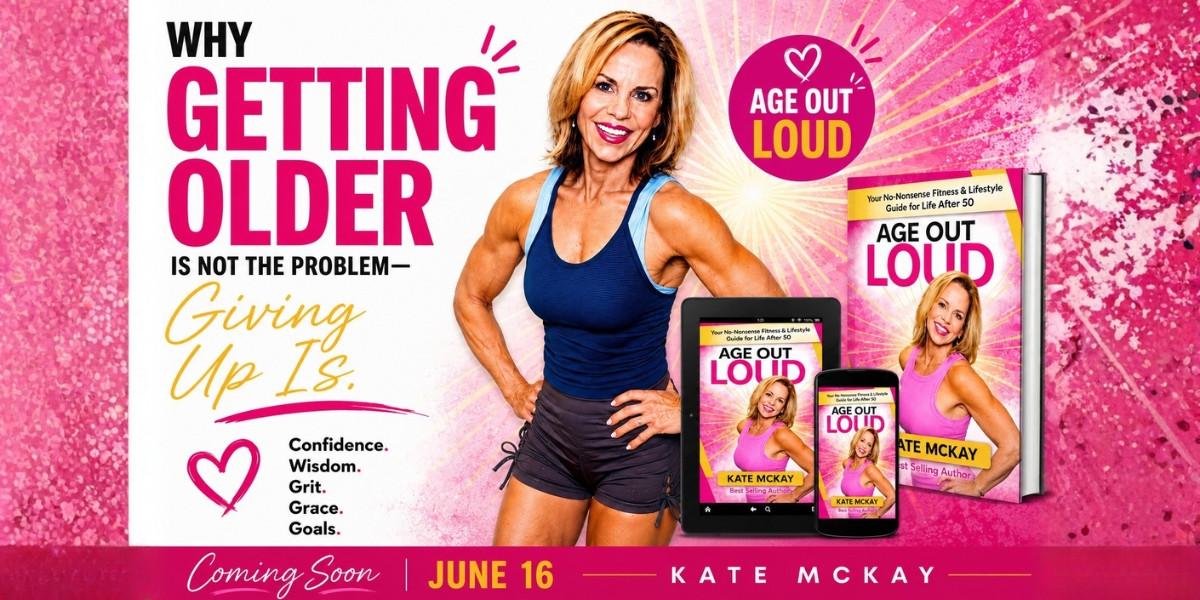



There’s a certain kind of question that follows Kate McKay around, and it says more about the culture than it does about her.
“How are you your age and still this fit?”
She laughs about it, but not in a dismissive way. More like someone who understands the gap between what people assume and what actually builds a life. Because for her, this didn’t start recently. There was no switch. No sudden reinvention. This is decades in motion.
Weight training. Discipline. Showing up when it would have been easier not to.
At some point, she says, it stops being something you do. It becomes who you are.
And that’s exactly where most people miss it.
The Real Problem Isn’t Discipline
McKay isn’t interested in selling motivation. She’s not trying to convince people to “try harder.” In fact, she pushes back on that idea pretty directly.
From what she’s seen, especially in midlife, women are not lacking discipline. They’re carrying outdated scripts.
Beliefs about age. About what’s appropriate. About when things are supposed to slow down.
Those ideas don’t usually show up loudly. They sit in the background, quietly shrinking what feels possible.
That’s the tension behind Age Out Loud. Not fitness for the sake of appearance. Not productivity for the sake of proving something. It’s about waking people up to the fact that the rules they’re living by might not even be theirs.
Midlife, in her view, isn’t a decline.
It’s a reset.
A System Hidden in Plain Sight
For years, McKay was answering questions about workouts, nutrition, and routines. But eventually, something clicked.
She wasn’t just giving advice. She was living inside a system.
That system became what she calls the G³ Blueprint. Grit, Grace, and Goals.
It sounds simple, and in a way it is. But not in the way people expect.
Grit is what keeps you moving when things feel heavy or inconsistent.
Grace is what stops you from burning out trying to do everything perfectly.
Goals give direction when life starts to feel scattered or reactive.
What’s interesting is how grounded it is. There’s no illusion that things will always feel aligned. The point is to keep showing up anyway, without turning the process into punishment.
Strength That Isn’t Just Physical
It would be easy to frame McKay’s work as fitness-focused. That would miss the point.
Strength, for her, is layered.
She talks openly about loss. About the death of her son. About navigating ADHD. About the kind of days that don’t look strong at all.
That context matters because it changes how resilience shows up. It’s not polished. It’s not always visible.
Sometimes it looks like getting through the day.
Sometimes it looks like doing the bare minimum and coming back tomorrow.
But the pattern stays the same. She keeps going.
That’s where her version of confidence comes from. Not from feeling ready. From repeated action over time.
The Risk of Staying Comfortable
There’s a moment in her story that doesn’t come from a major life event. It goes further back.
Being the kid who didn’t quite fit.
Not part of the group. Not fully included.
At the time, it stung. Looking back, she sees it differently. That was early training.
Grit doesn’t always come from dramatic moments. Sometimes it builds quietly through small discomforts that don’t go away.
That pattern carried forward. Through business challenges. Through family life. Through loss.
No big declaration. Just a series of choices to keep showing up.
And eventually, a decision that became clear even if it wasn’t announced.
She wasn’t going to shrink her life to make it easier for other people to understand.
The Truth About Midlife That No One Says Out Loud
Ask her what women need to hear, and she doesn’t hesitate.
You’re not behind.
You’re not too late.
You’re not done.
If anything, she argues, this is where things get more interesting. Not because everything becomes easier, but because the pressure to perform starts to fade.
Roles change. Kids grow. Careers shift.
There’s space.
And that space can feel uncomfortable at first. But it also creates room to ask better questions.
What do I actually want?
What still fits?
What doesn’t?
For McKay, that’s where real change begins. Not by trying to go back, but by leaning into what’s next.
Breaking the “Act Your Age” Script
Few phrases get under her skin more than “act your age.”
Mostly because no one really knows what it means.
It’s one of those ideas people absorb early and rarely question. Over time, it turns into an internal voice that limits behavior before anything even happens.
Stay in your lane. Don’t push too far. Don’t make it uncomfortable.
McKay flips that completely.
Instead of asking if you’re acting your age, she suggests a different question.
Are you acting like yourself?
That shift sounds small, but it changes everything. It moves the focus away from expectations and toward alignment.
Because most of the rules people follow were never chosen consciously.
They were inherited.
Midlife gives you the chance to rewrite them.
Confidence Isn’t Waiting for You
There’s a line she comes back to often.
You don’t age out of strength. Or confidence. Or feeling alive.
You grow into it.
But it doesn’t happen automatically.
It requires intention. Training your body in a way that supports you. Building habits that reinforce who you want to become. Showing up when it would be easier to disappear into routine.
That’s the part people underestimate.
Confidence isn’t something that arrives.
It’s something you build.
Living Fully, Even When It’s Messy
There’s nothing overly polished about how McKay talks about this stage of life. That’s part of why it lands.
She doesn’t pretend every day feels strong. She doesn’t frame resilience as a constant state.
What she offers instead is something more grounded.
Keep going.
Stay honest.
Don’t disappear.
And maybe most importantly, don’t wait for permission.
Because at the end of it, the question won’t be whether you played it safe.
It’ll be whether you actually lived.
That’s what aging out loud really points to. Not performance. Not perfection.
Just a refusal to sit on the sidelines of your own life.
McKay explores these ideas further in her book, Age Out Loud.