



By: Matthews Noka
Mark Kaplan looked like the last person who might have a heart attack. He exercised regularly, stayed lean, competed athletically, and carried himself with the confidence of someone who had spent decades taking his physical condition seriously. By many visible measures, he appeared to be doing everything right.
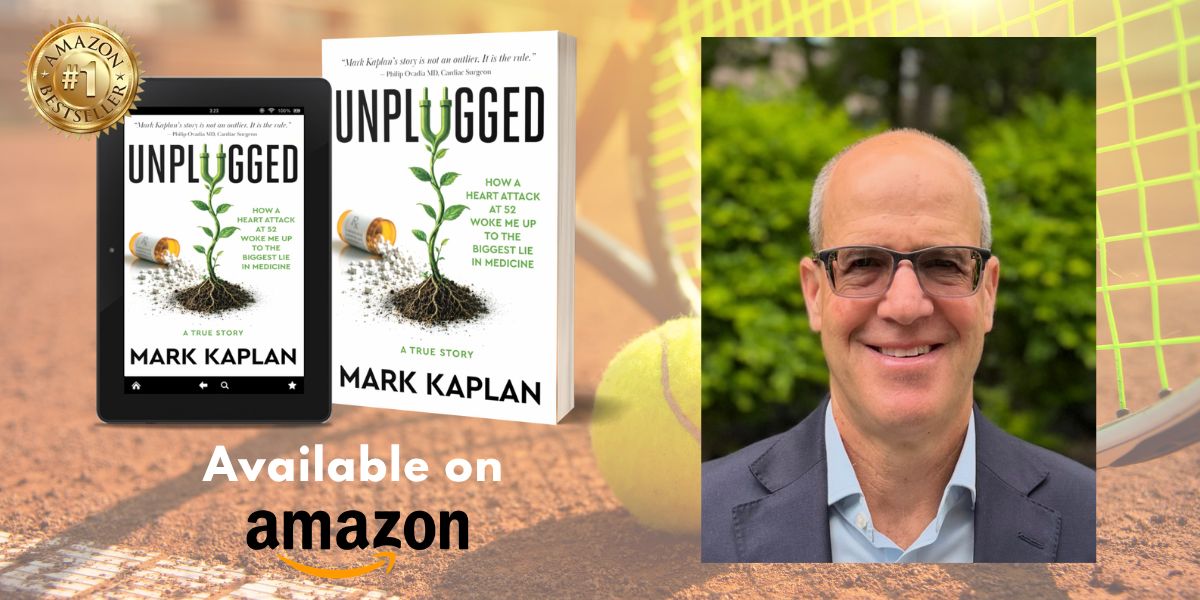
Then, at 52, everything he thought he knew about his own health changed, and the journey that followed became the foundation of his book, Unplugged: How a Heart Attack at 52 Woke Me Up to the Biggest Lie in Medicine.
The biggest lie, as Mark tells it, is not a conspiracy or a cover-up. It is something more ordinary and potentially more dangerous: the widespread assumption that looking healthy and being healthy are the same thing. That assumption, he believes, can prevent people from understanding what is happening inside their bodies before a health crisis forces the conversation.
The Gap Between Fitness and Health
Mark now describes fitness as what people can see and health as what is happening inside the body when nobody is watching. That distinction sounds simple, but its implications can be significant. A person can be strong, athletic, and visibly disciplined while still carrying risks that routine observation and standard checkups may not fully explore.
For high achievers and competitive people, that blind spot is worth examining. The same mindset that drives performance, the willingness to push through discomfort, ignore setbacks, and keep moving forward, can also make it easier to dismiss signals that deserve attention.
Mark believes this is one of the overlooked dynamics in preventive health today, and Unplugged is his attempt to shine a light on it.
Asking Better Questions
One of the empowering ideas in the book is the concept of becoming the CEO of your own health. Mark is not arguing against conventional medicine or the value of working with healthcare professionals. He is arguing for a more engaged and informed version of that relationship, one where patients show up with questions rather than simply waiting for answers.
He compares it to running a business. A good CEO does not simply accept whatever their advisors present without reviewing the information, understanding the context, and asking what might be missing from the picture.
Mark believes the same quality of engagement belongs in healthcare conversations, not from a place of distrust, but from a place of personal responsibility.
That shift from passive patient to active participant is one of the practical takeaways Unplugged offers, and it is one that requires no medical expertise to begin implementing. It requires the willingness to ask one more question than you asked last time.
Genetics as an Early Warning System
A meaningful thread running through the book involves what Mark learned about the role genetics played in his cardiovascular risk, and more importantly, what that discovery meant for his family. His son was able to learn about certain inherited risk factors decades earlier than Mark did, giving him the opportunity to make informed decisions long before any symptoms appeared.
Mark does not frame this as a reason for alarm. He frames it as a reason for awareness. Genetic information, in his view, is not a prediction of what will happen. It is an opportunity to make better choices earlier, to have conversations with healthcare providers that might not otherwise happen, and to approach prevention from a position of knowledge rather than assumption.
That reframing, from genetics as fate to genetics as information, is one of the useful perspective shifts the book offers.
The Personal Turning Point
Mark’s journey after his heart attack was not only a medical one. It was deeply personal. A conversation with his teenage daughter, who told him he was no longer the father she remembered, became a pivotal moment that pushed him to examine not just his physical health but the full texture of how he was living.
What followed was a committed process of paying closer attention to the daily decisions that can shape long-term wellbeing, including nutrition, sleep quality, stress management, and movement.
He documents that process in Unplugged with the honesty of someone who is not interested in presenting a tidy transformation narrative, but in sharing what taking ownership of your health can look and feel like in practice.
A Book About Awareness, Not Fear
At its heart, Unplugged is an invitation. It is not asking readers to be afraid of their bodies or to distrust the healthcare system. It is asking them to be curious, to ask better questions, and to look beyond the visible indicators of health toward the deeper picture those indicators alone may not reveal.
Mark’s story is a reminder that some of the most important health conversations can happen before anything goes wrong. The goal of the book is to encourage readers to have those conversations earlier, not because crisis is inevitable, but because awareness can be a stronger starting point than assumption.
Find Unplugged: How a Heart Attack at 52 Woke Me Up to the Biggest Lie in Medicine by Mark Kaplan on Amazon and discover why the most important question you can ask about your health is the one you have not thought to ask yet.