


Readers rarely know how much work happened behind a book before they opened it.
They do not see the early drafts. They do not see the deleted chapters. They do not see the author’s notes, revisions, research documents, editorial discussions, or design decisions.
They simply see the finished book.
And that finished product communicates something before the reader has had an opportunity to judge the quality of the story or ideas inside it. Professional presentation creates an important first impression.
Readers Experience the Product, Not the Process
An author may have an outstanding idea, but readers can only respond to the way that idea has ultimately been presented.
That makes production quality part of communication.
Consider what happens when a reader encounters inconsistent spacing, repeated grammatical errors, confusing chapter structures, awkward typography, or a cover that does not seem to match the book’s subject.
None of those issues necessarily means the underlying ideas are weak. But they create unnecessary barriers between the ideas and the reader. Professional publishing seeks to remove those barriers.
Editing Is About More Than Correcting Grammar
Editing is sometimes reduced to finding spelling mistakes. That is only one part of the process.
Depending on the manuscript and stage of development, editorial work can also address structure, clarity, repetition, pacing, organization, consistency, transitions, tone, and readability.
For nonfiction, an editor may examine whether an argument develops logically. For fiction, the questions may involve character development, narrative consistency, pacing, and continuity. For memoir, structure becomes particularly important because real life does not naturally organize itself into a satisfying narrative.
Editing therefore works at several levels. Some changes deal with the architecture of the manuscript. Others refine individual sentences. Proofreading comes later and focuses on errors that remain once the larger editorial and design decisions have been made.
Each stage performs a different function.
Formatting Is Part of the Reading Experience
Good formatting is frequently invisible. That is precisely why it matters.
A properly formatted book allows the reader to concentrate on the content without continually noticing the mechanics of the page.
Chapter headings should feel consistent. Spacing should support readability. Paragraphs should follow an intentional structure. Page elements should look like they belong to the same publication.
Digital editions require additional considerations because text needs to behave appropriately across different screens and devices. Print books present another set of requirements involving page dimensions, margins, typography, page numbering, and other production choices.
Formatting may appear technical, but the outcome is experiential. It determines how comfortably the reader moves through the book.
The Cover Makes a Promise
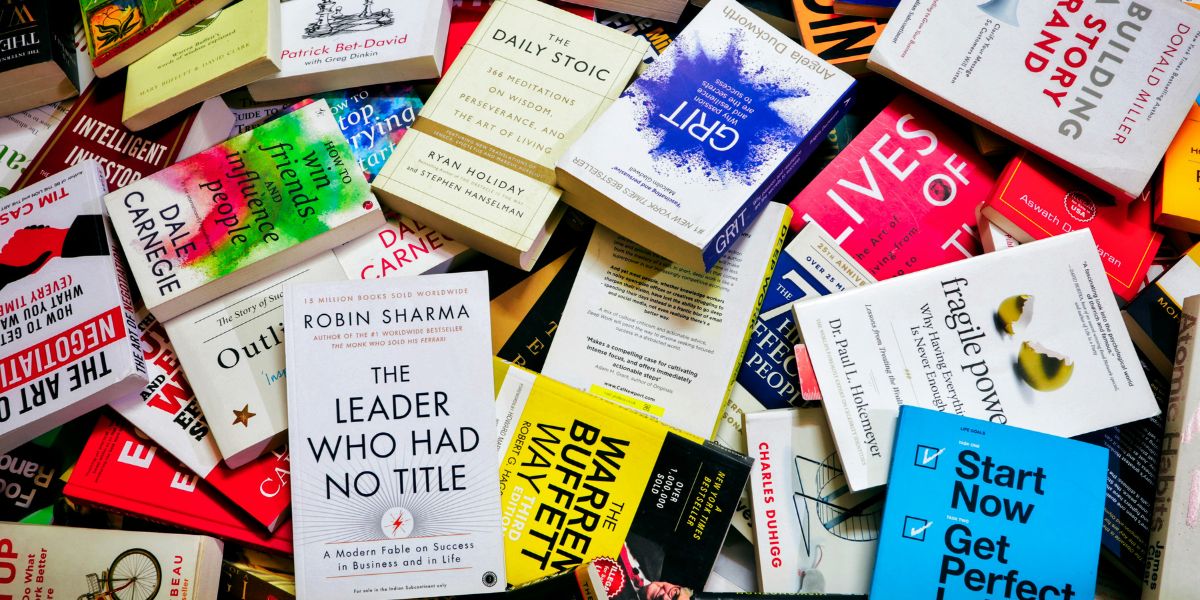
A book cover is not simply decoration. It communicates expectations.
A thriller, memoir, children’s book, business title, romance novel, and self-help book are not expected to look identical. Readers become familiar with the visual language surrounding different categories.
An effective cover can therefore communicate tone, genre, subject matter, and intended audience before a potential reader has even examined the description.
This does not mean every book should imitate competing titles. Originality matters. But originality works best when readers can still understand what kind of experience they are being offered.
A cover should attract attention while remaining connected to the character of the book.
Professionalism Is Cumulative
No single design or editorial decision creates credibility on its own. Instead, credibility tends to emerge from consistency.
The title feels appropriate. The cover feels intentional. The description clearly explains the book. The manuscript is polished. The interior feels professionally organized. The author’s online presence matches the quality of the publication.
When those elements reinforce one another, the book feels complete. When they contradict one another, readers may experience uncertainty even if they cannot immediately explain why.
This is one reason authors benefit from looking at publishing as a connected production process rather than a collection of unrelated tasks.
Independent Publishing Raises the Importance of Quality Control
Independent authors have considerable control over the way their work reaches the public. That freedom can be extremely valuable. It also creates responsibility.
Without a traditional publishing organization automatically coordinating the editorial and production process, authors need to decide how each stage will be handled.
Who will edit the manuscript? Who will proofread it? Who will design the cover? Who will prepare the interior? Who will make sure the different elements work together?
The objective should not be to reproduce traditional publishing for its own sake. The objective is to apply professional standards to the author’s chosen publishing path.
Quality Allows the Writing to Lead
Professional editing and production do not guarantee that every reader will love a book. No production process can do that.
What professional preparation can do is ensure that avoidable presentation problems do not distract from the author’s work.
When editing, formatting, proofreading, and design are handled carefully, readers can focus on what matters most: the ideas, the argument, the characters, the information, and the story.
Marketing And Publishing House LLC provides editing and formatting, proofreading, cover design, publishing, printing, and related production services as part of its wider publishing offering.
For authors preparing to enter the market, that is the real purpose of professional production: giving the manuscript the environment it needs to be taken seriously.