



By Blake Daniels
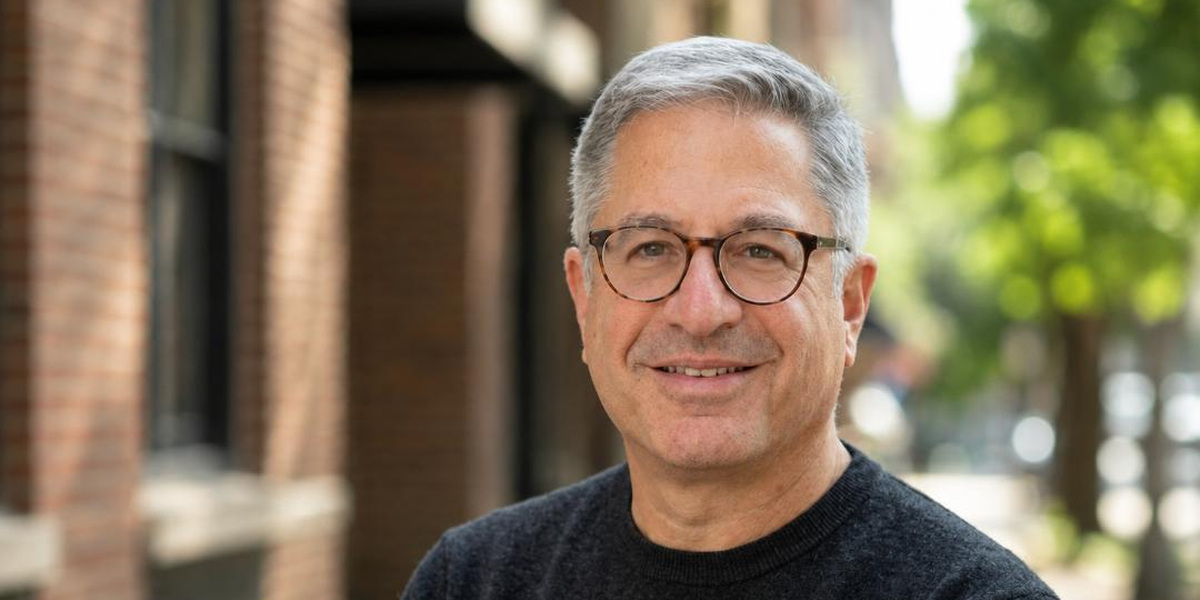
Billy Planer has spent much of his career asking people to move, sometimes literally, before asking them to think differently about conversation. Since 2004, his three-day Civil Rights journeys through the American South have brought adult and teen groups into places where history becomes immediate and personal. The trips are one part of a larger body of work that now informs his book, Conversations That Matter, a guide to speaking with people whose identities, beliefs, and votes may be very different from one’s own.
Planer says the journeys are designed to help participants understand connection: to history, to one another, and to people whose lives may initially seem distant from their own. He has found that changing geography can also change behavior. “I found that leaving your comfort zone and going somewhere new opens you up to engaging in things you may not normally do. It expands your boundaries,” he says. “Much like a good conversation that matters will.”
That insight sits at the center of Conversations That Matter. Planer does not define successful dialogue as a conversation in which everyone agrees. Instead, he focuses on the ability to remain engaged when agreement is unlikely. “Conversations That Matter is about how and why we must talk with people who don’t look, think, pray, love, and in 2026, vote like us,” he says. “We must become comfortable being uncomfortable having what I term a conversation that matters.”
The Civil Rights journeys followed an earlier project, Etgar 36, the five-week cross-country teen program Planer launched in 2003. Through that program, teenagers met people on opposing sides of issues including guns, abortion, marriage equality, climate change, marijuana legalization, and wealth disparity. Planer wanted young people to hear views directly rather than encounter them only through summaries, headlines, or social media. The Civil Rights trips expanded the same basic principle: firsthand experience can complicate assumptions in productive ways.
Planer sees one major barrier to serious dialogue in the habit of viewing people as fundamentally separate. In discussing that challenge, he cites the Rev. Dr. Martin Luther King Jr.: “Men hate each other because they fear each other. They fear each other because they don’t know each other, and they don’t know each other because they don’t communicate with each other, and they don’t communicate with each other because they are separated from each other.” For Planer, modern communication technology has not automatically solved that problem. People may be highly connected online while remaining socially or emotionally separated from those who hold different views.
His proposed shift is from seeing someone as “the other” to seeing that person as “another”, another human being trying to make sense of life, relationships, community, and responsibility. He argues that stories help make that shift possible because stories add context that labels remove. A political position can be easy to dismiss in the abstract. A person describing the experiences that shaped that position is harder to flatten into a stereotype.
Planer’s own interest in connection intensified after a tragedy during his senior year at Syracuse University. In 1988, friends of his, including his junior-year roommate, were murdered in the bombing of Pan Am Flight 103. The event made him think about how closely people are connected to events and strangers they may not know or understand. He began wondering whether people would be as willing to harm others if they knew them, shared stories, and recognized their connections.
Planer’s background also helps explain the educational structure behind the journeys. An Atlanta native, he earned a bachelor’s degree from Syracuse University and later completed a master’s degree in education and counseling at Georgia State University. His career has combined facilitation, travel, teaching, public speaking, and group leadership, giving him repeated opportunities to see how people respond when difficult history or contested ideas are presented through personal encounters rather than abstractions. Those observations now give the book much of its practical character.
That question still drives his work decades later. Through trips, keynote speeches, panel discussions, media appearances, and now Conversations That Matter, Planer encourages people to build tolerance for the discomfort that comes with honest disagreement. He does not suggest that history, politics, faith, identity, or social issues are simple. His argument is narrower and more practical: avoiding difficult conversations can deepen separation, while learning how to navigate them can preserve the possibility of connection.
The Civil Rights journeys make that philosophy tangible. Participants leave familiar spaces, encounter difficult history, listen to stories, and return with more context than they had before. Conversations That Matter asks readers to attempt the same kind of journey in conversation, moving beyond certainty long enough to hear another person clearly, while still holding on to their own convictions.
Conversations That Matter is available on Amazon.