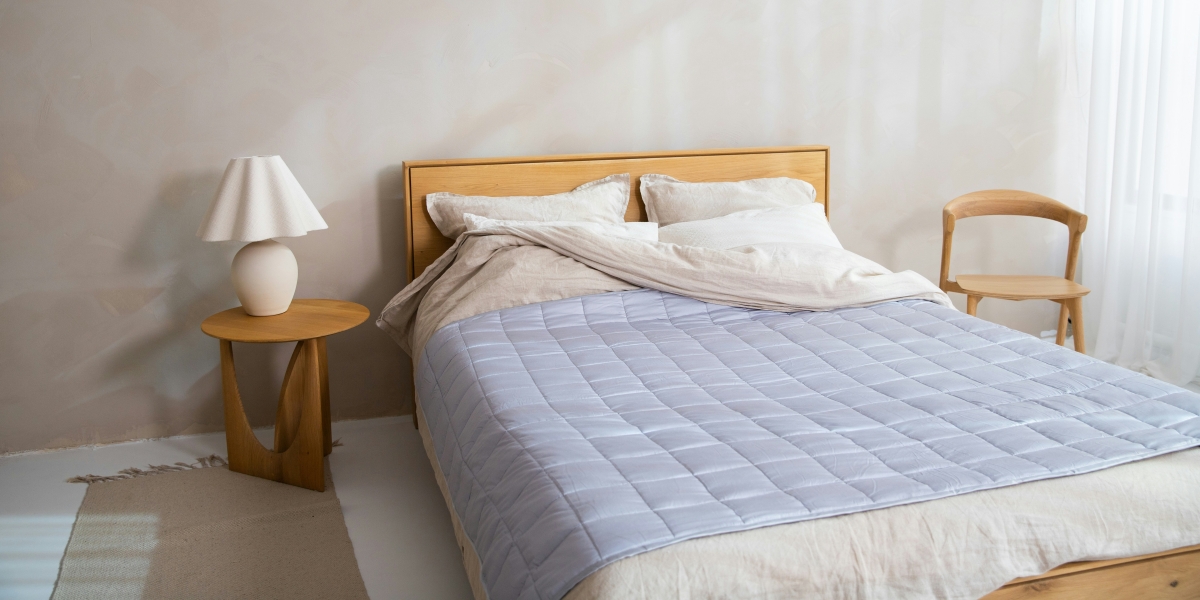





During LA heat waves, look for a cooling mattress with three things: a coil layer that lets air move, breathable comfort materials like open-cell foam or ventilated latex, and a breathable cover. That is why many hot sleepers find a cooling hybrid more comfortable than a traditional all-foam memory foam mattress, which tends to hold more heat.
When a heat wave keeps bedrooms warm long after sunset, the mattress becomes part of the equation. Its construction can either let warmth escape or add another warm layer between you and an already stuffy room. That makes how a mattress is built far more important than whether it carries a “cooling” label.
Key Takeaways
• Cooling starts with the overall mattress construction, not just a cooling label.
• Coil systems, open-cell foams, and ventilated latex are commonly used to encourage airflow.
• Memory foam’s density can cause it to retain more heat, though construction varies widely.
• Gel, phase-change materials (PCM), and cooling covers are features to evaluate, not guarantees.
• Sheets, mattress protectors, blankets, fans, and room ventilation all contribute to how the bed feels.
• Testing mattresses in person can help you compare surface feel and construction.
Why Heat Waves Can Change How Your Mattress Feels
When a bedroom stays warm for hours, everything in it starts from a higher temperature. A mattress that feels perfectly comfortable on a mild evening can feel noticeably warmer when the room has held heat all day.
This is especially noticeable in apartments or bedrooms with limited airflow. A fan may move air across the room, but it cannot change the construction of the mattress underneath you. That is why, if your bedroom tends to hold heat, it is worth looking for a mattress designed to promote airflow and dissipate heat.
What Actually Makes a Mattress “Cooling”?
A cooling mattress does not necessarily feel cold to the touch. More often, its advantage becomes apparent after you lie down. That comes down to the way the mattress is built and the materials used to build it. Some designs leave space for air to move through, while others rely on materials that are naturally more breathable.
Constructions That Keep Your Mattress Cool
When shopping for a cooling mattress, look beyond phrases such as “cooling technology” or “temperature regulating.” Check how the mattress is constructed from top to bottom.
• Does the mattress use an open or ventilated foam?
• Is there a coil layer that creates space for airflow?
• Is latex ventilated?
• What is the cover made from?
• Is the cooling technology limited to the surface, or does it form part of the overall construction?
The answers provide a more useful picture than the word “cooling” printed on a product page. All-foam, hybrid, latex, and innerspring designs each handle airflow and heat differently.
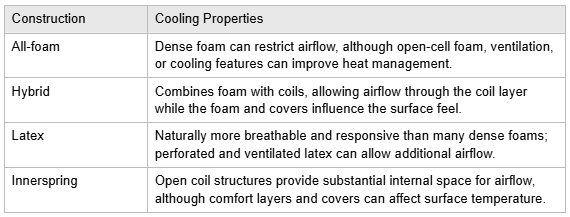
Materials That Help Manage Heat
Mattress shopping can quickly become a vocabulary exercise. What matters is how each feature contributes to the way a mattress handles heat, particularly when the bedroom is already warm.
Open-Cell Foam: The structure of the foam matters as much as the fact that it is a foam. Open-cell design creates more space within the material for air to move, which can help heat disperse through the comfort layer rather than remaining concentrated around the sleeper.
Gel-Infused Foam: Gel is intended to influence how heat is managed within the foam, especially near the sleeping surface. Its presence alone says little about the mattress as a whole, since the amount of gel, where it sits, and the surrounding construction all affect its role.
Phase-Change Material (PCM): PCM absorbs and releases heat as the indoor environment changes. In a mattress, it is typically incorporated into a cover or foam layer, making it more of a temperature-moderating component.
Cooling Covers: The cover is the first layer between the sleeper and the mattress, so its material can influence the initial feel of the sleeping surface. Breathable fabrics allow more airflow, while moisture-managing materials can help the surface feel less clammy in hot conditions.
Moisture-Wicking Fabrics: These fabrics move moisture away from the skin, helping the surface stay drier and more comfortable. Their contribution is more about managing the feel of the sleeping environment than actively cooling the mattress.
None of these features alone tells the full story. Their effects depend on where they appear in the mattress and how they work with the layers around them.
Hybrid vs. Memory Foam Mattresses: Which One Should You Choose?
When comparing mattresses for cooler sleep, the choice often comes down to hybrid vs. memory foam construction. Both can use cooling materials, but they handle airflow and body heat differently.
A hybrid mattress combines foam comfort layers with an internal coil system. The open space around the coils allows more air to circulate within the mattress, which can help reduce heat buildup. The surface can still provide the cushioning and pressure-relieving feel associated with foam mattresses.
Memory foam, by contrast, has a dense structure that can limit airflow and may feel warmer as your body settles into the mattress. That doesn’t mean all memory foam mattresses sleep hot. Newer models use breathable cell structures, cooling gels, and construction technologies that help regulate temperature.
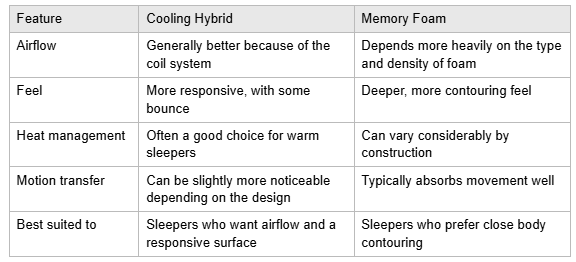
If your bedroom already runs warm, a cooling hybrid may be worth considering, particularly if you prefer more airflow and a responsive feel. If you like the softer, more enveloping feel of memory foam, look for a model designed with breathable materials and cooling features.
Construction matters more than the label alone. A well-designed memory foam mattress can feel cooler than a poorly ventilated hybrid, so check the materials, comfort layers and cooling features rather than assuming one category will always sleep cooler.
Should You Test a Mattress In-Store?
Knowing how construction and materials affect heat is only half the decision. The other half is how a mattress actually feels to you. Before buying, lie down on a few options instead of relying only on product specifications.
A showroom lets you compare different constructions side by side and notice how airflow, surface materials, and overall feel differ from one mattress to another. In Los Angeles, SleePare’s West LA showroom lets you try hybrid and memory foam mattresses from several online brands during the same visit, so you can compare both constructions before deciding.
Your Mattress Is Only One Part of the Cooling Setup
It’s tempting to blame the mattress whenever a bedroom feels too warm. Sometimes it is. Sometimes it is not.
You can buy a mattress designed for hot sleepers and still feel too warm if everything around it is working against you. During a Los Angeles heat wave, reducing heat buildup in the room, improving airflow and switching to lighter bedding can be just as relevant to comfort as the mattress itself. And Los Angeles is not one uniform sleeping environment. A coastal apartment, an inland home and a high-rise bedroom can hold and release heat very differently.
Start with the bedding.
Heavy comforters, dense mattress protectors and less breathable sheets can all change how the sleeping surface feels. Lightweight bedding and breathable fabrics may be worth considering during hotter periods.
Then look at the room.
Is warm air trapped inside? Is there enough ventilation? Does the room receive direct afternoon sun? Does the building hold onto heat after sunset? For an LA heat wave there is no single fix, and the most comfortable setup is often the one where the mattress, bedding, and bedroom all work in the same direction.
What Should Los Angeles Residents Look For During a Heat Wave?
A heat wave can change what matters most in a mattress. Instead of focusing only on firmness or brand, use this checklist.
1. Look for airflow. Check whether the mattress uses coils, ventilated latex or open-cell foam.
2. Check the cover. A breathable surface can influence how the mattress feels when you first lie down.
3. Look beyond “gel.” Gel may be part of a cooling system, but it should not be the only feature you evaluate.
4. Think about your bedding and room. A cooling mattress paired with heavy bedding or a stuffy room may not feel particularly cool.
5. Test the mattress if possible. A specification sheet cannot tell you exactly how warm or comfortable a mattress will feel to you.
Frequently Asked Questions
Are cooling mattresses worth considering during an LA heat wave?
Cooling mattresses are worth considering during an LA heat wave if your current mattress feels noticeably warmer than you would like. Look at the construction rather than relying solely on the cooling label. It also helps to consider the bedroom environment at the same time, since bedding and airflow affect how warm the bed feels.
Is memory foam always hot?
Memory foam is not always hot, because constructions vary widely. Some memory foam mattresses use open-cell structures, cooling materials or other features designed to reduce heat retention. The density, layers, cover and overall design all influence how warm the surface feels.
Are hybrid mattresses cooler than memory foam?
Hybrid mattresses often sleep cooler than all-foam memory foam mattresses, because their coil layer creates more internal space for airflow. However, the comfort layers and cover also influence how warm the surface feels. Testing both side by side is the easiest way to compare them for yourself.
Does a cooling mattress cool the entire bedroom?
A cooling mattress does not cool the entire bedroom. It can influence how the sleeping surface feels, but it does not change the temperature of the room. Air conditioning, fans, ventilation, sunlight and bedding remain important parts of the overall setup.
Choosing a Cooling Mattress That Fits Your LA Bedroom
For Los Angeles residents, a heat wave can expose weaknesses in a bedroom setup that are easy to overlook on a normal evening. The mattress may be part of the problem. It may also be only one piece of it.
The better question is which mattress construction gives you the comfort you want without adding unnecessary heat to your sleeping environment. Instead of chasing the most impressive cooling claim, look at how the mattress is built and whether that construction fits the place where you actually sleep.