


By: Emilio Andrade
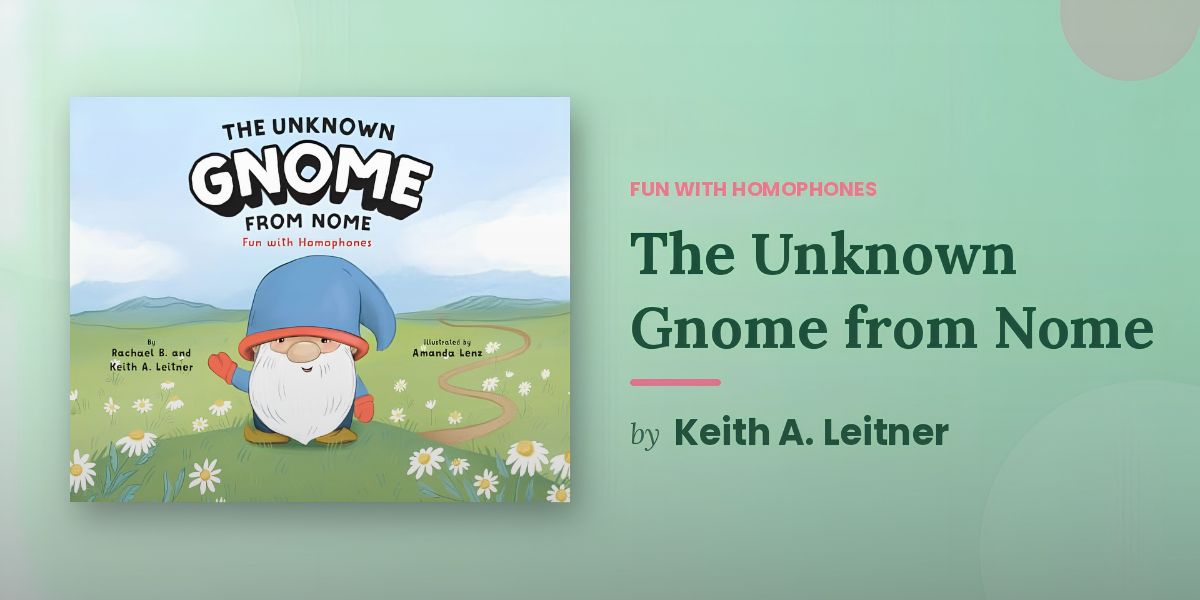
The English language is, by any reasonable measure, bewildering. The same sounds produce different words, the same words produce different meanings, and the rules that are supposed to govern all of this have exceptions that outnumber the rules themselves. For children learning to read and write, homophones represent one of the most specific and most reliably frustrating expressions of this bewilderment, the discovery that know and no are not simply the same word with two different looks but two entirely different words that have conspired to occupy the same sound. Most educational approaches to this problem are earnest and systematic and largely forgettable. Keith A. Leitner and his wife have taken a different approach entirely, building a story around a gnome from Nome whose name is unknown that makes the specific comedy of homophones not just visible but genuinely funny, and the result is a children’s book that earns its educational credentials through entertainment rather than despite it.
The structure of the book reflects the authors’ genuine understanding of how children actually engage with language learning, which is through play rather than instruction, through the specific pleasure of getting a joke rather than the specific labor of memorizing a rule. Each homophone pair that the story introduces arrives in a context that makes the distinction between the two words both clear and amusing, the gnome’s unnamed status giving the book a recurring comedic thread that ties the individual vocabulary moments together into a coherent and genuinely funny narrative rather than a series of disconnected examples.
The specific brilliance of the Nome gnome as a central character is worth pausing on. Nome, Alaska carries its own phonetic peculiarity, sounding identical to gnome, which is itself a word with a silent letter that makes it look nothing like it sounds. The character of the gnome thus embodies the very phenomenon the book is exploring, a creature whose name sounds like the place he comes from, whose written form conceals itself behind a silent letter, who is by definition un-known and unknown in both senses simultaneously. This is exactly the kind of layered wordplay that makes language genuinely interesting to children who are old enough to appreciate the joke, and Leitner has built his entire book around it with the confidence of someone who trusts his young audience to catch up and enjoy themselves when they do.
The warmth and the humor that run through the book reflect the genuine pleasure that the authors took in writing it, and that pleasure is contagious in the specific way that the best children’s books have always been contagious, making the reader want to share the discovery with someone else.
If you want to give a young reader the specific pleasure of discovering that English’s most confusing features are also its funniest ones, The Unknown Gnome from Nome by Keith A. Leitner is exactly the right book at exactly the right moment. Pick up your copy on Amazon today and let the gnome from Nome teach homophones the way they were always supposed to be taught: through laughter.