


Why Alan Griesinger Believes Great Stories Teach Us How to Live
There is a reason some books stay with you long after you close them. Not because of plot twists or clever endings, but because they quietly shift how you see yourself.
For Alan Griesinger, that is the entire point of literature.
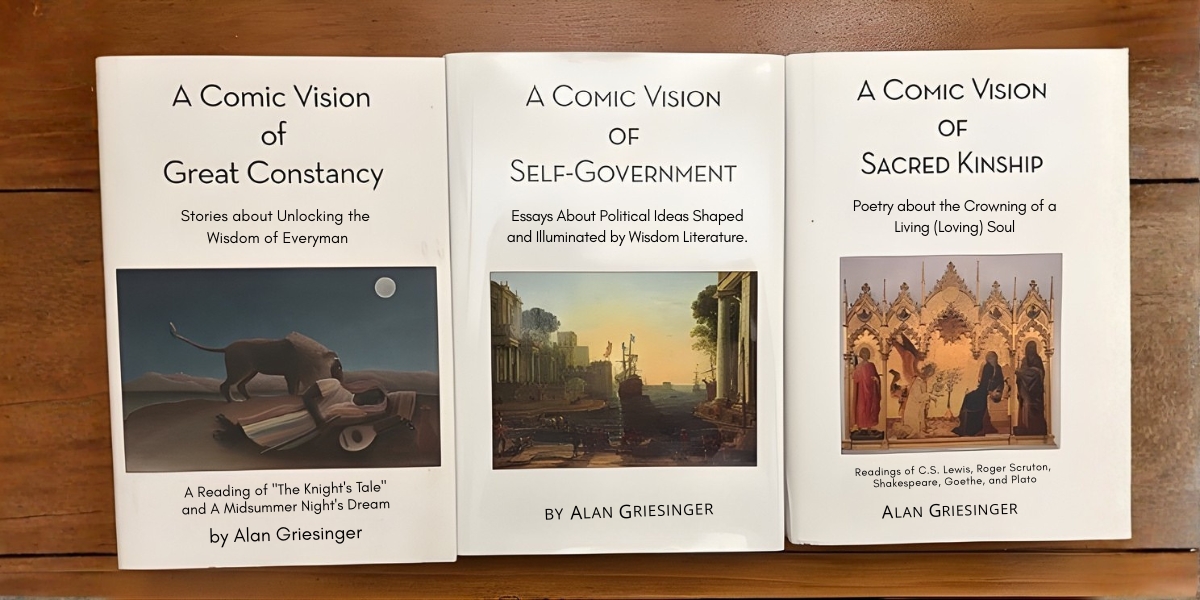
His book A Comic Vision of Great Constancy: Stories about Unlocking the Wisdom of Everyman did not come from theory or trend watching. It came from decades inside a classroom, watching real people struggle, mess up, repair, and grow.
This is not a book about reading for pleasure. It is about reading as practice for life.
A Classroom That Turned Into Something More
Alan did not start his career thinking he would write a book like this.
Early on, he was just trying to survive as a new teacher. But his students had other plans. They pushed him to see the classroom differently.
It stopped being a place where information moved from teacher to student. It became a small community with its own rhythm, its own tensions, and its own moments of repair.
They even renamed him. Not formally, not ceremoniously. Just naturally. Mr. G.
That small shift mattered more than it sounds.
It meant the distance was gone. Now he was part of the same messy system as everyone else.
Students brought their problems into the room. Misunderstandings, pride, and frustration. And at the same time, they were reading stories where those exact problems played out in different forms.
That overlap changed everything.
Alan was not just teaching literature anymore. He was living inside it.
Mistakes Became the Real Curriculum
One idea sits at the center of his work.
People do not grow by avoiding mistakes. They grow because of them.
In his classroom, that was not a slogan. It was visible every day.
Students clashed. They misread situations. They held onto ideas too tightly. And then slowly, sometimes reluctantly, they adjusted.
The same pattern showed up in the books they were reading.
Characters fall apart before they come together. They misunderstand before they see clearly. They lose before they gain anything real.
Alan began to notice something. Literature was not just reflecting life. It was rehearsing it.
When things went wrong in the classroom, the stories helped him figure out how to respond. Not perfectly, but better.
That experience became the backbone of his book.
What a “Comic Vision” Actually Means
The title of his book can throw people off.
“Comic” sounds like humor. Lightness. Something easy.
That is not what he means at all.
In the literary sense, a comic vision is about movement. From confusion to clarity. From conflict to reconciliation. From ego to something more grounded.
It is the belief that failure is not the end of the story.
It is the middle.
This idea shows up again and again in classic works. Stories where people fall hard, sometimes painfully, before they find their footing.
For Alan, that pattern is not just a storytelling device. It is a model for living.
The Moment That Changed His Teaching
There was one classroom moment that forced him to rethink everything.
He was teaching an Advanced Placement Literature class. Some students refused to read Homer because of pagan associations. Others resisted Chaucer because of his Christian background.
The class was splitting along lines that had nothing to do with the actual stories.
Alan had a choice. Push harder on those labels or remove them.
He removed them.
Instead of focusing on where the stories came from, he focused on what they showed. Human behavior. Mistakes. Desire. Pride. Repair.
Something unexpected happened.
Students connected.
Even texts written centuries ago suddenly felt immediate. Chaucer, of all things, became a favorite.
That shift reinforced a simple idea. People are more alike than they think. And stories reveal that quickly when you stop filtering them through identity labels.
Wisdom Does Not Show Up When Life Is Easy
Another thread running through Alan’s thinking is how wisdom actually enters a person’s life.
It does not arrive when everything is smooth.
It shows up when things break.
There is a moment, he suggests, when life pushes back hard enough that you cannot ignore it anymore. That is when people become open to change.
Literature captures that moment again and again.
Characters lose what they thought defined them. Status, relationships, certainty. And in that gap, something new becomes possible.
Not guaranteed. But possible.
That is where wisdom lives.
The Ego Has to Take the Hit
Alan often points to what he calls a “comic fall.”
It is not funny. It is uncomfortable. Sometimes painful.
It is when a person’s self-image collapses.
In stories, this often looks dramatic. Rivalries, heartbreak, loss. But underneath, it is something familiar.
We hold onto an idea of how things should be. Then reality disagrees.
That clash forces a choice.
Double down or adjust.
The comic vision leans toward adjustment. It suggests that letting go, even reluctantly, opens the door to something more stable.
Courtesy Is Not What You Think
One of the more surprising ideas in his book is the role of courtesy.
Not politeness for the sake of appearances. Something deeper.
For writers like Chaucer and Shakespeare, courtesy is a form of social intelligence. It is how people maintain relationships under pressure.
When tension rises, courtesy creates space for repair.
Without it, small conflicts turn into lasting damage.
Alan saw this play out in his classroom and in the stories he taught. The ability to step back, recognize a mistake, and respond with some level of grace changes outcomes.
It sounds simple. It rarely is.
Why He Finally Wrote the Book
After retiring, Alan made a decision.
He did not want these insights to disappear with his teaching career.
So he wrote A Comic Vision of Great Constancy.
Not as an academic exercise. Not as a literary analysis.
As a record of what he had seen.
He believes modern culture moves too fast. There is a tendency to discard the past, to assume older works have nothing to offer.
He disagrees completely.
Those stories, he argues, are patient records of human behavior. They show people failing, adjusting, repairing, and trying again.
That pattern has not changed.
The Takeaway for Today
What Alan is really saying is simple, but not easy.
You do not need perfect control over your life.
You need the ability to respond when things go wrong.
That is self-government. Not controlling others, not forcing outcomes, but managing your own reactions, your own ego, your own next step.
Great literature teaches that quietly, over time.
Not by telling you what to do.
By showing you what happens when people get it wrong, and how they find their way back.
Looking for something thoughtful with a sharp edge?
Alan Greisinger’s A Comic Vision of Great Constancy: Stories about Unlocking offers stories that mix insight, humor, and reflection in a way that stays with you.
Explore more and discover the book at: A Comic Vision