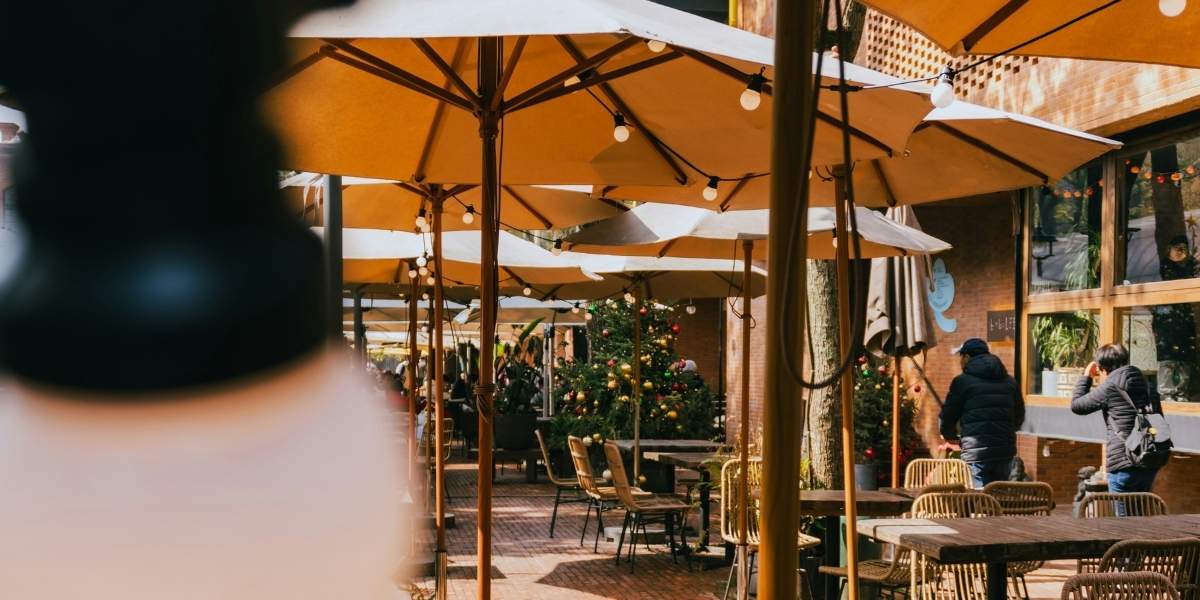




El Niño is strengthening ahead of Southern California’s winter, bringing greater attention to weather-sensitive revenue at Los Angeles restaurants. The outlook coincides with a 2027 deadline for temporary outdoor dining permissions. Federal forecasts, industry financial data and city fee schedules explain the exposure, while leaving the scale of potential storm-related losses uncertain.
Key Takeaways
- NOAA’s October 8 advisory gives a greater than 83% chance of strong-to-very-strong El Niño conditions continuing through January-March 2027
- NOAA’s September seasonal outlook favors wetter-than-normal conditions in California, with probabilities reaching 50% to 60% near the coast during parts of winter
- Full-service restaurants reported median pretax income of 2.8% of sales in 2024, according to a national industry survey
- Los Angeles temporary Al Fresco dining permissions are valid through April 1, 2027, while businesses work toward permanent approvals
El Niño is strengthening as Los Angeles restaurants prepare to manage weather-sensitive outdoor seating. NOAA’s latest advisory anticipates strong-to-very-strong conditions through early 2027, but cannot predict individual restaurant patio closures.
The uncertainty arrives alongside a separate, fixed date for restaurant operators. The city is transitioning temporary L.A. Al Fresco authorizations into permanent permits, with April 1, 2027, marking the end of the current pathway. For restaurants that depend on open-air capacity, weather interruptions and permit-related expenses are distinct financial considerations.
El Niño Outlook Favors a Wetter Southern California Winter
In its October 8 advisory, NOAA’s Climate Prediction Center said the probability of a strong-to-very-strong El Niño continuing through January-March 2027 remained above 83%. Ocean temperatures in key parts of the equatorial Pacific were well above average, supporting the agency’s assessment that the event was strengthening.
A separate September 17 seasonal outlook favored above-normal precipitation across California during the colder months. For December-February, January-March and February-April, the forecast assigned probabilities reaching 50% to 60% near parts of the California coast. Those percentages indicate the odds of above-normal seasonal totals, not a projected increase in rainfall or the proportion of days expected to be wet.
For outdoor dining, the distinction is consequential. A wetter-than-normal season could include long intervals with little rain, while an individual storm could coincide with a heavily booked dinner period. Seasonal forecasts cannot identify which Los Angeles dining areas will lose usable seating or estimate the resulting sales effects.
Beyond patios, Los Angeles winter flood risks include potential street flooding and access problems during intense storms. Their severity depends on the timing, location and characteristics of each weather system rather than El Niño’s strength alone.
Past storms show how a financial disruption can unfold. In March 2023, the Los Angeles Times reported that downtown restaurant LA Cha Cha Cha estimated $500,000 in revenue lost that winter because of poor weather. The restaurant had to adjust staffing and move diners indoors when rain affected its open-air seating.
The same report quoted Daniel Castillo, co-owner of Heritage Barbecue in San Juan Capistrano, saying, “When it rains, people aren’t coming.” His account concerned a different restaurant outside Los Angeles city limits. Neither example establishes a typical loss for outdoor dining businesses or predicts what will occur in 2026-27.
Thin Margins Make Lost Patio Seating a Revenue Concern
National figures illustrate restaurants’ narrow financial margins. The National Restaurant Association’s 2025 operations data drew on records from more than 900 restaurants and found that median income before taxes equaled 2.8% of sales for full-service respondents in 2024. The corresponding figure for limited-service respondents was 4%.
In a separate July 2026 analysis, the association estimated that total expenses for an average restaurant had risen 36% between 2019 and 2026. It also reported that 42% of operators said their restaurants were unprofitable in 2025. These national figures are not Los Angeles-specific.
A canceled outdoor reservation does not create an identical reduction in earnings. Some customers may accept indoor seating, and restaurants can sometimes reduce food orders or adjust shifts. Other expenses, including occupancy costs and some already-scheduled labor, may remain even when fewer tables are available.
The effect also varies with restaurant design. A business with ample indoor tables can potentially preserve more bookings than one built around an uncovered terrace. The LA experiential dining trend reflects the attention some local establishments give to physical setting and layout, adding another consideration when outdoor space is temporarily unusable.
The financial exposure depends partly on when the forecast changes. Advance warning may allow a venue to contact guests and revise staffing. Rain arriving shortly before service leaves less time to reassign reservations, adjust preparation and protect equipment. No citywide estimate has established how much revenue El Niño will cost Los Angeles restaurants this winter.
April 2027 Outdoor Dining Deadline Brings Permit Costs Into Focus
Since 2020, more than 3,000 restaurants citywide have participated in temporary L.A. Al Fresco outdoor dining, according to the Los Angeles Department of Transportation. The city’s guidance says operators still holding temporary authorizations were automatically enrolled in a transition pathway on July 1, 2026. Those permissions remain valid through April 1, 2027, while operators work on outstanding permits, inspections and approvals.
The required process depends on where the tables sit. On-street dining requires a revocable permit through the Bureau of Engineering, with review involving the Department of Transportation. Sidewalk dining has separate revocable-permit requirements. Private-property dining areas must undergo applicable building and zoning review, and alcohol service can require additional authorization.
For on-street dining, the city’s published schedule lists a one-time application review fee of $1,200 for existing participants and $1,500 for new applicants. Separate revocable-permit fees, sewer facilities charges assessed per seat and, where required, inspection or construction review fees can add to the total. These amounts are permit charges, not estimates of weather-related losses.
Temporary weather protection raises its own approval questions. The city offers standard plans for certain shade-sail installations, but coverage does not automatically mean a structure is approved for every site or safe to use during severe weather. The Department of Transportation’s rules also require equipment to be secured or put away during storms and high winds.
Restaurant operators seeking to retain street or sidewalk seating must provide site plans and meet relevant accessibility, liability insurance and city approval requirements. Additional review may be necessary when a dining area includes new construction. The permanent approval process is separate from NOAA’s forecast, and neither the city’s deadline nor its listed fees indicate how many restaurants will be affected by rain.
Frequently Asked Questions
Does El Niño guarantee heavy rain in Los Angeles?
No. El Niño increases the likelihood of some seasonal weather patterns, but it does not determine the timing, severity or location of individual storms. NOAA’s forecast describes probability, not a guaranteed rainfall total.
How might winter storms affect restaurant revenue?
Storms can make outdoor tables unavailable and prompt cancellations or changes to service. The financial effect depends on indoor capacity, booking patterns, staffing and costs a business can adjust.
When do temporary L.A. Al Fresco permits expire?
Los Angeles says temporary authorizations remain valid through April 1, 2027, while participating businesses advance through required approvals. Requirements depend on whether outdoor dining is on the street, sidewalk or private property.
How much does an on-street outdoor dining application cost?
The city’s listed application review fee is $1,200 for an existing participant and $1,500 for a new applicant. Separate permit, per-seat and potentially construction or inspection charges may apply.