


By: Aman Jalan
Forests VC is bringing a value-add development mindset to natural capital, where renovating a farm can mean redesigning its economics and regenerating its land.
Walk onto an aging apartment complex with an experienced real estate developer, and they rarely see only what is there. They see what could be improved. Forests VC is applying that same instinct to farms.
The natural capital development company, co-founded by regenerative finance executive Ronny Castillo and business strategist Kimberly Lacayo, aims to acquire or partner on undervalued land and transform it into more productive, resilient, and valuable natural assets.
Costa Rican businessman and business partner Marco Zúñiga captures the mindset. “The question extends beyond what the land is worth today. It’s what the land could become.”
The answer may involve substantially more than changing what gets planted. Forests VC looks across the entire property. High-value regenerative forestry can create biological growth with long-duration asset value. Agriculture can generate nearer-term revenue. Strategic water management can strengthen productive capacity. Processing can capture margin closer to its source. Circular systems can convert byproducts into useful inputs or new outputs. Biodiversity can contribute to resilience, while tourism and measurable ecosystem services may create additional opportunities where appropriate.
Renovating a farm, in this sense, can mean redesigning its economics.
Forests VC calls its playbook the FINCA Framework. Acquire, Design, Grow, Measure, Optimize, and Connect form its six stages.
The framework begins by understanding the asset before deciding what it should become. Soil, water, climate, biodiversity, infrastructure, market access and the surrounding economy all help determine which combination of productive systems makes sense.
That assessment extends directly into operations. Agronomist and Forests VC Head of Asset Management Adrian Vargas focuses on agricultural systems, irrigation, crop efficiency and logistics, helping translate the property’s physical potential into productive performance.
For Lacayo, whose background spans communications, business strategy, ESG and corporate social responsibility, that integration changes the traditional sustainability equation. “Better stewardship should be one of the reasons the asset becomes more valuable,” she says.
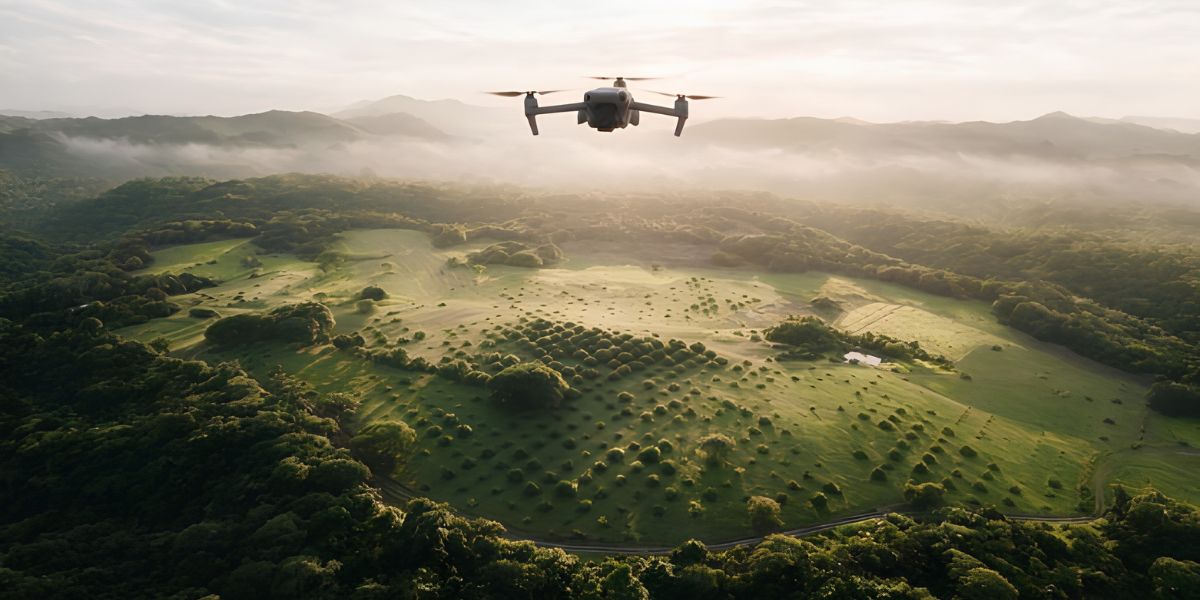
Technology can add another layer. Remote sensing, ground-level monitoring and planned digital-twin capabilities can provide greater visibility into how the property and its productive systems evolve.
The objective, however, remains economic. Castillo, whose career evolved from conventional finance into regenerative finance and natural capital, sees the opportunity through the lens of capital allocation.
“The challenge isn’t finding capital,” he says. “It’s building natural assets that deserve it.”
That philosophy is being applied at Raíz de Oro, the group’s flagship Costa Rican development, where Castillo serves as president and a multidisciplinary team is bringing together forestry, agriculture, engineering, law, business, and land stewardship.
The larger opportunity is to make the process repeatable. Forests VC envisions an acquisition and development platform that can identify promising properties, apply FINCA to develop more of their potential, and connect the resulting assets with markets and capital.
That makes the company’s opportunity bigger than owning farms. It is about building the capability to transform them.
For landowners, that could mean a partner capable of seeing opportunities within a property that have yet to be developed. For investors, it could create access to differentiated real assets with multiple potential economic engines across varying time scales.
Real estate investors have spent generations creating value by repositioning overlooked properties. Forests VC is applying a similar principle to the natural world. Find the potential. Design around the land. Improve the economics. Regenerate the asset. Then do it again.