



By: Kate Sarmiento
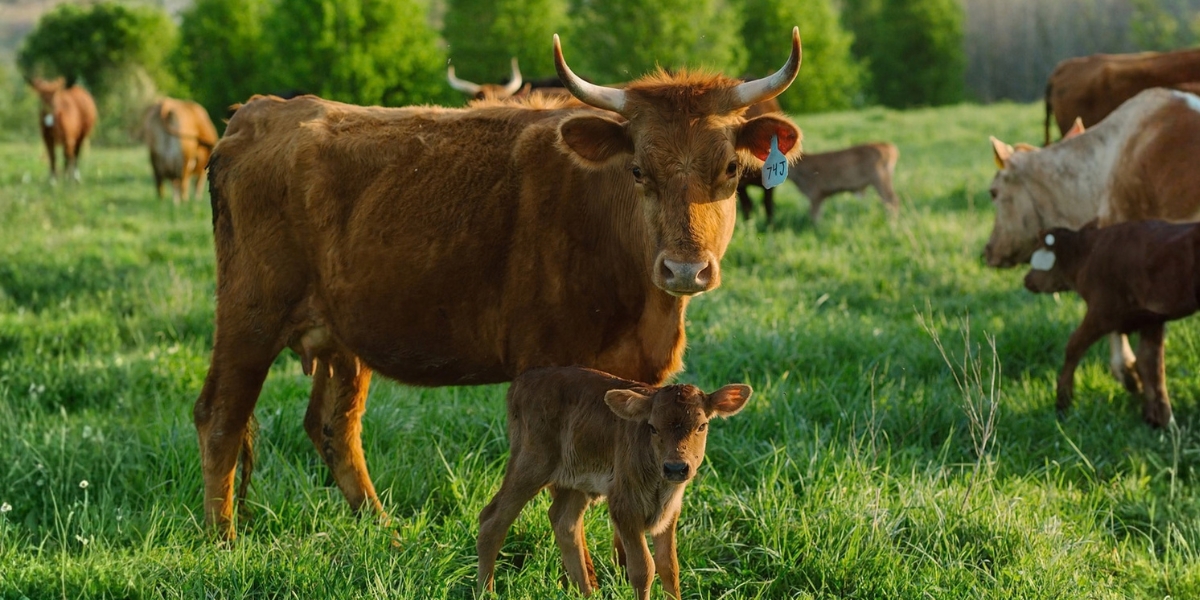
More than half of U.S. farm households lost money from farming in 2024 (Source: USDA Economic Research Service, 2025). Think about that for a second, because those are the same farms regenerative agriculture is supposed to grow on. Maggie Keith has been working on this problem for close to 20 years at Foxhollow Farm, a 1,300-acre regenerative farm in Crestwood, Kentucky, where the land and the business both have to hold up. Foxhollow raises 100% grass-fed, grass-finished beef and sells it straight to customers around the region, and it carries three certifications: Demeter Biodynamic, Regenified Level 5, and American Grassfed Association.
Most American farms are small family farms (about 86% of them), and the families running them usually make most of their money off the farm (Source: USDA Economic Research Service, 2026). The farm doesn’t cover the household bills on its own. So when someone asks these families to switch to regenerative practices, they’re asking people with no cushion to take on more cost and more risk, and that’s a tough thing to say yes to.
This matters beyond the farm gate. Shoppers who pay more for grass-fed beef need those farms to stay open, and food companies that have promised to source regenerative ingredients need farms that last long enough to supply them. Both groups are counting on farmers to make a living, yet the money question rarely gets the same attention as soil health.
Good Intentions Don’t Count as Collateral
Switching to regenerative practices costs money before it makes money. Look at Kansas wheat farms. In the first couple of years after they switch, profits can fall by up to 60% or more because yields drop and farmers have to pay for new seed and machinery (Source: Boston Consulting Group, 2023). The same numbers show the switch can pay off later, with a 15% to 25% return over ten years. Getting there can take three to five years, though (Source: World Business Council for Sustainable Development, 2023), and a farm that’s already losing money has a hard time waiting that long.
And the margins were thin to begin with. Farms got 11.8 cents of every dollar Americans spent on domestically produced food in 2024 (Source: USDA Economic Research Service, 2026). The other 88.2 cents went to everything that happens after food leaves the farm, like processing, shipping, and selling it. A farmer can spend years building up the soil and still keep about 12 cents of every food dollar, so expecting that farmer to cover transition losses alone is a big ask.
The age of American farmers raises the stakes even higher. The average producer was 58.1 years old in the 2022 Census of Agriculture, and the number of U.S. farms fell 6.9% between 2017 and 2022 (Source: University of Illinois Farm Policy News, 2024). Regenerative agriculture needs younger farmers to grow, and those farmers need to see a business that can support a family before they commit to one.
How Foxhollow Keeps More of the Food Dollar at Home
Foxhollow reintroduced cattle to its land in 2006 and built its business around selling beef directly to households instead of through the traditional commodity system. The farm ships regionally, runs Foxhollow Market on-site, and hosts farm tours and experiences, so more of each food dollar stays with the farm and the 15 people who work there. After nearly 20 years, Foxhollow treats this as a working model that shows what regenerative agriculture can do as a business.
Certification supports that model. Demeter, Regenified, and the American Grassfed Association are outside organizations that verify how a farm operates, and that independent check gives customers a reason to trust what they are paying for.
The model matters more as cattle numbers shrink. As of January 2026, the U.S. beef cow herd stood at 27.6 million head, its lowest level since 1961 (Source: University of Kentucky, 2026). Kentucky’s beef cow numbers have also dropped to their lowest point since the 1960s, and a University of Kentucky economist noted that a lot of the state’s pasture has been converted to row crops over the past couple of decades (Source: Southern Ag Today, 2026). Pasture stays pasture when raising cattle on it pays, and Foxhollow is building its business around that fact.
Farmers Can’t Save the Soil for Free
The encouraging part is that regenerative practices can pay once a farm gets past the transition. Across 100 corn and soybean farms in nine states, soil health practices raised net income for 85% of corn growers and 88% of soybean growers, with average gains of $52 an acre for corn and $45 an acre for soybeans (Source: Soil Health Institute, 2021). Every farmer in that group had used these practices for more than five years, which shows the profit is real but arrives after the hardest years (Source: Environmental Defense Fund, 2021).
That gap is where the rest of the food system can step in. Cost-share agreements with food companies, farm lending programs, and government support can all help carry farmers through the transition, though none of these options had reached the scale needed as of 2023 (Source: Boston Consulting Group, 2023). Shoppers can help as well by buying directly from farms they know.
Maggie’s work beyond Foxhollow follows the same thinking. She chairs The Berry Center board, where she champions small farmers, land stewardship, and resilient regional economies, and she serves on the board of the Hawthorn Valley Association. Foxhollow is also a female-led farm, and Maggie balances running the business with raising three children on the farm alongside her husband, which makes long-term profitability a family matter as much as a business goal.
Your Next Beef Order Can Back a Better System
Regenerative agriculture will grow as fast as farmers can afford to adopt it, and buying from farms already doing the work is the most direct way to speed that up. Foxhollow Farm ships 100% grass-fed, grass-finished beef across the region through its website, and visitors to Crestwood can shop Foxhollow Market or book a farm experience. People deserve to know their farmer and trust their food again, and farmers deserve a business that lets them keep doing this work for the next 20 years.