





By: Amarachukwu Jacinta Abosi
Long before I understood what it would mean for my own manufacturing business, I completed an industrial training placement at the National Agency for Food and Drug Administration and Control (NAFDAC), Nigeria’s primary regulatory authority for food, drugs, and related consumer products. At the time, it was simply a required stage of my pharmacology education. In hindsight, it was one of the most practically useful experiences of my entire career, because it gave me a working, inside understanding of a system I would later have to navigate as a founder, not just study as a student.
What the Registration Pathway Actually Involves
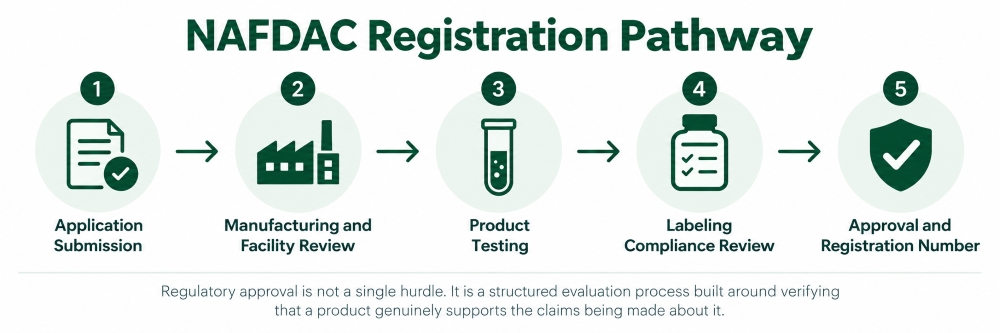
From the outside, regulatory approval can look like a single bureaucratic hurdle – submit an application, wait, receive a number. From the inside, it is closer to a structured evaluation process, built around verifying that a product’s manufacturing, labeling, and safety documentation genuinely support the claims being made about it. For pharmaceutical products, this includes scrutiny of manufacturing conditions, ingredient sourcing, and stability data. For food and consumer products, including the personal-care category my own company now operates in, it includes facility inspection, product testing, and labeling compliance review, all aimed at the same underlying goal: making sure a product reaching a Nigerian shelf has actually been verified to be what it claims to be.
Common Points of Friction for New Entrants
Having since gone through elements of this process as a manufacturer rather than a trainee, I can say plainly that the points of friction founders most often underestimate are rarely about the regulation itself being unreasonable – they are about preparation. Facility documentation that is incomplete or inconsistent. Product testing that was done informally rather than through a recognized process. Labeling that has not been checked closely enough against current requirements before submission. Each of these is entirely avoidable with enough lead time, and each is a common reason a new manufacturer’s timeline runs longer than expected.
Why Regulatory Literacy Is a Competitive Advantage
It is tempting for a new founder to treat regulatory compliance as a box to check on the way to the “real” work of building a brand. My NAFDAC training left me with the opposite view: understanding the regulatory pathway early and building a product and documentation process around it from the beginning, rather than retrofitting compliance in later, is itself a meaningful competitive advantage. It shortens approval timelines, reduces costly rework, and – perhaps most importantly for a company built on the premise of scientific rigor – reinforces the same discipline of testing and documentation that a credible product needs regardless of what any regulator requires.
A Path Worth Considering
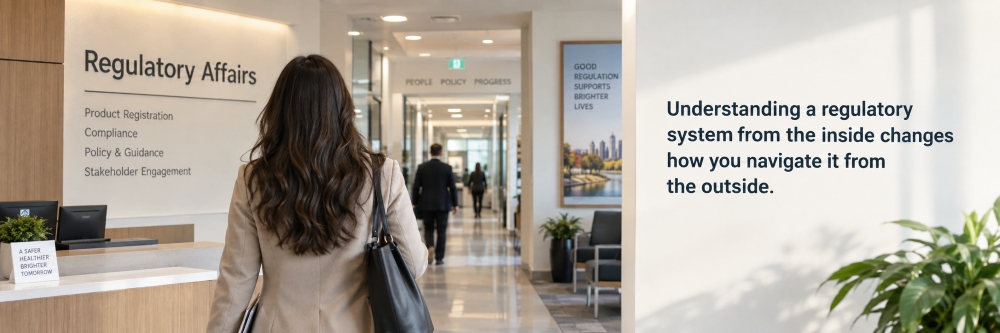
For pharmacology and life-sciences students weighing career directions, I would say this plainly: regulatory affairs is not simply a compliance function sitting off to the side of “real” scientific work. It sits at the exact intersection of scientific literacy, manufacturing reality, and public safety – and time spent understanding it, whether through a placement like mine at NAFDAC or through dedicated regulatory affairs training, pays dividends whichever side of the approval process you eventually find yourself standing on.
Disclaimer: This article is for general informational purposes only and does not constitute professional, legal, or regulatory advice. The information presented may not reflect the latest regulations or requirements. Readers are encouraged to consult qualified professionals or relevant authorities for guidance specific to their circumstances.