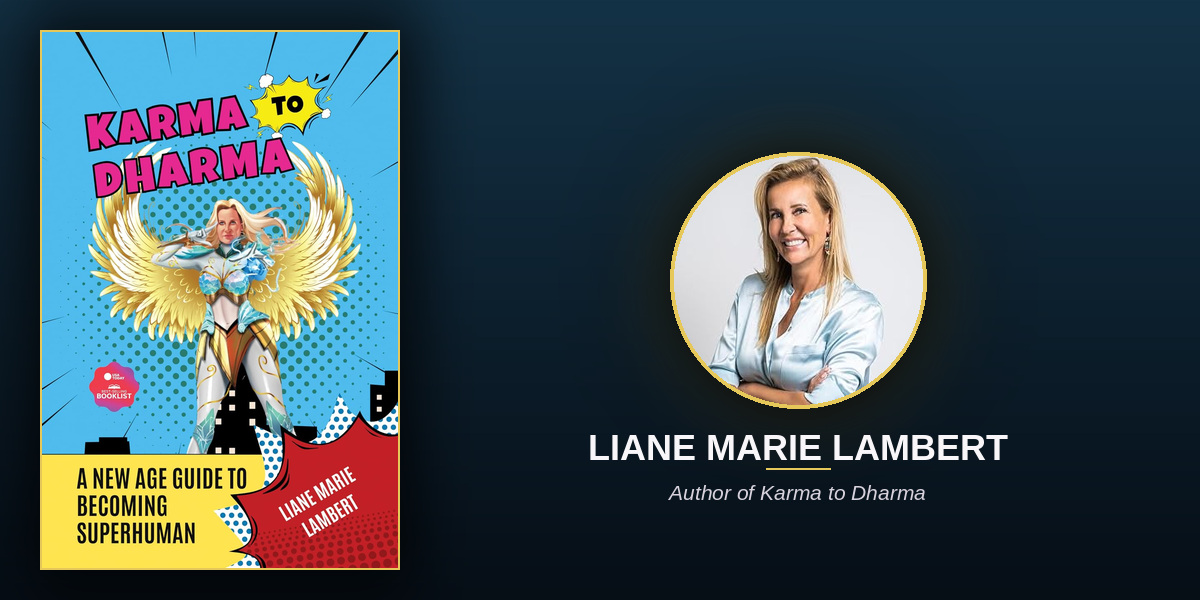



The idea of becoming superhuman sounds, on the surface, like the kind of claim that belongs to a fitness brand or a biohacking podcast rather than a spiritual guide. What Liane Marie Lambert means by it is considerably more interesting than either of those contexts would suggest, and the distinction is worth understanding before you open the book. Superhuman, in Lambert’s framework, is not about extraordinary physical performance or cognitive enhancement through technology. It is about stepping fully into the version of yourself that exists beyond the limitations of karmic conditioning, old belief systems, and the accumulated weight of relationships and patterns that have been quietly determining the ceiling of your experience without your conscious permission. That version of yourself, free of karmic baggage and fully aligned with your authentic Dharma, is what Lambert means by superhuman, and the journey she describes is one of clearing and activating and remembering rather than acquiring and performing.
Lambert comes to this work from a background that is genuinely diverse in ways that give the book its particular range of practical applicability. She holds a Holistic MBA and certifications in health coaching and life coaching through an International Coaching Federation accredited institution, brings a BA in business alongside a background that has encompassed homemaking, entrepreneurship, and motherhood, and has walked the journey the book describes through her own experience of a soul that cried out for wholeness and a self that answered. That combination of formal training and lived experience lets her speak both the language of practical application and the language of genuine inner knowing.
The journey she maps from Karma to Dharma is organized around the recognition that most people are living below their highest potential not because they lack the capacity for a more elevated experience but because they are carrying karmic weight they have never been equipped to identify and release. Old belief systems about their worth and their capabilities. Patterns in relationships that reflect karmic contracts rather than genuine soul alignment. A vibrational frequency shaped by accumulated experience rather than conscious choice. Lambert addresses each of these with the specificity of someone who has done the clearing work herself and guided many others through it, and the practical applications she offers throughout are meant to make the framework actionable rather than inspiring but ungrounded.
The concept of time jumping into your soul’s highest timeline is one of the more distinctive elements of Lambert’s framework and one of the most evocative. She describes this as the experience of moving from a timeline shaped by karmic conditioning into one aligned with your highest potential, and she connects it to the practical work of raising your vibration, clearing karmic relationships, and releasing the weight of what no longer serves you. That language will resonate immediately with readers already familiar with new age and spiritual development frameworks, and Lambert deploys it with enough personal testimony and practical grounding to make it feel genuinely applicable rather than simply rhetorical.
For readers curious about moving from the timeline shaped by karma into one aligned with their highest Dharma, Liane Marie Lambert’s Karma to Dharma: A New Age Guide to Becoming Superhuman lays out her framework alongside the personal story behind it. The book is available on Amazon.