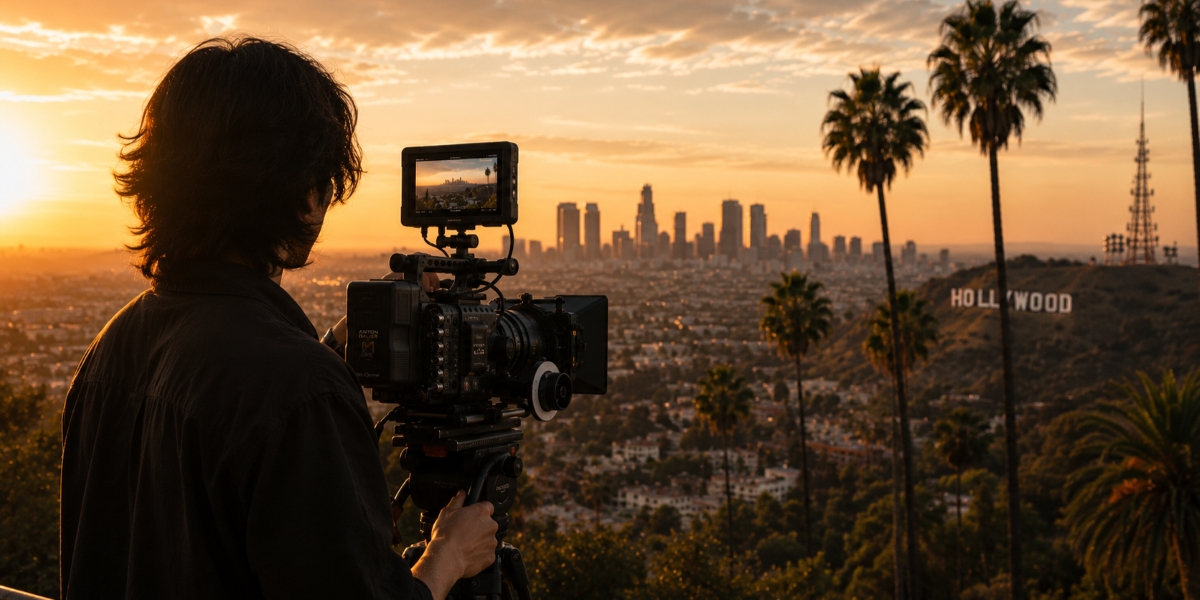




By: Miki Inoguchi, Cinematographer
How a kid from Fukushima who dreamed of Hollywood action movies ended up behind the camera, and why the hardest moments of his childhood became the fuel.
There is a photograph Miki Inoguchi keeps in his memory. An old man sitting alone under a full bloom of cherry blossoms in Japan, the blossoms brief and luminous, the man long and worn. It is not a shot Miki has recreated. It is a feeling he has been chasing ever since. That is, maybe, the clearest window into who he is as a cinematographer: someone who learned to see the world before he ever picked up a camera.
Miki is 26, from Fukushima, Japan, the kind of small town where you know everyone and nobody leaves for Hollywood. Except he did.
The Boy from Fukushima
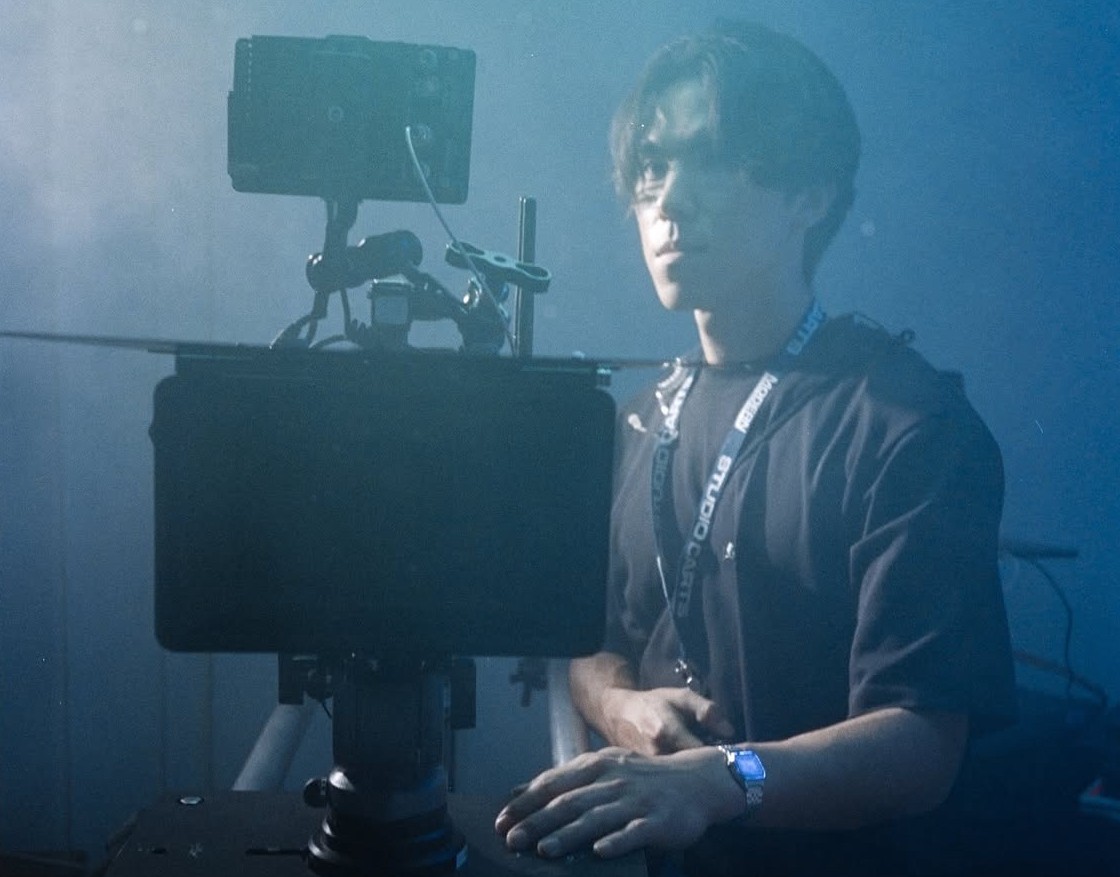
Growing up, the Inoguchi household ran on American movies. His parents were devoted fans of Hollywood blockbusters, and young Miki absorbed them completely. Transformers. Terminator. Star Wars. He was so consumed by the films that every time an adult asked him what he wanted to be when he grew up, his answer was always the same: a Hollywood action star. Arnold Schwarzenegger, specifically, had stunned this small kid from the Japanese countryside into believing that such a thing was possible.
Then, within a few years of each other, two events arrived that would quietly reshape everything. First, his father lost his hearing at 43. The financial instability that followed, and the tension it brought into the family, marked the first time Miki understood that the ground beneath you is not guaranteed. And then, when he was in fifth grade, the earthquake hit.
On March 11, 2011, a 9.0 magnitude earthquake struck off the coast of Japan. The tsunami that followed killed nearly 20,000 people. And the Fukushima Daiichi nuclear plant, just miles from where Miki lived, began to melt down. He was ten years old.
Those things made me think that anything can happen in life. So act early. Pursue what you love while you can.
That urgency never left him. When he was old enough, he made a decision that nobody from his small countryside school had made before him: he would go abroad. First he moved to Tokyo alone for high school to pursue English education. Then, when it came time for college, he aimed straight for America.
Santa Barbara, by Accident
Miki landed at Santa Barbara City College, drawn partly by its film program and partly by the kind of semi-accidental logic that governs a lot of young people’s biggest decisions. He came wanting to take film classes and discovered immediately that college in America meant required coursework in subjects that had nothing to do with film. It frustrated him. He was still adapting to American social culture, still learning English, still finding his footing.
“I was probably perceived as an awkward kid,” he says now, with the clarity of someone who has made peace with the memory. “But once I started taking film classes and working on set more, I found my community.”
He had arrived wanting to be in front of the camera. He had dreamed of becoming an action star since childhood, took acting classes to pursue it, but quickly realized he hated watching himself on screen and pivoted fully to cinematography. By the time he finished at SBCC, he had worked on somewhere between twenty and thirty projects and had begun to develop a reputation for someone who could not just operate a camera but think through it.
His first major film as cinematographer was Sunshine in the Rain, a short he shot with director Benny Chen. The film got into the Santa Barbara International Film Festival and was selected as the cover film for the Live Action Shorts program. It also screened at the Amsterdam World International Film Festival and the Vancouver Independent Film Festival, and went on to win Best Student Short Film at the Seattle Film Festival and additional awards at the LA Film Awards. Not a bad start for a kid who had wanted to be Arnold Schwarzenegger.
The Year He Went Home
When COVID shut the world down, Miki went back to Japan. He worked in broadcast television as a production and camera lighting assistant in Fukushima. And then he did something that would prove more formative than almost anything else: he bought a mirrorless camera, and he walked.
For a year, he traveled solo across Japan, photographing everyday life, studying art history, and learning how to look. He would return to the same locations at different times of day. He learned that every object has a right angle, a right light, a right moment. He got, as he puts it, better eyes.
The photographs from that year live on his Instagram account, @kotonohagraphy. Scroll through it, and you start to understand what he is drawn to: not the spectacular, but the quietly charged. A man in a suit at a late-night convenience store with a small plastic bag, waiting for the light to change. Is he a new salaryman? Has he had a long day? Or is that his small ritual happiness, a beer on the way home, his one private pleasure? Miki does not answer the question. He finds the frame that makes you ask it.
Everything does have a way to look good. It is really a matter of angle. My job is to find that angle for each scenario, for each story.
He came back to the US to finish his BA in Film and Electronic Arts at Cal State Long Beach in 2023. The traveling year had changed how he moved through the world, and it had changed how he moved through a set.
Where He Is Now
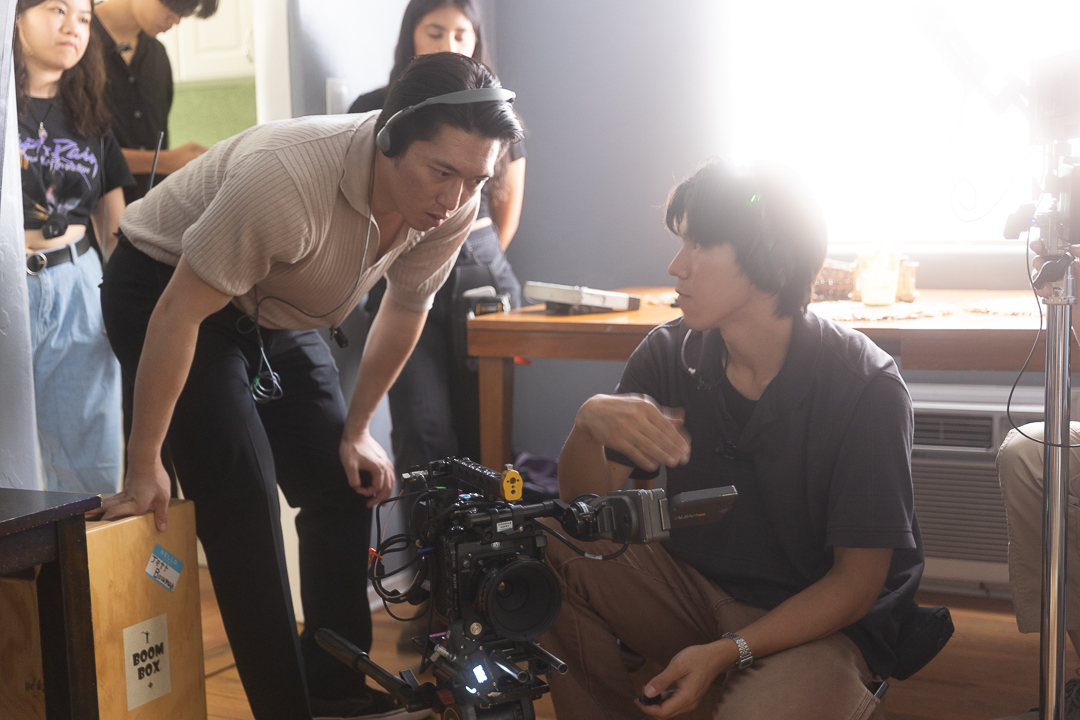
Today, Miki’s work spans narrative shorts, documentary, and commercial work, with credits including a documentary about designer Tamotsu Yagi shot in collaboration with Sotheby’s, a feature film currently in post-production, and festival-selected shorts including Hand (Cleveland International Film Festival) and The Nikkei of Norwalk (LA Asian Pacific Film Festival). He also works as a gaffer and colorist, disciplines he sees not as separate jobs but as extensions of the same eye, with lighting and color being the two crafts most directly tied to how a DP shapes an image.
His goal is to work between Japan and the world. Not as a filmmaker defined by his nationality, but as someone who can move between cultures, speak both languages, and connect with people across them. There are stories, he believes, that need him specifically, not because of ego but because of access, because of the particular set of eyes that comes from being permanently, productively foreign.
The boy from Fukushima who wanted to be an action star is now the person deciding how the action looks. It turns out that was always the better version of the dream.