
By: Xavier P
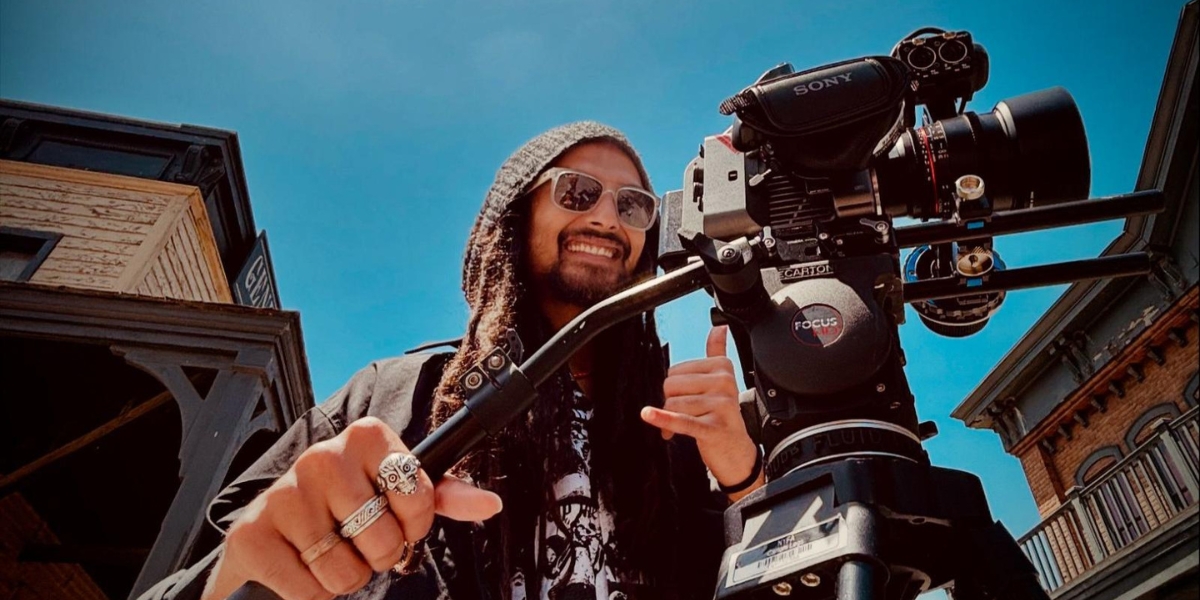
From live broadcast environments and international music productions to festival-recognized short films and socially driven documentaries, Sameer Kafle’s work is defined by a clear and consistent focus: human-centered storytelling rooted in lived experience.
Working across music videos, narrative films, documentaries, and large-scale live productions, Kafle brings together technical precision and emotional depth. Over the past eight years, his work has evolved through a deliberate progression, with each project expanding both his creative range and his ability to craft stories that resonate beyond the screen.
An early foundation of this journey was shaped during the Australian tour of internationally recognized artist Ian Moss of the iconic rock band Cold Chisel. Contributing to tour video production, Kafle documented live performances and behind-the-scenes moments within a high-pressure, large-scale environment. This experience refined his instinct for visual rhythm, pacing, and the interplay between sound and image, elements that would later become central to his cinematic language.
That transition became evident in Death of the Maiden, where Kafle served as Director of Photography and trailer editor. The film follows a doctor confronting mortality through repeated encounters with death, ultimately facing the emotional inevitability of losing her own father. Kafle shaped the film’s visual identity through a controlled black-and-white aesthetic, punctuated by selective color as a symbolic device, while maintaining tonal consistency under demanding production conditions.
The project received international festival recognition, including selections at the Paris Short Film Festival, Sydney Lift-Off Film Festival, Logicema Music Film Festival, and Changing Face International Film Festival, where it achieved Monthly Semi-Finalist status, marking a growing presence in narrative filmmaking.
His progression into directing became more personal with Beyond the Battle, a short film he wrote, directed, and produced. Following a private screening at New York Film Academy and its 2025 release, the film explores the psychological aftermath of military service through a reclusive young man whose deteriorating apartment mirrors unresolved trauma.
Rather than depicting conflict itself, the film examines what follows, including silence, isolation, and the struggle to reconstruct identity. Informed by real conversations with individuals affected by PTSD, the project represents a shift toward deeply personal storytelling and narrative authorship.
This commitment to real-world narratives is further reflected in his documentary work. In 2023, Kafle directed and produced Why?, a film centered on the death of a young construction worker following a scaffolding accident. Moving beyond the incident, the documentary explores the emotional aftermath experienced by the worker’s family, bringing visibility to lives often overlooked. The film stands as both a tribute and a reflection on human stories that rarely receive attention.
His work also extends into community-driven initiatives. Kafle has collaborated with nonprofit organizations, including Turbans 4 Australia, producing visual content that supports outreach and social awareness. These projects reflect his belief in storytelling as an artistic practice and as a tool for connection and impact.
Alongside his narrative and documentary work, Kafle has collaborated with artists and productions across Australia, Nepal, India, France, and the United States. His experience spans both creative direction and technical execution, with work distributed across live environments, artist platforms, and digital channels.
Across all formats, a clear throughline defines his practice: the discipline of live production informs his cinematography, cinematography strengthens his narrative direction, and documentary deepens emotional authenticity. Together, they form a cross-genre approach grounded in precision, adaptability, and human insight.
For Sameer Kafle, filmmaking is not driven by spectacle, but by the recognition of people, of stories, and of realities often left unseen.