



By: Dar Dowling
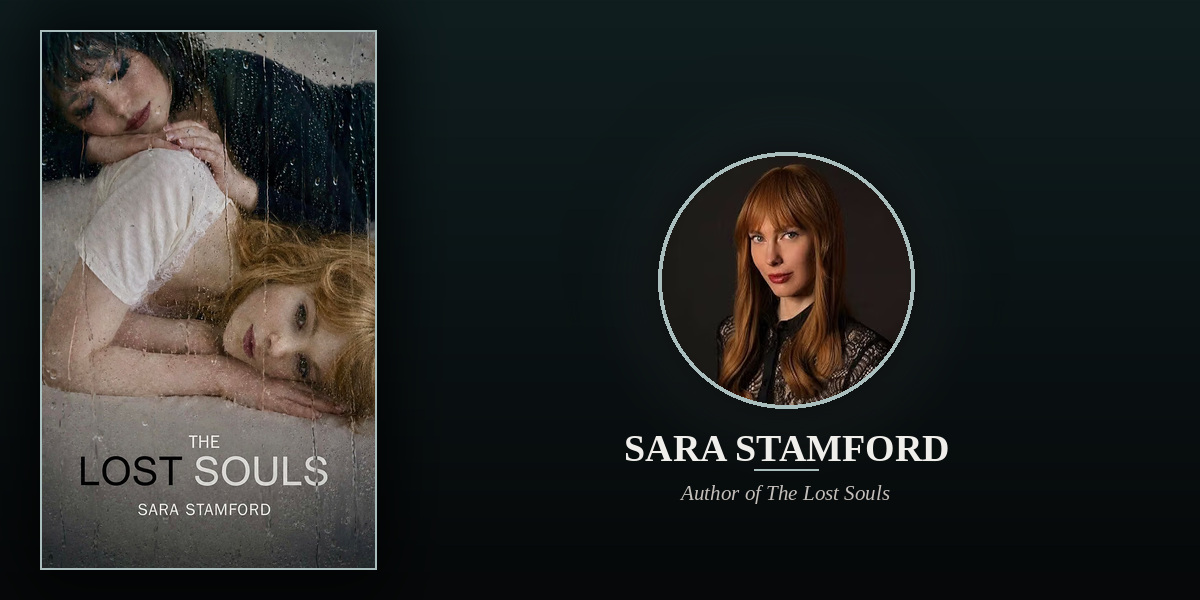
There is a moment in The Lost Souls that most novels about romantic betrayal would handle differently. Elizabeth discovers that Chris is married. And she forgives him in the same scene where she learns the truth, forgiving him before her body even catches up to the decision. Her love for him drowned out every rational thought and was stronger than resentment.
Sara Stamford made that choice deliberately, and her reasoning goes to the heart of what the novel is trying to do. Knowing something is wrong and being emotionally ready to walk away are two very different things. Elizabeth knows the truth should be enough. But her feelings don’t disappear just because the facts change.
I didn’t want her to suddenly become this perfectly rational woman who walks away without looking back, Stamford says, because that’s not always how love works. Sometimes we forgive what we know we shouldn’t because the fear of losing someone feels stronger than the pain they’ve caused us. For Elizabeth, staying was part of the journey she had to go through before she could finally understand her own worth.
The Childhood That Built Her
Understanding why Elizabeth stays requires understanding where she came from. Her backstory was designed with real care. She grew up with a grandmother who gave approval sparingly and only for exceptional performance. As a child, she learned that love was something she had to earn by being good enough, perfect enough, or useful to someone.
That pattern follows her into adulthood in specific and recognizable ways. She aligns the dinner plates with quiet precision, not for control but because she wants to please, to make others feel cared for, to earn that quiet validation. She sometimes mistakes being needed for being loved. She gives too much in relationships, hoping that if she loves someone enough, takes care of them enough, or becomes what that person needs, she’ll finally feel chosen.
That kind of emotional dynamic is common, Stamford notes, for people who grew up with childhood trauma, abandonment, or emotional neglect. A lot of women can relate to it. The novel doesn’t ask readers to pity Elizabeth for it. It asks them to recognize themselves in it.
The Betrayal That Stays Complicated
Stamford also made a deliberate choice about how Chris’s confession is delivered. He reveals the truth not through drama or confrontation but in a quiet Sunday morning scene where he makes tea in Elizabeth’s kitchen and speaks in a soft, exposed voice. She lets him be genuinely moving even in his confession.
That was important to her. The betrayal needed to remain complicated because most relationships are. Chris did something deeply hurtful, but that doesn’t mean Elizabeth could instantly turn off everything she felt for him. She wanted him to remain, someone Elizabeth could still love and want, even while knowing he had betrayed her. That contradiction felt very human. The person who breaks your heart is still the person you wish could put it back together.
What the Novel Understands About Women and Love
What The Lost Souls captures with particular honesty is the gap between what we know and what we choose to feel, and the way that gap is not a weakness but a deeply human reality. Elizabeth’s journey is not toward becoming someone who doesn’t feel too much. It is toward finally understanding that what she has been giving, and who she has been giving it to, doesn’t reflect what she actually deserves.
The path there is not clean or straight or resolved in a way that provides easy comfort. Stamford ends the novel with a tragic death, resisting the pull toward resolution that would soften the story’s emotional truth. “Sometimes forgiveness is still possible,” she says. “But sometimes it comes too late.”
Readers can find The Lost Souls by Sara Stamford on Amazon.