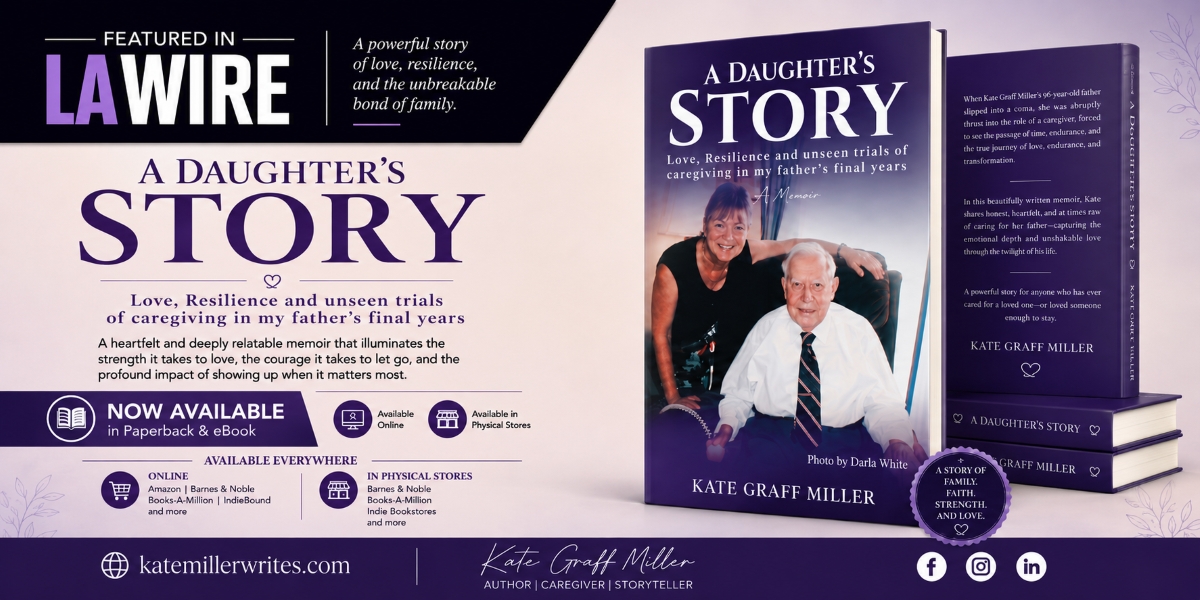




Every memoir has a hidden foundation, a world that quietly shapes the voice behind the story long before the first page is written. In A Daughter’s Story, readers encounter Kate Graff Miller as a compassionate caregiver and emotionally perceptive writer. But the roots of that wisdom stretch far back into an extraordinary upbringing filled with literature, intellect, creativity, and emotional warmth.
A 1950s Childhood Along the Hudson River
Kate was raised in Irvington-on-Hudson, New York, during an era that now feels almost mythic in its simplicity. The 1950s offered children freedom, imagination, and community in ways modern life rarely permits. Irvington itself was a picturesque village perched along the Hudson River, rich with history and natural beauty. Children rode bicycles through leafy neighborhoods, explored the woods until dusk, and grew up surrounded by familiar faces. For her, it was an ideal environment for observation, reflection, and storytelling. The strongest influences, though, came from inside her own home.
Growing Up in a Household of Writers
Her mother, Polly Anne Colver, was a working writer at a time when relatively few women established lasting publishing careers. She wrote children’s books, biographies, and adult fiction, publishing under several different names across her career. Her home office became Kate’s first classroom in storytelling.
The rhythmic clacking of the Smith-Corona typewriter, the arrival of manuscript galleys, conversations with editors- these moments exposed Kate to the creative process from childhood.
But Polly Anne’s influence extended beyond literature. She carried herself with enthusiasm, humor, and elegance. She could transform ordinary moments into adventures and infused everyday life with imagination. Museums, Broadway shows, lunches in Manhattan, and spontaneous stories became part of Kate’s emotional education. Through her mother, she learned that creativity was not separate from life. It was a way of experiencing it more deeply.
What Kate Graff Miller Learned From Her Father
Her father, Stewart Graff, balanced that artistic energy with intellectual rigor and emotional steadiness. A Harvard graduate and lawyer, Stewart loved politics, books, theater, and conversation. What made him unforgettable was not simply his intelligence. It was his attentiveness. He taught Kate patiently, listened carefully, and made her feel important in both subtle and lasting ways.
The household itself was rich with curiosity. Her older brother Jerry was mechanically gifted, inventive, and endlessly fascinating to his younger sister. Creativity existed everywhere, in books, ideas, inventions, and conversation. It was a family culture that valued learning not as an obligation, but as joy. That emotional and intellectual environment would later become essential to her identity as both caregiver and author.
How That Upbringing Shaped A Daughter’s Story
Years later, when she found herself moving through hospitals, aging, grief, and emotional exhaustion while caring for her father, she carried those early lessons with her. Her ability to observe small emotional truths, preserve humor during hardship, and communicate vulnerability with honesty all trace back to the world that raised her.
What makes the book particularly remarkable is how organically that background shaped the memoir’s voice. She writes not with literary pretension, but with emotional clarity. Readers feel the intimacy of remembered details because she learned early in life to notice them. The sound of train tracks at night, the warmth of her father’s hand in winter, the atmosphere of family dinners, the emotional texture of ordinary days.
That authenticity has resonated with readers across generations. The book reflects something increasingly rare in modern publishing. Deeply personal storytelling that feels relatable. Readers are not merely connecting to Kate’s experiences. They are recognizing echoes of their own families, parents, fears, and memories inside her words.
In many ways, the memoir is about more than caregiving. It is about the lifelong shaping of a woman whose empathy, resilience, and emotional insight were formed long before the crisis arrived. The hospitals and hardships came later. First came a childhood filled with storytelling, laughter, intellect, and love. And from that foundation emerged a memoir about family history, emotional honesty, and the quiet forces that shape a life.
If you are drawn to stories that celebrate family history, emotional honesty, and the quiet forces that shape a life, A Daughter’s Story is a book worthy of a place on your shelf and in your heart. You can check the book here.