


By: Jay Kt
Three words are often used interchangeably but represent very different types of books: autobiography, memoir, and biography. An autobiography is written by the person whose life is being described, while a memoir focuses on a specific period, experience, or theme from that person’s life. A biography, however, is written by someone else about another person and relies on research, evidence, interviews, and documented sources rather than personal memory alone.
Understanding this difference is the first step in creating a meaningful life story. Professional biography writing services help determine the right approach, establish the research process, identify reliable sources, and create a structure that represents a person’s journey accurately and thoughtfully. Whether the subject is a family member, community leader, entrepreneur, or company founder, the foundation of a strong biography remains the same: careful research, honest storytelling, and a clear understanding of why the person’s life matters.
Understanding Authorized and Unauthorized Biographies
A biography can be created with or without the subject’s cooperation. An authorized biography is written with the subject’s involvement or, in the case of someone who has passed away, with cooperation from their family. This often provides access to valuable materials such as personal interviews, letters, photographs, diaries, and conversations with people who knew the subject closely.
An unauthorized biography is created through independent research using publicly available records, published information, archives, and interviews with people willing to share their knowledge. While access may differ between the two approaches, authorization does not automatically determine accuracy. A well-researched independent biography can sometimes provide a more critical and detailed perspective.
Before beginning a biography project, clearly discuss expectations, especially regarding access, review processes, and approval rights. A clear agreement helps protect the book’s integrity while ensuring everyone understands their role in the process.
Research, the Foundation of Every Strong Biography
A biography is only as reliable as the research behind it. The research stage often reveals important details that add depth and meaning to a life story. Interviews with family members, friends, colleagues, and the subject themselves can provide personal experiences that official records cannot.
Personal materials such as letters, diaries, photographs, and handwritten notes often reveal personality, emotions, and important moments that might otherwise be forgotten. Official records, including birth certificates, marriage documents, military records, immigration records, employment documents, and historical archives, can help verify important events and timelines.
For a professional biography writer, keeping detailed source records is essential. Every photograph, document, and interview should be properly organized so you can review and verify information throughout the writing process.
Handling Different Memories and Family Stories
Family histories often contain different versions of the same event. One person may remember a moment differently from another, especially when many years have passed.
The goal of a biography is not to choose the most appealing version but to discover the most accurate account possible. This requires comparing memories, reviewing documents, checking historical records, and identifying where uncertainty remains.
When facts cannot be fully confirmed, honest writing is the strongest approach. A statement explaining that different accounts exist is more trustworthy than presenting an uncertain memory as fact. Readers appreciate transparency, and families value a biography that respects the truth of their shared history.
Choosing the Right Structure for a Biography
A biography can be organized in different ways depending on the subject’s life and the purpose of the book. A chronological structure is one of the most common approaches because it follows life events naturally from childhood through later years. This allows readers to understand how experiences shaped the person over time.
Some biographies work better with a thematic structure, where chapters focus on important areas such as career, family, personal challenges, achievements, or beliefs. This approach is useful when specific themes carry more meaning than a simple timeline.
Another option is a framed structure, where the book begins with a significant event and then explores the experiences that led to that moment. Choosing the right structure helps create a stronger emotional connection and keeps readers engaged throughout the story.
Privacy, Consent, and Ethical Storytelling
Writing about real people requires responsibility, especially when living individuals are involved. Interview participants should understand how their information will be used, whether they will be identified, and where the book will be published.
Handle sensitive information involving personal relationships, medical history, financial matters, or private communications carefully. Verify information shared during interviews before publication, especially when it involves other living individuals.
A responsible biography balances storytelling with respect. Professional biography writing services carefully manage research, permissions, and privacy considerations throughout the project.
Family History Books and Commercial Biographies
A family history book and a commercial biography may use similar research methods, but they serve different audiences.
A family history book is usually created for relatives and future generations. It may include detailed family stories, photographs, personal memories, traditions, and moments that are meaningful to those who already know the subject.
A commercial biography is written for a broader audience. It must explain why the subject’s life matters to readers who may have never heard of them. It requires stronger storytelling, wider context, and a focus on the experiences that create universal interest.
Some families create both versions using the same research foundation: a detailed family edition and a more focused public biography.
Planning Photographs and Supporting Materials
Photographs are often among the most meaningful elements of a biography, especially for family projects. However, photo sections require planning.
Create high-quality scans before printing because poor image quality cannot easily be corrected later. Captions should include important details such as names, dates, locations, and the photograph’s source.
Additional materials such as family trees, timelines, source notes, and indexes can also add value, depending on the book’s purpose.
A professional biography writer considers these elements alongside the manuscript, rather than treating them as last-minute additions.
How Biography Writing Services Work
Professional biography projects usually begin with a discussion about the subject, intended audience, and goals of the book. After this planning stage, we collect research materials, conduct interviews, and develop a chapter outline.
Once the structure is approved, writing begins through organized drafts and revision stages. This approach allows authors and families to provide feedback while keeping the project focused and consistent.
At Author Path Publishers, biography projects are handled with confidentiality and NDA protection. Authors and families retain full rights and royalties, while receiving professional support throughout research, writing, and publishing preparation.
Commission a Biography Through Author Path Publishers
Every life contains experiences, lessons, challenges, and achievements worth preserving. A professionally written biography helps preserve those memories with accuracy, emotion, and respect.
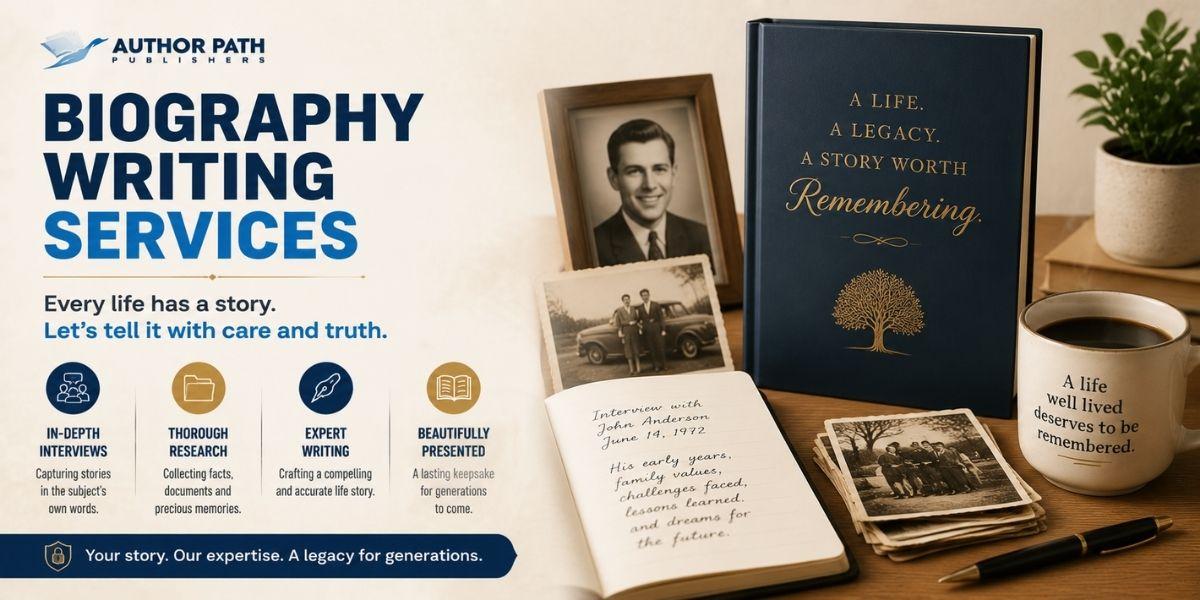
The biography writing services at Author Path Publishers support the complete process, including research planning, interviews, document review, photograph organization, story structure, and manuscript development.
Whether you want to preserve your family history, document a loved one’s journey, or create a professional biography for a public audience, our team helps transform memories and experiences into a lasting book.
Your material remains confidential, you keep full ownership rights, and your story receives professional attention from the first interview to the finished manuscript.