



The question sounds straightforward: how does a Qurbani donation placed online in the United States, Australia, or the United Kingdom become a meal on a table in Gaza, or Yemen, or Sudan? The answer involves livestock procurement, halal compliance verification, cold chain logistics, field team coordination across multiple jurisdictions, and a layer of documentation rigorous enough to satisfy both Islamic requirements and multi-jurisdictional regulatory standards.
It is not a simple operation. For the MATW Project (Muslims Around the World), it is the operational reality of every Eid al-Adha season, replicated across 16 countries simultaneously.
The Foundation: Year-Round Presence, Not Seasonal Parachuting
The single most important factor in MATW’s Qurbani delivery capacity is that its teams are not arriving in these countries for Eid al-Adha. They are already there. In Ramadan 2026, MATW distributed over 1.4 million iftar meals across Palestine, Lebanon, Syria, Jordan, Egypt, Sudan, Togo, Pakistan, Afghanistan, Yemen, Bangladesh, Kenya, Tanzania, Uganda, Chad, and Indonesia. Every distribution logged. Every beneficiary verified. Every food pack tracked from procurement to delivery. For those looking to take part, MATW’s Donate Qurban program offers a way to support families through an established delivery network already operating in these communities.
This year-round presence means that when Qurbani season arrives, MATW is not building logistics from scratch. It is extending an established operational chain into a new product category, fresh meat distribution, using the same local teams, the same community relationships, and the same accountability frameworks that govern every other distribution event throughout the year. For donors, this is the difference between hoping their Qurbani reached a family and knowing it did.
Phase One: Livestock Procurement and Islamic Compliance
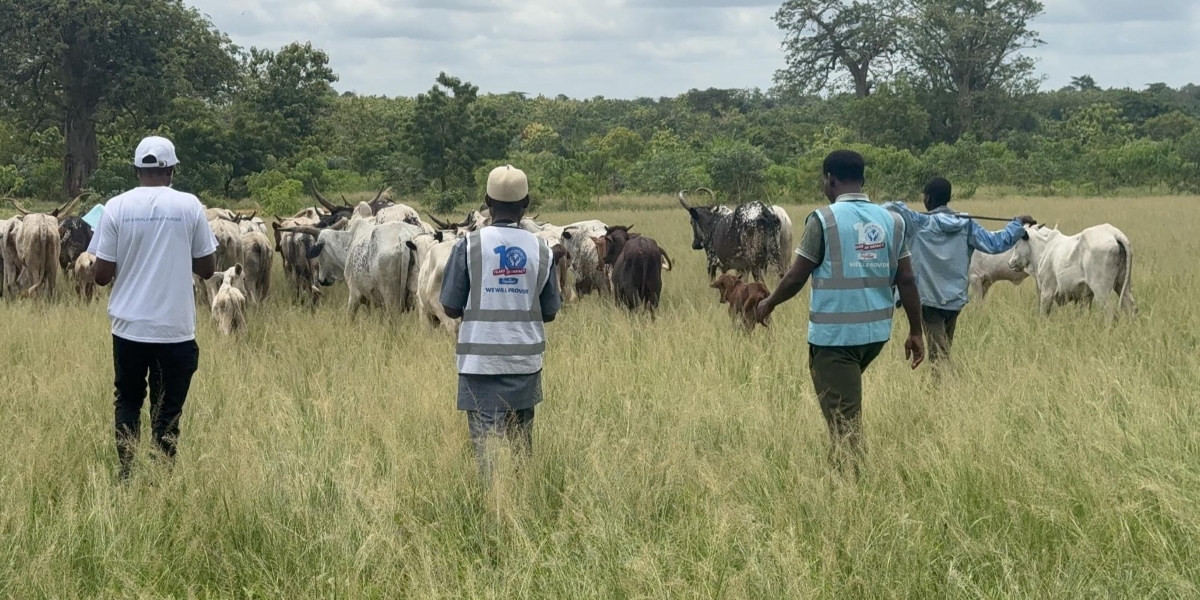
The Qurbani process begins with animal sourcing. MATW procures animals locally wherever logistically feasible, sourcing from farmers and traders within or adjacent to the communities being served. This approach serves two purposes simultaneously: it ensures the freshest possible product reaches recipient families, and it channels donor funds into local economies, supporting livelihoods alongside nutrition.
Islamic compliance at the procurement stage is non-negotiable. Animals must meet the requirements of halal slaughter across the major schools of jurisprudence: the right species (sheep, goat, cow, or camel), the right minimum age, the right health status (free from illness, lameness, blindness, or significant physical defect), and the correct method of sacrifice. MATW’s field teams coordinate with local scholars and qualified butchers to ensure these requirements are met at every site and in every country of operation.
Where local livestock is unavailable, as is the case within Gaza due to the destruction of local food systems and ongoing access restrictions, sacrifice is performed in a compliant location outside the immediate crisis zone, with meat then preserved, packaged, and transported through available channels to recipient families. This is not a workaround of Islamic requirements. It is an application of them to a logistical reality, validated by qualified scholars.
Phase Two: Sacrifice, Processing, and Cold Chain
On the days of Eid al-Adha (the 10th, 11th, and 12th of Dhul Hijjah), sacrifice is performed by qualified personnel at sites prepared in advance by MATW’s field teams. The timing matters: Qurbani performed outside the prescribed days is not valid, and MATW’s operational planning ensures that procurement, logistics, and distribution are all staged to meet this requirement across every country of operation simultaneously.
After sacrifice, meat is processed, portioned, and, where distribution cannot occur on the day of sacrifice, preserved through cold chain infrastructure. The average Qurbani meat pack distributed to recipient families contains three to five kilograms of meat, depending on region and animal type. This is enough to provide a family of five with meaningful protein for over a week. In the context of food systems that have been stripped to nothing by conflict, that quantity is not incidental. It is significant.
Phase Three: Beneficiary Verification and Distribution
Distribution is the most visible part of the Qurbani process, but it is the verification that precedes it which determines whether the giving lands where it should. MATW’s field teams maintain beneficiary lists compiled through community-level needs assessments, identifying families on the basis of poverty severity, displacement status, the presence of widows or orphans in the household, and other vulnerability indicators.
Priority is given to the families with the least capacity to access meat through any other means. In practice, this means families in active conflict areas, internally displaced persons in camp settings, communities in remote areas with no functioning markets, and households headed by widows or elderly individuals without economic support. The assessment process is documented, the prioritization criteria are consistent, and the distribution records are logged by field teams and reviewed by Head of Operations Samuel Harris.
“The way we think about Islamic giving has to evolve. Zakat and Sadaqah are not just about alleviating immediate suffering. They are tools for building dignity, sustainability, and self-sufficiency in communities that have been denied them. At MATW, we are designing programs where charitable giving creates economic activity, not just economic dependence. That is what our faith calls for, and it is what these communities deserve.”
— Naeem Iqbal, US Development Director, MATW Project
Country by Country: Where MATW Delivers Qurbani in 2026
Palestine (Gaza): MATW’s largest single-country Qurbani operation, building on Ramadan 2026 distributions that reached over 1.1 million people with iftar meals and 42,620 food packs. Sacrifice is coordinated outside the immediate conflict zone where necessary, with meat transported through available crossings to verified recipient families. The groundwater well currently serving 15,000+ people is an indicator of MATW’s sustained infrastructure investment in Gaza beyond emergency relief.
Lebanon: Emergency response protocols established during Ramadan 2026 (when MATW delivered 55,600 iftar meals, 2,950 food packs, hygiene kits, and Eid gifts amid displacement escalation) are extended into Qurbani distribution. Lebanon’s compounding crises mean that Qurbani beneficiaries include both Lebanese families and Palestinian and Syrian displaced persons.
Yemen: One of MATW’s most challenging operational environments, given ongoing conflict, access restrictions, and the severity of food insecurity. MATW delivered 15,990 iftar meals, 11,530 food packs, 8,000 rice bags, and 1,500 units of baby milk during Ramadan 2026. Qurbani distributions target the same beneficiary families, with particular attention to households with young children and nursing mothers.
Sudan: Distribution into an active displacement crisis, with over 10 million internally displaced people, representing the world’s largest such crisis. MATW’s established presence through Ramadan relief provides the verified local team relationships and beneficiary lists through which Qurbani distribution is coordinated.
Togo and sub-Saharan Africa: In Togo, where MATW has operated since Ali Banat’s founding work, Qurbani distributions address chronic poverty rather than acute conflict. During Ramadan 2026, MATW distributed 34,500 iftar meals, 3,473 food packs, and 64,000 rice bags in Togo alone. For communities where protein is a rarity year-round due to structural poverty rather than active conflict, Qurbani meat represents the same singular nutritional event it does in war zones, just with different causes.
Afghanistan and Bangladesh: Active distributions across populations facing a combination of political instability, economic collapse, and food insecurity. MATW’s Ramadan 2026 operations in Bangladesh included 25,100 iftar meals, 11,000 food packs, 8,000 rice bags, and 1,500 units of baby milk. Qurbani distributions extend this reach into Eid season through the same local team infrastructure.
Accountability Infrastructure: How Donors Know Their Qurbani Reached Someone
MATW Project holds full compliance registrations in Australia, the UK, the US, and France. Its impact data is published in full, not projected, not estimated, but logged and verified. The Ramadan 2026 Impact Report, signed off by Head of Operations Samuel Harris and CEO Mahmoud Ismail, lists distributions by country, quantity, and type with a specificity that permits independent verification.
For Qurbani specifically, accountability extends to the distribution event itself: each sacrifice is performed by qualified personnel, documented by field teams, and distributed to beneficiary families whose details are maintained on verified lists. Donors who give through MATW are not funding a process they must take on faith. They are extending a documented operation whose records exist and are auditable.
MATW Project’s Qurbani 2026 distributions extend across the same 16-country operational footprint that supports the organization’s year-round humanitarian work. Through the organization’s website at matwproject.org, donors can review distribution options by country and animal type, with each donation routed through the documented chain of procurement, sacrifice, and beneficiary verification that defines MATW’s operational model.