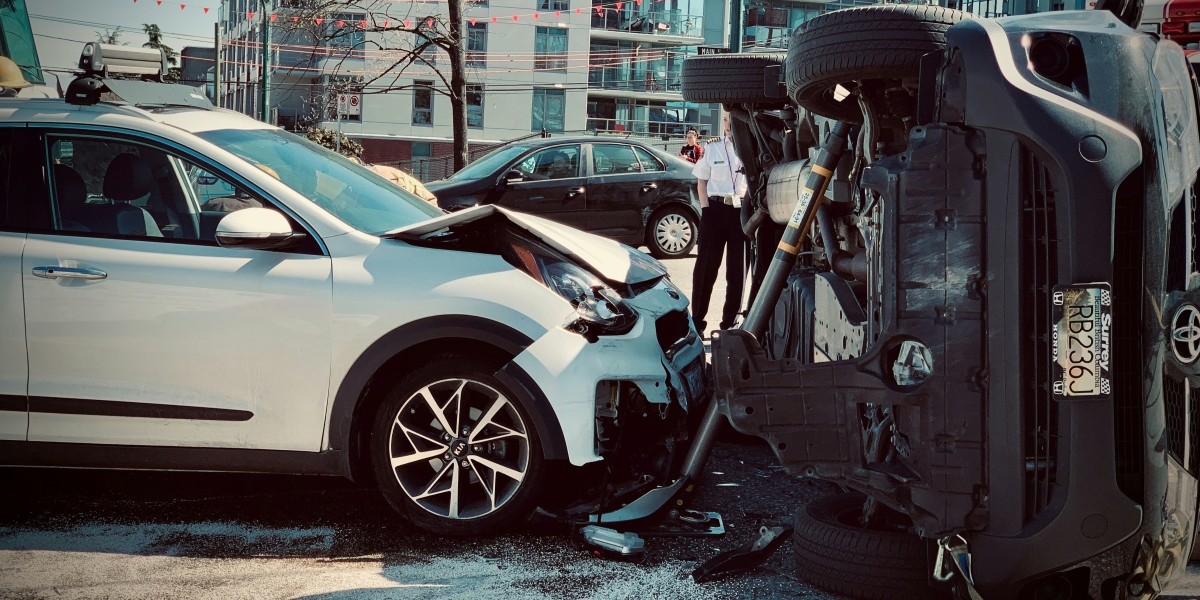





A wreck is a wreck, right? Two vehicles collide, somebody’s hurt, insurance gets involved, and the paperwork starts piling up. From the outside, a car accident and a truck accident can look like the same problem in different sizes.
They aren’t. Not even close.
Once you scratch the surface, a Texas truck accident operates under a different set of rules, involves different players, and produces different kinds of evidence than the typical fender-bender or two-car pileup. Anyone who’s been through both can tell you: the experience of dealing with the aftermath is barely the same animal.
Here’s a plain-English look at why these cases live in completely different worlds.
1. The Sheer Physics of It
Start with the obvious one. A loaded 18-wheeler can legally weigh up to 80,000 pounds on Texas highways. A typical passenger car weighs somewhere around 4,000 pounds. That’s a 20-to-1 size mismatch, and the physics don’t care who had the right of way.
When a commercial truck and a passenger car collide, the energy transfer is brutally lopsided. The result is usually:
- More severe injuries (spinal damage, traumatic brain injuries, multiple fractures)
- Longer hospital stays and rehab timelines
- Higher medical bills, often by an order of magnitude
- More extensive vehicle damage, often resulting in total losses
- Higher rates of fatalities, especially for occupants of the smaller vehicle
That alone changes everything downstream. The medical record is bigger, the financial fallout is bigger, and the long-term life impact is bigger. A “minor” truck accident is often a hospital visit.
2. There’s a Whole Layer of Federal Rules
Passenger cars are governed primarily by Texas traffic law and the Texas Transportation Code. Commercial trucks operate under that, plus an entire layer of federal regulation from the Federal Motor Carrier Safety Administration (FMCSA).
These federal rules cover things like:
- Hours of Service, meaning how long a driver can be behind the wheel before required rest
- Electronic Logging Devices (ELDs) for automatic tracking of driving hours
- Drug and alcohol testing (pre-employment, random, post-accident, and reasonable suspicion)
- Vehicle inspection and maintenance schedules
- Cargo securement standards
- Driver qualification files, including medical certifications and training records
- Weight limits and load distribution
A regular driver running late is just running late. A commercial driver running late may be violating federal hours-of-service rules, which can be a major factor in how a truck accident case is evaluated. None of that exists in your typical two-car collision.
3. The “Who’s Responsible?” Question Gets Complicated Fast
In a standard car accident, the cast of characters is usually short: Driver A, Driver B, and maybe their respective insurance companies. Liability tends to live with whoever was behind the wheel.
A truck accident can involve a whole roster of potentially responsible parties:
- The truck drivers themselves
- The trucking company that employs them
- The owner of the truck, which can be different from the company operating it
- The owner of the trailer, which can be different again
- The company that loaded the cargo (cargo shift is a real issue)
- A maintenance contractor responsible for keeping the truck roadworthy
- A parts manufacturer, if a mechanical failure contributed
- A broker or shipper who arranged the freight
Sorting out which of these actually played a role in a specific wreck is its own investigation. It’s also one of the biggest reasons truck accident cases take longer to work through than car accident cases.
4. Insurance Coverage Looks Wildly Different
Texas requires drivers to carry minimum auto liability insurance of 30/60/25: $30,000 per person, $60,000 per accident for bodily injury, and $25,000 for property damage. That’s the floor for the average car on the road.
Commercial trucks engaged in interstate commerce are typically required to carry much higher minimums under federal rules, often $750,000 to $1 million in liability coverage, and sometimes more depending on the cargo (hazardous materials carry their own, much higher requirements).
Why does this matter? Because it changes the entire dynamic of how a case is handled on the insurance side. Carriers writing million-dollar commercial policies don’t approach claims the way a personal auto insurer handles a fender-bender. They have:
- In-house legal teams
- Rapid-response investigators who can be at the scene within hours
- Established playbooks for minimizing payouts on serious injury claims
- A strong financial incentive to push back hard on every dollar
That’s not a knock on insurance companies. It’s just the reality of how the commercial side of the industry operates. Knowing it’s coming is half the battle.
5. The Evidence Trail Is Bigger and More Fragile
A typical car accident generates a relatively short evidence list: police report, photos, witness statements, repair estimates, and medical records.
A truck accident generates all of that plus:
- Electronic Logging Device (ELD) data showing the driver’s hours
- Event Data Recorder (“black box”) information from the truck itself, including speed, braking, and throttle position, sometimes in the seconds before impact
- Dispatch records and GPS logs
- Bills of lading and cargo manifests
- Driver qualification and training files
- Maintenance and inspection logs
- Drug and alcohol test results taken post-accident
- Internal company communications about the driver, the route, or the load
Here’s the catch: a lot of this evidence has a shelf life. Trucking companies generally have retention requirements, but those retention windows don’t last forever. Some records can be lawfully overwritten or destroyed after relatively short periods. That’s why preserving evidence quickly after a truck accident is treated as a much bigger deal than it usually is after a car accident.
6. The Investigation Is a Different Kind of Job
A straightforward car accident often comes down to who hit whom and what the police report says. The investigation can be relatively contained.
Truck accident investigations frequently call for:
- Accident reconstruction specialists who can model the physics of a heavy-vehicle collision
- FMCSA compliance experts who understand what the federal rules require and whether they were followed
- Medical experts documenting the long-term impact of catastrophic injuries
- Vocational and economic experts are projecting lost earning capacity over decades
This is one of the practical reasons truck accident cases tend to move more slowly and cost more to develop than standard auto cases. There’s just more to investigate, and more specialists involved in piecing it together.
7. Texas Geography Adds Its Own Wrinkle
Texas is a freight state. I-20, I-35, I-45, I-10, and I-30 are some of the most heavily trafficked truck corridors in the country. Add in the oil and gas industry, with its constant flow of tanker trucks, equipment haulers, sand trucks, and water trucks across South, West, and East Texas, and the volume of commercial traffic on Texas roads is enormous.
That has a few practical implications:
- Truck accidents in Texas frequently involve out-of-state carriers, which can layer in jurisdictional questions.
- Oilfield-related trucking has its own subset of issues, including non-standard driving schedules and equipment that doesn’t always look like a typical 18-wheeler.
- Rural stretches of Texas highway often mean longer emergency response times and fewer witnesses, which changes how evidence gets gathered at the scene.
The same wreck on a quiet suburban street and on a remote stretch of I-20 outside Odessa will produce very different evidence files, even if the mechanics of the collision were identical.
The Bottom Line
A car accident case is rarely simple, but it usually fits inside a familiar framework: two drivers, two insurance policies, a police report, and a set of medical bills.
A truck accident case sits inside a much bigger frame. There are federal regulations layered on top of state law, multiple companies and contractors who might share responsibility, much larger insurance policies with much more aggressive defenses, a wider pool of time-sensitive evidence, and injuries that tend to be more severe and longer-lasting.
That’s why anyone treating a truck wreck like “a car accident, but bigger” is starting from the wrong premise. The cases really are different in the rules, the players, the evidence, the timeline, and the stakes. Recognizing that early is a big part of understanding what you’re actually dealing with.
If a settlement offer after a truck accident lands in your lap and your gut says it doesn’t add up, your gut is probably picking up on all of the above without naming it. That “oh hell no” feeling is information. It’s worth listening to.
Disclaimer: This article is intended for general informational purposes only and does not constitute legal advice. Every situation is different, and reading this article does not create an attorney-client relationship. Anyone who has been involved in a truck or car accident in Texas and has questions about their specific circumstances should consider speaking with a licensed Texas attorney.