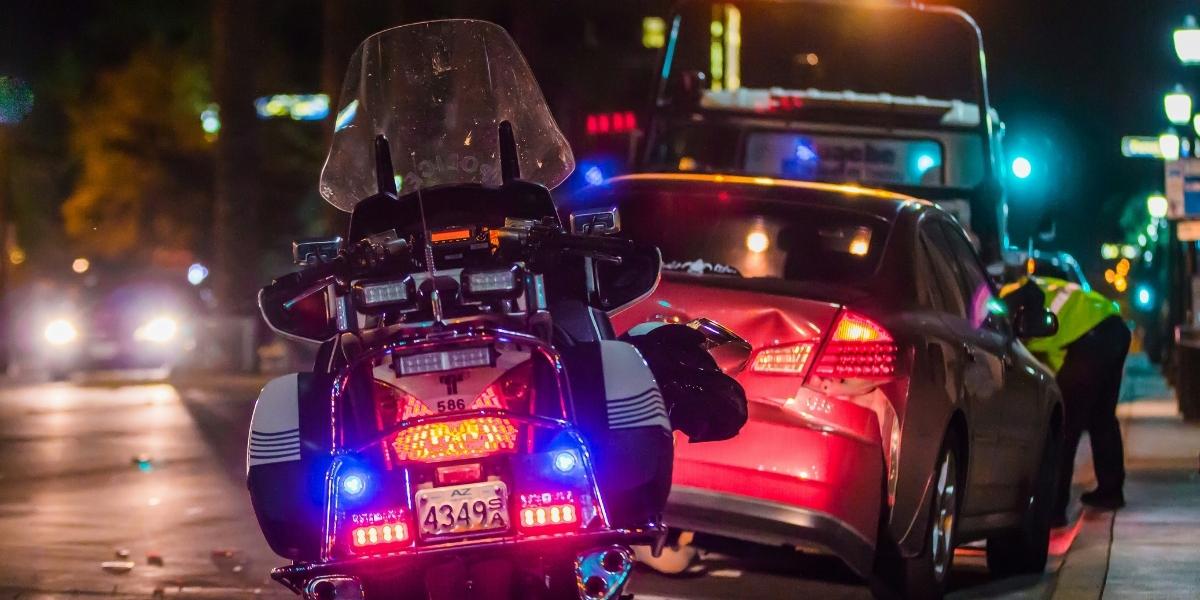





Dangerous intersections are drawing renewed LAPD attention as Los Angeles police increase enforcement at several crash-heavy locations across the city, including corridors in downtown Los Angeles, Hollywood, South L.A., and the San Fernando Valley.
The push follows LAPD data, which reported 750 traffic crashes so far this year that resulted in serious injury or death. That figure was reported as a 5% increase compared with the same period last year. Police have pointed to distracted driving, red-light violations, and rising collisions involving e-bikes and e-scooters as factors that may be adding pressure to Los Angeles streets.
The issue may reach beyond routine traffic enforcement. In Los Angeles, intersections are often where commuting, delivery work, nightlife, tourism, event traffic, school runs, rideshare pickups, and electric mobility overlap. A single high-risk corner can affect drivers, pedestrians, cyclists, scooter riders, businesses, and visitors moving through the same space.
Dangerous Intersections Named in LAPD Data
LAPD data cited in the report identified four locations with notable crash counts so far in 2026. Figueroa Street and 7th Street in downtown Los Angeles was listed with 11 crashes. Highland Avenue and Pat Moore Way near the Hollywood Bowl was listed with six. Century Boulevard and Main Street in South L.A. and Sherman Way at the 170 Freeway entrance in the San Fernando Valley were each listed with five.
Figueroa and 7th sits in a dense downtown zone where office traffic, buses, pedestrians, cyclists, rideshare vehicles, and visitors often converge. That mix may help explain why police are watching the intersection closely. The area connects commuters, entertainment traffic, restaurants, hotels, and delivery routes within a few blocks.
Highland Avenue and Pat Moore Way carries a different kind of pressure. Its location near the Hollywood Bowl places it close to one of Los Angeles’ busiest entertainment corridors, where venue crowds, tourists, hillside roads, and pedestrian movement can overlap. When event traffic builds, turns, crossings, and driver attention may become more complicated.
Century Boulevard and Main Street and Sherman Way near the 170 Freeway show how dangerous intersections are not limited to downtown or entertainment districts. They also appear along commuter corridors where freeway access, surface-street speed, visibility, and turning movements may create repeated points of conflict.
E-Bikes and Scooters Add Pressure to LA Streets
Los Angeles streets are dealing with a changing mobility mix. Police said there have already been 54 crashes this year involving a car and an e-bike. Officers also warned that some riders use sidewalks illegally, which may create added risk for pedestrians.
Captain Anthony Espinoza of the LAPD West Traffic Division said that some younger riders may not have a driver’s license or formal training, which can affect how they understand traffic rules. Police said some riders are not slowing for stop signs or are going through red lights.
That concern gives the dangerous intersections issue a broader city-life angle. Los Angeles residents are no longer moving only by car. They are using scooters, e-bikes, buses, rideshare services, bikes, and walking routes that share the same street network. The more varied that system becomes, the more pressure may fall on enforcement, road design, public education, and individual awareness.
E-bikes and scooters have changed how many Angelenos move through short trips, dense neighborhoods, entertainment corridors, and commercial districts. They can offer flexible transportation, especially in areas where parking is limited or traffic is heavy. They may also create new safety questions when riders, drivers, and pedestrians are moving through the same intersection at different speeds.
For police, the concern appears to center on behavior that can quickly turn dangerous: red-light violations, sidewalk riding, distracted driving, and failure to slow at stop signs. Those issues can become harder to manage at busy intersections where cars are turning, pedestrians are crossing, and riders are moving between lanes or curb areas.
Why the Crash Spike Matters for Los Angeles
Los Angeles has used street safety tools for years, including the city’s Vision Zero High-Injury Network. LADOT’s public mapping materials describe the network as a small share of city streets that accounts for a large share of severe outcomes involving people walking.
That context may help explain why officials often focus on specific corridors rather than spreading attention evenly across every street. Dangerous intersections tend to form where multiple risk factors meet: traffic volume, speed, limited visibility, pedestrian activity, complex turns, and unpredictable movement from different types of road users.
Enforcement may address some behavior, especially red-light running, distraction, and sidewalk riding. Street safety work often involves more than citations. Signal timing, road markings, crosswalk visibility, turn design, lighting, signage, speed management, and public awareness can also shape how people move through an intersection.
The stakes may be practical for the city’s business and lifestyle corridors. A crash-heavy intersection can slow deliveries, disrupt commutes, affect storefront access, and create concern for workers and customers. For residents, it may influence whether a neighborhood feels walkable or stressful.
The issue may also touch daily routines across Los Angeles. A parent crossing near a school, a rideshare driver leaving an event zone, a delivery worker entering a busy corridor, and a tourist walking near a venue may all face similar traffic conditions within minutes of one another. When crash numbers rise, the impact can reach well beyond the people directly involved in a collision.
Police Enforcement Meets LA Street Culture
Police said drivers should expect to see more enforcement at or near intersections with higher crash counts. That may mean more visible motor officers, more traffic stops for violations, and closer attention to behaviors that officers believe are tied to severe crashes.
The enforcement push comes as Los Angeles manages a busy summer rhythm, including concerts, sports, filming activity, restaurant districts, tourism, beach traffic, and late-night movement. Those patterns may add pressure to corridors already carrying heavy daily use.
The dangerous intersections now drawing LAPD attention are not isolated map points. They are part of the daily pace of a city where work, entertainment, mobility, and neighborhood life share the same lanes. The enforcement effort suggests officials are treating those locations as priority spaces where driver behavior, rider awareness, and pedestrian safety meet in real time.