


By: Ariana Chan
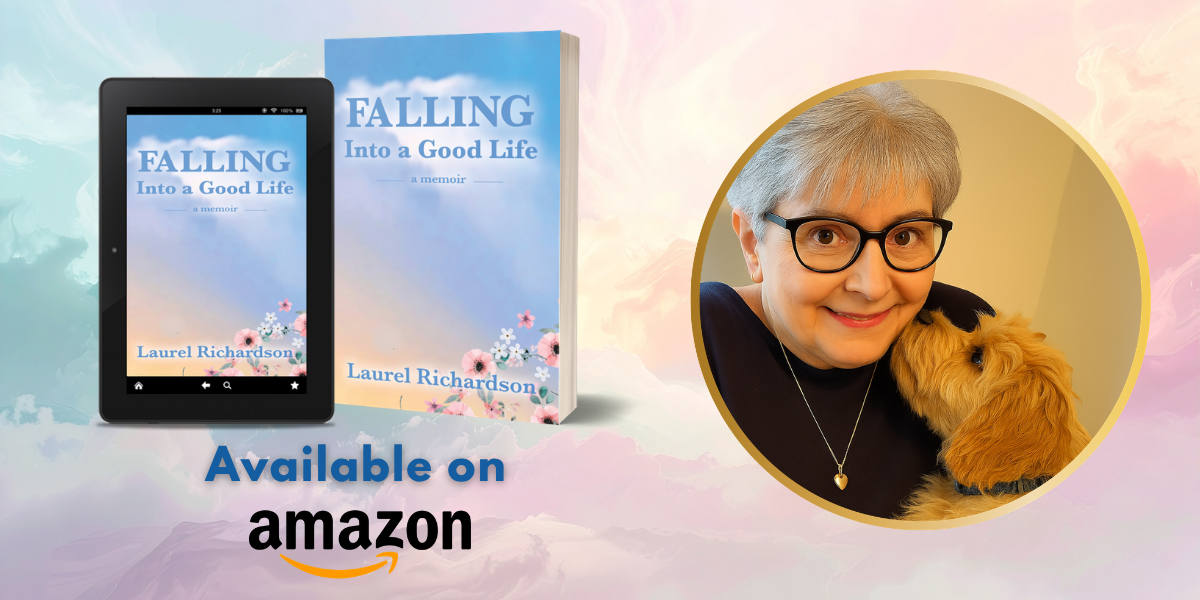
Most people, when they picture the aftermath of a broken neck, broken back, broken arm, shattered eye socket, fractured ribs, and a severe concussion sustained alone on a dining room floor for fourteen hours, picture an ending. Laurel Richardson turned it into the most alive chapter of her life.
Her memoir Falling Into a Good Life is not a recovery story in the way we usually mean that phrase. It’s something harder to categorize and more interesting because of it. It’s about what becomes possible when everything you thought defined you gets stripped away at once, and you have to figure out, from the inside, who you actually are without it.
The Fall That Broke More Than Bones
At eighty-seven, Laurel fell down thirteen steps. The doctors called her a miracle because she survived. She has a different take on where the real miracle lived. For her, it was the people who showed up, friends, family, medical professionals, and eventually an entire community at a senior living residence called The Hartford, that made what came after possible.
She’s clear that she doesn’t frame any of this as a heroic comeback. That framing would miss the point entirely. What happened wasn’t triumph over adversity in the cinematic sense. It was something quieter and more genuinely human. A woman at the end of one version of her life discovers that another version, richer and more connected than the previous one, was still available to her.
That distinction matters because the book isn’t trying to inspire anyone with a highlight reel. It’s trying to tell the truth about what transformation actually feels like from the inside.
Rewriting What a “Fall” Is Supposed to Mean
There is a story our culture tells about older women who fall. It goes like this: the fall is the beginning of the end. Physical decline leads to social contraction, loss of independence, and a slow fade from the life she once had. Laurel’s memoir takes that script apart page by page.
She’s direct about it. The fall broke her bones, yes. But it also broke open the narrow narrative aging gets handed, the one that insists possibility shrinks with every passing year. What she found inside a senior living community wasn’t contraction. It was belonging, creativity, friendship, and a kind of freedom she hadn’t expected to encounter at that stage of life.
Her argument about independence is worth pausing on. She redefines it not as doing everything alone, which is how most people measure it, but as choosing the support that actually lets you live more fully. That’s a meaningful shift. It moves independence away from self-sufficiency as performance and toward something more honest about how human beings actually thrive.
Identity After the Fracture
Surviving that kind of physical trauma doesn’t just change your circumstances. According to Laurel, it rearranges your sense of self in ways that are difficult to describe and impossible to rush.
The old roles fell away. The habits that had shaped her daily life no longer fit. Purpose, which had previously been tied to productivity and professional identity, narrowed down to something simpler and more immediate. Presence. The people in the room. The ability to stand up and walk across it.
She describes gratitude in a way that strips the word of its greeting card quality. After the fall, gratitude wasn’t abstract. It was physical. It was breath. It was balanced. It was the specific faces of the people who stayed.
The fall didn’t return her to who she was before. She’s frank about that. It made her into someone more awake to the life she was actually living.
The Inside Work Nobody Talks About
External recovery has a checklist. Bones heal on a schedule. Mobility returns in measurable increments. Therapists mark progress in documented stages. All of that is real and necessary, and none of it touches the deeper work.
Laurel describes rebuilding from the inside out as starting in the places no one else can see, the mind, the spirit, the quiet interior rooms where trust either holds or doesn’t. You relearn the shape of your own courage, she says, long before you relearn stairs. That sequence matters. Internal recovery moves slowly and without a clear roadmap, and what it produces isn’t a return to the old life. It’s a truer one.
That phrase carries the whole weight of the memoir. Not better in a motivational sense. Truer. More honest about what actually matters and less cluttered with what doesn’t.
What Vulnerability Actually Looks Like in Practice
One of the most quietly radical things about this book is what Laurel says about vulnerability. After the fall, she couldn’t demonstrate competence or independence anymore. The facade was simply gone. And in its absence, something shifted.
Letting people see her exactly as she was, frightened, broken, dependent, uncertain, turned out to be its own form of strength. Not because vulnerability is comfortable, she doesn’t pretend it is, but because allowing herself to be fully human during the rebuilding process was what actually made the rebuilding possible.
Laughing at the absurd parts of recovery. Admitting fear out loud. Accepting help without apologizing for needing it. These weren’t small things. They were the architecture of everything that came after.
At ninety, with fourteen published books behind her, Laurel Richardson has earned the right to say something true about what a life can hold. What she says is this: even in falling, there is the chance to rise into something astonishing. She lived it. The book proves it.
You can get more information about Falling Into a Good Life on Amazon.