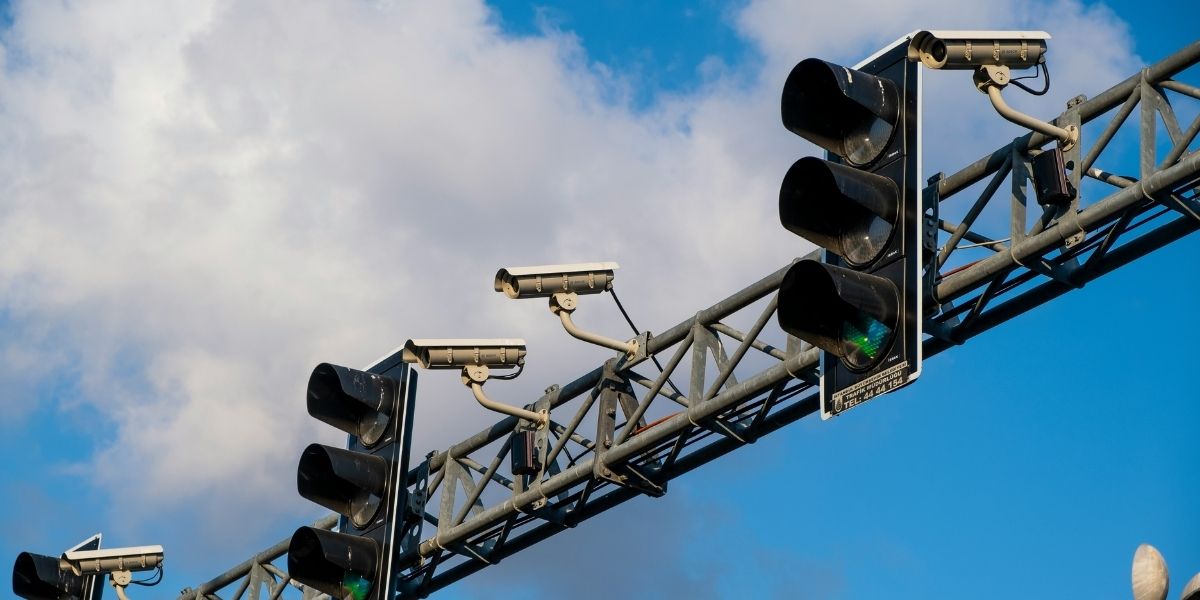





Los Angeles speed cameras began issuing warnings at 26 locations on October 26, bringing automated speed checks to streets across the city. The Los Angeles Department of Transportation plans 125 sites under a state-authorized pilot. Drivers face no camera fines during each site’s first 60 days, but later penalties could range from $50 to $500.
Key Takeaways
- On October 26, 26 of 125 planned locations were issuing warnings, according to LAist
- Cameras record vehicles traveling at least 11 mph above the posted speed limit
- Every newly activated location has its own 60-day warning period
- After that period, civil penalties range from $50 to $500, with an additional first-violation warning rule
Los Angeles speed cameras began recording vehicles traveling at least 11 mph above posted limits on Monday, October 26. Drivers initially receive mailed warnings rather than fines.
LAist counted 26 locations issuing warnings on launch day. The Los Angeles Department of Transportation (LADOT) plans a network of 125 locations and expects the remainder to activate by the end of 2026.
California Assembly Bill 645 authorized the five-year pilot, which records speeding on selected city streets. Unlike an officer-issued ticket, an automated notice is tied to a vehicle’s rear license plate and mailed to the registered owner following review.
First 26 Camera Locations Begin With Mailed Warnings
LADOT says speed was directly involved in about one in five fatal crashes in Los Angeles in 2024. The department selected camera locations using records of speed-related collisions, school proximity and other high-risk conditions. The pilot is intended to cover all 15 city council districts rather than a single part of the city.
The first deployments include locations near La Brea Avenue and First Street, Fairfax Avenue and Clinton Street, Melrose Avenue and Hayworth Avenue, and La Cienega Boulevard and Pico Boulevard.
The program arrives amid broader attention to dangerous intersections in Los Angeles, where separate traffic enforcement efforts have focused on serious collisions. Automated speed enforcement differs from a roadside stop because equipment records a potential violation before a city employee reviews the information.
LADOT’s Parking Enforcement and Traffic Control division reviews the recorded data before an official notice goes to the vehicle’s registered owner. A speed-camera warning does not replace the posted speed limit, which continues to apply regardless of whether a camera is present.
Camera Locations and Signs Vary Across Los Angeles
Although 125 camera locations are planned, the full list does not mean all of them are operating. LADOT publishes approved street segments and enforcement hours, with each system’s status changing as installations and activation proceed.
The city’s February planning process identified proposed speed camera locations for public review. Approved corridors include portions of Olympic Boulevard, Venice Boulevard, Santa Monica Boulevard and roads in the San Fernando Valley. A listed corridor may contain several intersections, but the camera applies to the designated segment. The systems measure vehicle speed rather than whether a driver has crossed an intersection against a red light.
California law requires signs stating “Photo Enforced” and displaying the posted speed limit no more than 500 feet before each operating system. Those signs must be visible to vehicles traveling in the direction monitored by the camera.
School-zone enforcement carries additional restrictions. Where a lower school-zone limit applies only when children are present, the law restricts the times when automated equipment can enforce that lower limit. The city must also publish the hours when enforcement is permitted for each approved street segment on its website.
The official LADOT location map offers the relevant status for a particular road segment. Proposed locations described earlier in the year should not automatically be treated as cameras already issuing notices.
Speed Camera Fines Start After Each Warning Period
Each activated site first issues warnings for 60 calendar days to owners whose vehicles travel at least 11 mph above the posted limit. The grace period begins when that site activates, not on a single deadline for the entire network. Initial locations could therefore begin issuing civil citations in late December, while later sites remain in their own warning periods.
After that period, penalties begin at $50 for driving 11 to 15 mph over the limit. The amount rises to $100 for 16 to 25 mph over and $200 for 26 mph or more over the limit. A vehicle traveling at 100 mph or higher triggers a $500 penalty instead.
California law also requires a separate warning for a vehicle’s first recorded violation within Los Angeles at 11 to 15 mph over the limit. That rule applies even after the location’s initial 60 days have passed. Subsequent qualifying incidents may carry the stated penalty.
The automated violations are civil matters, not moving violations, and do not add points to a driver’s record. Notices go to the registered vehicle owner, including when someone else was driving. State law provides nonliability procedures for certain circumstances, including documented vehicle theft and qualifying rentals.
Privacy Rules and Citation Reviews Govern the Cameras
LADOT says the systems capture rear license plates of speeding vehicles rather than photographing drivers’ faces. The state’s pilot framework prohibits facial recognition technology and limits how camera information can be used or disclosed.
Photographic evidence that does not lead to a violation notice must be destroyed within five business days. Evidence supporting a citation may generally be retained for up to 60 days after the case’s final disposition, subject to exceptions. Vehicle owners and people identified as drivers can request the photographic evidence associated with an alleged violation.
A formal citation must be mailed within 15 calendar days of the recorded incident. It must identify the measured speed, posted limit, date, approximate time and location, plus instructions for payment or review. Camera systems must be inspected at least every 60 days and independently calibrated at least annually.
An owner can request a free initial review within 30 calendar days of the citation being mailed. If the agency upholds the notice, an administrative hearing can be requested within 21 days after the review result is mailed. California law also allows eligible recipients to request a hearing without prepaying the penalty when they demonstrate an inability to pay.
Revenue from Los Angeles speed cameras must first cover program costs. Under the state framework, excess funds are directed toward traffic-calming measures.
Frequently Asked Questions
How many Los Angeles speed cameras are active?
LAist reported 26 locations issuing warnings as of October 26, 2026. LADOT plans a total of 125 locations and expects additional cameras to activate in phases.
How fast must a vehicle travel to trigger a warning?
A camera can record a vehicle traveling at least 11 mph above the posted speed limit. During a site’s first 60 calendar days of operation, qualifying events lead to warnings rather than fines.
When will drivers begin receiving fines?
The first sites could begin issuing civil penalties in late December 2026, once their individual 60-day warning periods end. A vehicle’s first 11-to-15-mph-over violation within the city still receives a separate warning.
Can the registered owner challenge a speed camera citation?
Yes. The owner may request a free initial review within 30 calendar days after the citation is mailed, with a further administrative hearing available if that review does not resolve the case.